A Contentious Bridge Between Sport and Wildlife Protection
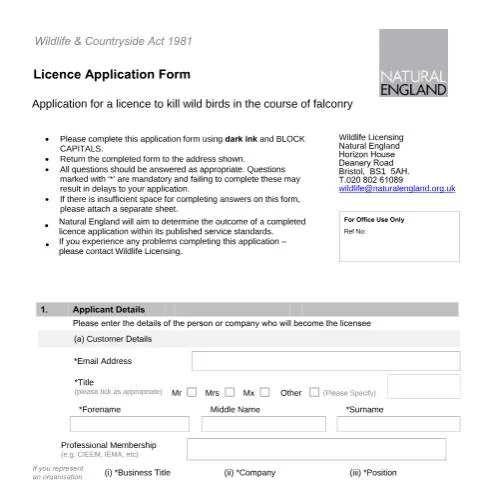
The world of falconry sits uneasily within modern wildlife conservation frameworks, creating a regulatory puzzle that Natural England must navigate with considerable care. Form A41, the application for a licence to kill wild birds for falconry purposes, represents one of the most ethically complex licensing procedures administered under the Wildlife and Countryside Act 1981. Unlike straightforward pest control licences or scientific research permits, this document authorises the deliberate taking of protected wild birds purely for sporting purposes—a practice that generates heated debate among conservationists, animal welfare advocates, and traditional field sports enthusiasts.
The form's existence reflects Parliament's decision to preserve certain historical hunting traditions whilst maintaining strict regulatory oversight. Falconers seeking to take birds from the wild for training and sport must demonstrate not only their competence and facilities but also their understanding of conservation principles. This creates an inherent tension: applicants are simultaneously positioned as custodians of wildlife and as individuals seeking to capture and train wild creatures for human entertainment.
Under section 16(1)(e) of the Wildlife and Countryside Act, Natural England may grant licences for specific purposes that would otherwise constitute offences under the Act's protective provisions. The A41 form specifically covers falconry applications, distinguishing this sporting pursuit from commercial activities such as crop protection or public health measures. The distinction matters enormously—any hint of commercial gain or alternative purpose will likely result in application rejection.
Navigating the Regulatory Maze of Wild Bird Capture
The Wildlife and Countryside Act 1981 established comprehensive protection for Britain's wild birds, making it illegal to kill, take, or possess most species without specific authorisation. The Act recognises only narrow exceptions, and falconry represents perhaps the most controversial of these permitted activities. Natural England inherited responsibility for these licences from predecessor organisations, bringing with it decades of accumulated case law, policy guidance, and administrative precedent.
Form A41 operates within a complex web of related legislation and international obligations. The Birds Directive, retained in UK law post-Brexit, continues to influence licensing decisions, particularly for species of European conservation concern. Meanwhile, the Convention on International Trade in Endangered Species (CITES) may apply to certain raptor species, creating additional layers of regulatory compliance that successful applicants must navigate.
The form's structure reflects this regulatory complexity. Each section builds toward demonstrating that the proposed activity serves legitimate sporting purposes whilst maintaining appropriate safeguards for wild bird populations. Natural England's assessment process considers not just individual applications but cumulative impacts across all licensed activities, seasonal breeding patterns, population dynamics, and emerging conservation concerns.
Decoding the Application's Critical Components
Section 1 of the A41 form demands comprehensive applicant details, extending far beyond basic contact information. The inclusion of professional memberships, particularly those relating to conservation bodies like CIEEM or IEMA, signals Natural England's expectation that applicants possess relevant expertise or affiliations. The customer type field—spanning farmers, householders, and ecologists—helps categorise applications and may influence assessment criteria.
The alternative contact provisions in subsection (b) reflect the collaborative nature of many falconry operations. Professional falconers often work with landowners, estate managers, or conservation organisations, creating complex webs of responsibility and authority. Natural England requires clear identification of all parties involved, ensuring that licensing decisions account for the full range of stakeholders affected by any granted permissions.
Communication preferences in Section 2 carry practical significance beyond mere convenience. Email correspondence enables faster processing and reduces administrative costs, but telephone contact may be essential for complex cases requiring detailed discussion. The form's emphasis on providing contact numbers for telephone communication suggests that Natural England anticipates needing clarification or additional information from many applicants.
| Form Section | Key Information Required | Assessment Implications |
|---|---|---|
| Applicant Details | Personal/business information, professional memberships | Establishes credibility and relevant expertise |
| Previous Applications | Licensing history, outcomes, reference numbers | Reveals compliance record and experience level |
| Purpose Declaration | Confirmation of falconry sporting purpose only | Excludes commercial or alternative uses |
The Significance of Licensing History and Precedent
Section 3's focus on previous applications reveals Natural England's risk-based approach to licence administration. Applicants with established track records of compliance may receive more favourable consideration, whilst those with histories of violations or problematic applications face enhanced scrutiny. The form specifically requests reference numbers from previous applications, enabling cross-referencing with Natural England's internal databases and case files.
The multiple outcome categories—Granted, Not Granted, Advice Only, Deferred, Not Yet Known—reflect the nuanced nature of wildlife licensing decisions. "Advice Only" outcomes typically result from applications that fail to meet basic criteria but where Natural England provides guidance for future submissions. "Deferred" applications often require additional information or await resolution of related issues, such as appeals or policy reviews.
Understanding previous application outcomes helps Natural England identify patterns in applicant behaviour and assess the likelihood of compliance with any granted licence conditions. Applicants who have received "Not Granted" decisions must demonstrate how they have addressed the underlying concerns that led to rejection, whether these relate to inadequate facilities, insufficient experience, or conservation impacts.
Distinguishing Sport from Commerce in Falconry Applications
The purpose section represents the form's most critical component, establishing the legal foundation for any licence that might be granted. The checkbox for "Falconry, under section 16(1)(e)" appears deceptively simple but carries profound legal significance. This single tick confirms that the application falls within the narrow sporting exception to wildlife protection laws, excluding all commercial, agricultural, or public safety justifications.
The accompanying note delivers an unambiguous warning about scope limitations. Commercial aspects—even tangential ones such as crop protection or public health benefits—automatically disqualify applications from consideration under the falconry provisions. Similarly, the use of trained raptors as non-lethal deterrents falls outside the A41's scope, requiring separate licensing procedures with different criteria and assessment processes.
This strict purpose limitation reflects Parliament's intent to preserve traditional sporting practices whilst preventing commercial exploitation of wildlife protection loopholes. Natural England must carefully scrutinise applications for any hints of broader purposes, examining applicant backgrounds, proposed activities, and associated land uses. Professional pest control operators, agricultural businesses, or aviation safety companies cannot legitimately use the falconry licensing route, regardless of their genuine sporting interests.
Processing Timescales and Administrative Realities
Natural England's commitment to determine licence outcomes within published service standards reflects broader government initiatives to improve regulatory efficiency. However, the complexity of wildlife licensing decisions often requires extensive consultation, site visits, and technical assessments that may extend processing times beyond standard targets. The form's reference to attaching separate sheets for insufficient space acknowledges that many applications require detailed explanations that cannot fit within the provided fields.
The administrative burden extends beyond the initial application. Successful applicants must comply with licence conditions, maintain detailed records, and submit monitoring reports as required. Natural England's Wildlife Licensing team may conduct compliance inspections, investigate complaints, or require additional information throughout the licence's validity period. The form represents merely the beginning of an ongoing regulatory relationship between applicant and authority.
Seasonal factors significantly influence processing timescales. Applications submitted during peak breeding seasons may face delays whilst Natural England assesses potential impacts on vulnerable populations. Conversely, applications for winter activities may benefit from faster processing when conservation concerns are typically reduced. Understanding these patterns can help applicants time their submissions to avoid unnecessary delays.
Compliance Monitoring and Long-term Obligations
Successful A41 applicants enter into a regulated relationship with Natural England that extends far beyond the initial licence grant. The Wildlife and Countryside Act empowers the organisation to attach extensive conditions to licences, covering everything from permitted methods and locations to detailed recording requirements and reporting obligations. Licence holders must maintain comprehensive records of all activities undertaken under their authorisation, including dates, locations, species taken, and disposal methods.
The form's emphasis on providing complete and accurate information reflects the serious legal consequences of non-compliance. False or misleading statements may result in licence revocation, prosecution, and permanent exclusion from future licensing schemes. Natural England maintains detailed records of all licence holders and their compliance history, sharing information with other regulatory bodies and law enforcement agencies as appropriate.
Regular monitoring visits by Natural England staff or contracted inspectors form part of the ongoing oversight regime. Licence holders must provide access to facilities, records, and birds as requested, demonstrating continued compliance with all conditions. Any changes to circumstances, locations, or activities may require licence variations or new applications, maintaining the regulatory framework's relevance to actual practices.
Strategic Considerations for Prospective Applicants
The A41 form demands careful preparation extending well beyond completing the required fields. Prospective applicants should thoroughly research Natural England's current policies, recent licensing decisions, and any emerging conservation concerns affecting their target species. The organisation publishes annual reports on licensing activities, providing valuable insights into approval rates, common rejection reasons, and evolving assessment criteria.
Professional advice from experienced falconers, conservation lawyers, or specialist consultants may prove invaluable for complex applications or those involving sensitive species or locations. The British Falconers' Club and similar organisations maintain extensive guidance on licensing procedures, whilst conservation groups may provide insights into current ecological concerns that could influence assessment outcomes.
Timing applications to align with Natural England's assessment cycles and seasonal considerations can significantly impact processing times and success rates. Early submission allows time for clarification requests, additional information gathering, and any necessary modifications before critical deadlines. The form's requirement for block capitals and dark ink reflects the need for clear, professional presentation that facilitates efficient processing by busy licensing staff.
Documentation Requirements and Evidence Standards for A41 and LR41 Applications
Natural England requires comprehensive documentation to assess your A41 or LR41 licence application, with evidence standards varying significantly between first-time applicants and licence renewals. Understanding these requirements beforehand can prevent costly delays and application rejections.
Mandatory Documentation for Initial A41 Applications
First-time A41 applicants must provide detailed proof of their falconry experience and facilities. This includes photographs of your weathering area, mews design specifications showing minimum space requirements (typically 8ft x 4ft x 7ft for medium-sized raptors), and evidence of secure perching arrangements. Natural England particularly scrutinises shelter provisions, drainage systems, and escape-prevention measures.
Your application must demonstrate at least two years of documented falconry experience, supported by logbooks, training certificates from recognised falconry organisations, or witness statements from established falconers. British Falconers' Club membership certificates carry significant weight, though alternative documentation from the Hawk Board or International Association of Falconry may suffice.
Veterinary arrangements require formal confirmation through a signed agreement with a wildlife-experienced veterinary practice. Generic pet veterinarians may not meet Natural England's standards unless they demonstrate specific raptor experience through continuing professional development certificates or case histories.
Enhanced Evidence Requirements for LR41 Applications
LR41 applications demand substantially more rigorous documentation due to the commercial implications and potential for larger-scale taking. Applicants must provide detailed business plans demonstrating sustainable falconry operations, including projected bird numbers, breeding programmes, and commercial activities such as flying displays or educational demonstrations.
Financial evidence becomes crucial for LR41 applications. Natural England may request three years of accounts, insurance documentation covering public liability (minimum £2 million), and evidence of sufficient capital reserves to maintain birds during economic downturns. Commercial falconry operations must also demonstrate compliance with animal welfare legislation and local planning permissions for business use.
Breeding facility specifications require architectural drawings showing nest box dimensions, incubation equipment, and biosecurity measures. Natural England expects detailed protocols for disease prevention, quarantine procedures for new birds, and emergency veterinary response plans.
Common Documentation Errors and Rejection Factors
Inadequate photographic evidence represents the most frequent cause of application delays. Images must clearly show facility dimensions with measuring instruments visible, demonstrate secure construction materials, and capture all angles of weathering areas. Blurred, distant, or poorly lit photographs typically trigger requests for resubmission.
Incomplete veterinary agreements often result in automatic rejections. Natural England requires specific clauses addressing emergency call-out arrangements, post-mortem examination protocols, and veterinary record-keeping standards. Generic template agreements rarely satisfy these requirements without substantial customisation.
Experience documentation frequently fails when applicants provide vague or unverifiable references. Natural England may contact referees directly, so ensure your falconry mentors or training providers remain accessible and can substantiate your claimed experience levels with specific examples and dates.
Regional Variations and Local Authority Considerations
While Natural England maintains overarching standards for A41 and LR41 licences across England, significant regional variations affect application processing, species availability, and ongoing compliance requirements. These differences reflect local ecological priorities, conservation pressures, and administrative resources.
Species Availability by English Regions
Northern England typically offers broader species options due to stronger wild raptor populations and established conservation programmes. Areas around the Lake District, Yorkshire Dales, and Northumberland often permit taking of peregrine falcons, merlins, and occasionally goshawks, subject to annual population assessments and breeding success data.
Southern England applications face tighter restrictions, particularly around Areas of Outstanding Natural Beauty and Special Protection Areas. The South Downs, Chilterns, and areas within the M25 corridor experience heightened scrutiny due to development pressures and smaller remaining wild populations. Kestrel taking may represent the only viable option in heavily urbanised southern counties.
Coastal regions present unique opportunities and challenges. Saltmarsh areas in Essex, Kent, and Lincolnshire support different species compositions, potentially allowing marsh harrier or short-eared owl taking under exceptional circumstances. However, these areas often overlap with Sites of Special Scientific Interest, requiring additional environmental assessments.
Local Planning Authority Interface
Falconry operations frequently intersect with local planning regulations, creating additional compliance layers beyond Natural England licensing. Keeping raptors for personal use typically falls under permitted development rights, but commercial operations or facilities exceeding certain thresholds may require planning permission.
Change of use applications become necessary when converting agricultural buildings to commercial falconry centres or establishing breeding facilities exceeding domestic scale. Local authorities assess noise implications, visitor numbers, parking provision, and potential conflicts with neighbouring land uses. Rural locations generally receive more favourable treatment, though green belt restrictions may apply.
Listed building consent adds complexity for historic properties. Converting traditional farm buildings or installing modern aviaries within conservation areas requires careful navigation of heritage protection requirements. Some local authorities maintain specialist rural planning officers familiar with falconry operations.
Coordination with Other Regulatory Bodies
Environment Agency involvement becomes relevant for larger operations requiring waste management licences or water abstraction permits. Falconry centres processing substantial quantities of organic waste or operating water features may trigger environmental permitting requirements.
APHA (Animal and Plant Health Agency) oversight applies to commercial operations importing or exporting birds, particularly for breeding programmes involving non-native species. CITES permit requirements for certain species create additional documentation burdens and timing considerations.
Local authority environmental health departments may inspect facilities following noise complaints or welfare concerns. Maintaining positive relationships with these officers through proactive communication can prevent enforcement actions that might jeopardise your Natural England licence.
Long-term Compliance and Licence Maintenance Strategies
Successful A41 and LR41 licence holders must navigate ongoing compliance requirements that extend far beyond initial approval. Understanding these long-term obligations prevents licence revocation and ensures sustainable falconry operations throughout the licence period.
Record-keeping and Reporting Obligations
Detailed record-keeping represents the cornerstone of licence compliance, with Natural England conducting periodic audits and expecting immediate access to comprehensive documentation. Your daily logs must record bird health observations, feeding schedules, flying activities, and any unusual behaviours or incidents.
Taking records require meticulous documentation including exact GPS coordinates, weather conditions, time of capture, and detailed descriptions of the birds taken. Natural England may cross-reference these records with breeding survey data and population monitoring information, making accuracy crucial for licence renewal prospects.
Mortality records demand particular attention, requiring post-mortem examination reports for any bird deaths and detailed circumstances surrounding losses. Unexplained mortality patterns or failure to report deaths promptly can trigger licence review procedures and potential revocation.
Annual returns must be submitted by specified deadlines, typically 31st January following the licence year. Late submission or incomplete data automatically flags your licence for enhanced scrutiny during renewal processes. Digital submission systems increasingly replace paper-based reporting, requiring familiarity with Natural England's online portals.
Facility Maintenance and Upgrade Requirements
Weathering facilities require regular maintenance to meet evolving welfare standards and safety requirements. Natural England may update guidance on minimum space requirements, environmental enrichment provisions, or security specifications during your licence period. Licence holders must implement these changes within specified timeframes or risk compliance breaches.
Perching arrangements need regular inspection and replacement, with particular attention to wear patterns that might cause injury or facilitate escapes. Modern falconry increasingly emphasises naturalistic perching options and environmental enrichment, reflecting advancing understanding of raptor welfare needs.
Security upgrades may become necessary following local crime trends or Natural England policy updates. Investment in CCTV systems, improved locking mechanisms, or alarm systems represents ongoing operational costs that licence holders must budget for throughout the licence period.
Veterinary Relationship Management
Maintaining effective veterinary support requires ongoing professional relationships and regular health monitoring protocols. Annual health checks for all birds provide baseline health data and demonstrate proactive welfare management to Natural England inspectors.
Veterinary continuing education in raptor medicine advances rapidly, making it essential to ensure your veterinary provider maintains current knowledge. Some licence holders arrange annual training sessions or specialist consultations to enhance their veterinary support quality.
Emergency veterinary protocols need regular testing and updating, particularly contact arrangements and out-of-hours availability. Natural England expects immediate veterinary response capability for serious injuries or illness, making backup arrangements essential for single-practice dependencies.
Renewal Strategy and Forward Planning
Licence renewal applications require submission typically three months before expiry, with processing times varying according to your compliance history and any facility changes. Maintaining exemplary records throughout the licence period significantly streamlines renewal processes and reduces assessment requirements.
Facility improvement planning should anticipate future regulatory changes and welfare standard developments. Proactive upgrades often receive favourable consideration during renewal assessments, demonstrating commitment to best practice and continuous improvement.
Succession planning becomes relevant for aging licence holders or those considering retirement from falconry. Natural England may permit licence transfers under specific circumstances, but requires substantial advance notice and comprehensive assessment of proposed new licence holders.