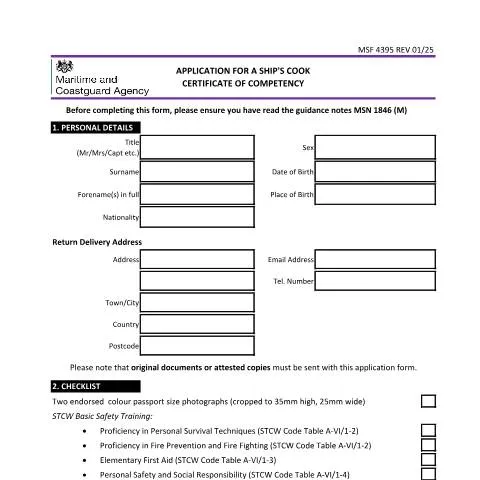
Becoming a Certified Ship's Cook: Maritime Catering Credentials Under STCW Standards
Working in a ship's galley requires more than culinary skills—it demands certified competency that meets international maritime standards. The Ship's Cook Certificate of Competency issued by the Maritime and Coastguard Agency represents a professional qualification that bridges traditional catering expertise with the unique demands of maritime operations. This certification ensures that galley personnel can maintain food safety standards whilst operating in the challenging environment of vessels at sea, where storage limitations, rolling conditions, and extended voyages create distinct operational pressures.
The certificate demonstrates compliance with both STCW (Standards of Training, Certification and Watchkeeping for Seafarers) requirements and UK maritime labour regulations. Unlike shore-based catering qualifications, this certification specifically addresses the complexities of preparing meals for crews during extended periods at sea, where fresh provisions may be limited and cooking conditions can be affected by weather and vessel movement.
Professional Requirements and Qualification Pathways
The Maritime and Coastguard Agency has established two distinct pathways for obtaining the Ship's Cook Certificate of Competency, reflecting different approaches to professional development within the maritime catering sector.
Traditional Pathway: Shore-Based Training Plus Marine Assessment
The first route combines established shore-based qualifications with specific marine competency assessment. Candidates must possess a Level 2 Professional Cookery Diploma or equivalent training, supplemented by an Assessment in Marine Cookery. This pathway suits experienced shore-based chefs seeking to transition into maritime operations, as it recognises existing culinary expertise whilst ensuring familiarity with shipboard-specific challenges.
The marine cookery assessment evaluates practical skills including menu planning for extended voyages, food storage in limited galley spaces, and meal preparation techniques that account for vessel movement. Candidates learn to work with preserved and frozen ingredients when fresh provisions become unavailable during long passages.
Integrated Marine Cookery Qualification
The alternative pathway involves completing a Level 2 Professional Cookery Diploma in Marine Cookery, which integrates shore-based culinary techniques with maritime-specific training from the outset. This route is often preferred by those entering the maritime sector without extensive prior catering experience, as it provides comprehensive preparation for shipboard operations within a single qualification framework.
Essential Safety and Hygiene Components
Regardless of the chosen pathway, all candidates must complete Level 2 Food Safety or Food Hygiene training. This requirement reflects the heightened importance of food safety aboard vessels, where foodborne illness can have serious consequences for crew welfare and operational safety. The closed environment of a ship means that contamination risks must be managed with particular rigour.
STCW Basic Safety Training: Maritime-Specific Competencies
The STCW Basic Safety Training requirement distinguishes maritime cooks from their shore-based counterparts, reflecting the reality that galley personnel may need to respond to emergency situations whilst at sea.
| STCW Component | Code Reference | Practical Application |
|---|---|---|
| Personal Survival Techniques | Table A-VI/1-2 | Lifeboat operations, survival suit use |
| Fire Prevention and Fire Fighting | Table A-VI/1-2 | Galley fire suppression, cooking equipment safety |
| Elementary First Aid | Table A-VI/1-3 | Kitchen injury treatment, crew medical support |
| Personal Safety and Social Responsibility | Table A-VI/1-4 | Shipboard safety culture, crew coordination |
| Security Awareness | Table A-VI/6-1 | ISPS Code compliance, threat recognition |
The fire prevention and fire fighting training holds particular relevance for galley personnel, given that cooking operations present inherent fire risks. Candidates learn to operate specialised marine fire suppression systems and understand how galley fires can be contained within the ship's overall fire safety strategy.
Medical Fitness and Sea Service Requirements
The application process includes stringent medical and experience requirements that reflect the demanding nature of shipboard operations. Candidates must provide evidence of one month's sea service, demonstrating practical familiarity with maritime working conditions. This requirement ensures that applicants understand the physical and psychological demands of extended periods at sea before committing to a career in maritime catering.
ENG1 Medical Certification
The ENG1 Medical Fitness certificate or acceptable equivalent represents a comprehensive medical assessment specifically designed for maritime personnel. This examination goes beyond standard occupational health checks to evaluate fitness for work in the unique environment of ships at sea. The assessment considers factors such as seasickness susceptibility, claustrophobia, and the ability to work effectively in confined spaces for extended periods.
Under the Merchant Shipping (Maritime Labour Convention) (Medical Examination) Regulations 2010, this medical certification is mandatory for all seafarers. The regulations align UK requirements with international standards, ensuring that certified ship's cooks meet global maritime labour standards and can work aboard vessels operating under various flag states.
Application Process and Documentation Standards
The Maritime and Coastguard Agency maintains strict documentation standards for certificate applications, reflecting the international recognition of UK maritime qualifications. All applications must be submitted to the Registry of Shipping & Seamen at Anchor Court in Cardiff, which serves as the central processing facility for UK seafarer documentation.
Photography and Signature Requirements
The application requires two endorsed colour passport-size photographs with specific dimensions: cropped to 35mm high and 25mm wide. These photographs must be endorsed by an appropriate authority, following established UK passport photography standards. The signature requirements are particularly stringent, reflecting the certificate's role as an internationally recognised identity document.
Applicants must sign using black ink only, within precise dimensional constraints: maximum 0.6cm height and 5.0cm width. The signature box cannot be modified, and digital submissions must be scanned at minimum 200dpi resolution. These specifications ensure that the signature can be accurately transferred to the certificate and remains legible for verification purposes worldwide.
Document Authentication
The MCA requires original documents or attested copies for all supporting evidence. This requirement reflects the international nature of maritime operations, where fraudulent qualifications pose significant safety risks. Attested copies must be certified by appropriate authorities, typically solicitors, magistrates, or other recognised officials who can verify document authenticity.
Professional Value and Career Applications
The Ship's Cook Certificate of Competency opens career opportunities across the diverse UK maritime sector, from commercial merchant vessels to offshore installations and cruise operations. The certificate is recognised internationally under STCW conventions, enabling holders to work aboard vessels flying various flags and operating in international waters.
Commercial Shipping Opportunities
Container ships, bulk carriers, and tankers typically require certified cooks for extended voyages where crew welfare depends heavily on quality meal provision. The certificate demonstrates competency in managing limited storage space whilst maintaining nutritional standards during voyages that may last several weeks or months.
Offshore and Specialised Vessel Operations
The offshore energy sector, including wind farm support vessels and oil rig supply ships, often requires certified maritime catering personnel. These operations may involve challenging weather conditions and irregular schedules, where the certified cook's training in emergency procedures and maritime safety becomes particularly valuable.
Passenger Vessel and Ferry Services
Cruise ships and passenger ferries operating from UK ports require galley staff who can demonstrate both culinary competency and maritime safety training. The certificate provides evidence of professional standards that meet international passenger vessel requirements.
Regulatory Framework and Compliance Obligations
The Ship's Cook Certificate of Competency operates within a complex regulatory framework that encompasses UK domestic law, international maritime conventions, and industry-specific standards. Understanding these regulatory obligations is essential for certificate holders and maritime employers.
STCW Convention Compliance
The certificate aligns with the International Convention on Standards of Training, Certification and Watchkeeping for Seafarers, ensuring that UK-certified ship's cooks meet global standards. This compliance enables employment aboard vessels operating under foreign flags and ensures recognition in international ports.
Maritime Labour Convention Requirements
The Maritime Labour Convention, often described as the "seafarers' bill of rights," establishes minimum standards for working and living conditions aboard vessels. Certified ship's cooks play a crucial role in meeting these standards, particularly regarding crew welfare and nutrition. The certificate demonstrates competency in maintaining food safety standards that protect crew health during extended voyages.
Certificate holders must understand their obligations under these international frameworks, including requirements for continued professional development and medical fitness maintenance. The MCA provides ongoing guidance through Marine Safety Note 1846(M), which outlines current requirements and procedural updates.
Certificate Validity and Professional Development
The Ship's Cook Certificate of Competency represents the foundation of a maritime catering career rather than a one-time qualification. Certificate holders must maintain their credentials through ongoing medical certification and may need to undertake additional training as regulations evolve or career opportunities arise.
The certificate itself does not have a fixed expiry date, but associated requirements such as the ENG1 medical certificate require periodic renewal. Certificate holders working regularly at sea must maintain valid medical certification throughout their careers, with renewal intervals typically ranging from one to five years depending on age and specific medical considerations.
Professional development opportunities may include specialised training for particular vessel types, advanced food safety qualifications, or progression toward senior galley positions. The certificate provides the foundation for career advancement within the maritime catering sector, with experienced certified cooks potentially progressing to chief cook roles or shore-based positions within maritime catering management.
The Maritime and Coastguard Agency continues to update requirements in response to evolving international standards and technological developments within the maritime sector. Certificate holders should monitor MCA communications and industry publications to remain aware of changes that may affect their professional obligations or career development opportunities.
Medical and Health Requirements for Ships' Cook Certification
Before undertaking duties aboard commercial vessels, prospective ships' cooks must satisfy specific medical fitness standards established under the Maritime Labour Convention (MLC) 2006, as implemented through UK maritime legislation. The Maritime and Coastguard Agency requires all seafarers, including catering personnel, to hold a valid Seafarer Medical Certificate (ENG1) issued by an MCA-approved doctor.
The ENG1 medical examination encompasses comprehensive health assessments particularly relevant to galley operations. Visual acuity standards are crucial given the precision required in food preparation, knife handling, and equipment operation in confined spaces. Candidates must demonstrate adequate colour vision to distinguish food safety indicators, particularly when assessing meat temperatures or identifying spoilage signs. Hearing requirements ensure cooks can respond to emergency signals and communicate effectively with crew members during meal service periods.
Specific attention focuses on communicable disease screening, as ships' cooks handle food preparation for entire crews over extended voyages. Medical practitioners examine for conditions that could compromise food safety, including gastrointestinal disorders, skin conditions affecting hands and arms, and respiratory infections. The examination also assesses physical fitness levels necessary for working in challenging maritime environments, including the ability to maintain balance in rough seas and lift standard galley equipment weighing up to 23 kilograms.
Candidates with pre-existing medical conditions requiring ongoing treatment must provide detailed documentation from their GP or specialist consultant. The MCA-approved doctor evaluates whether conditions can be safely managed aboard vessels with limited medical facilities. Insulin-dependent diabetes, for instance, requires careful assessment of the candidate's ability to maintain stable blood glucose levels during irregular meal schedules common in maritime operations.
The ENG1 certificate remains valid for two years for seafarers under 18 years of age and five years for those aged 18 and over, though some medical conditions may necessitate more frequent renewals. Renewal examinations focus particularly on any changes in health status that could affect galley duties, including the development of allergies to common food ingredients or cleaning chemicals used in commercial kitchens.
Understanding Different Vessel Categories and Certificate Endorsements
The ships' cook certificate of competency operates within a framework of vessel classifications that determine specific operational requirements and limitations. Commercial vessels exceeding 24 metres in length carrying more than 12 passengers, or cargo ships with crews of 15 or more, typically require certified ships' cooks under MCA regulations. However, certificate endorsements vary significantly based on vessel type, operational area, and crew size.
Passenger vessel endorsements carry additional responsibilities reflecting the higher standards expected in commercial passenger operations. Cooks serving on cruise ships, ferries, or chartered passenger vessels must demonstrate competency in large-scale food preparation, dietary accommodation for diverse passenger requirements, and compliance with enhanced hygiene protocols. These endorsements often specify minimum experience requirements aboard passenger vessels before certification approval.
Cargo vessel operations present different challenges, with ships' cooks typically serving smaller crews over longer voyage periods. The certificate endorsement for cargo operations emphasises provisioning skills for extended periods at sea, including proper food storage techniques, inventory management, and meal planning for crews potentially at sea for several months. Understanding of international port regulations regarding food supplies becomes particularly relevant for cargo vessel operations.
Offshore and specialised vessel categories include supply boats serving oil rigs, research vessels, and fishing industry support craft. These operations often involve irregular schedules, challenging weather conditions, and limited galley facilities. Certificate endorsements for offshore work may require additional competency demonstrations in emergency food preparation and working within confined galley spaces typical of smaller commercial vessels.
Near coastal versus unlimited operational areas affect certificate requirements and renewal obligations. Vessels operating exclusively within UK coastal waters may have different certification pathways compared to those engaged in international voyages. The MCA distinguishes between operations within 60 nautical miles of a safe haven and unlimited global operations, with corresponding variations in required competency levels and ongoing professional development obligations.
Yacht operations represent a growing sector with specific certification considerations. Large yacht (LY) endorsements cater to the superyacht industry, where ships' cooks often work alongside professional chefs in high-end galley operations. These positions typically require demonstration of fine dining preparation skills, wine service knowledge, and ability to accommodate specific dietary preferences of yacht owners and guests.
Career Progression and Advanced Qualifications in Maritime Catering
The ships' cook certificate of competency serves as the foundation qualification within a structured career progression framework established by the maritime industry. Senior cook positions typically require a minimum of 18 months sea service as a qualified ships' cook, combined with additional competency assessments in menu planning, cost control, and supervision of junior galley staff. These roles carry increased responsibilities for provisioning decisions and dietary management for larger crews.
Chief cook certification represents the next tier, requiring candidates to demonstrate comprehensive galley management skills including staff supervision, budget management, and compliance with international food safety regulations across different flag states. Chief cooks must show competency in training junior staff, implementing HACCP (Hazard Analysis Critical Control Points) systems, and liaising with ship's officers regarding crew welfare and dietary requirements.
The pathway to Catering Officer positions requires formal navigation and management qualifications alongside extensive catering experience. Catering Officers hold deck officer ranks and bear responsibility for all hotel services aboard passenger vessels, including restaurants, bars, and accommodation services. This career progression typically requires completion of Officer of the Watch qualifications and demonstrated leadership experience in maritime hospitality operations.
Specialisation opportunities within maritime catering include pastry and bakery operations, particularly relevant for cruise ship and large passenger ferry operations. Specialised qualifications in dietary management for medical conditions, ethnic cuisine preparation, and kosher or halal food handling expand employment opportunities within diverse maritime operations. Some ships' cooks pursue additional qualifications in wine service or beverage management, particularly valuable in yacht and cruise ship environments.
Shore-based career transitions leverage maritime catering experience in port authority positions, maritime college instruction, or food supply companies serving the shipping industry. Former ships' cooks often progress to survey roles with classification societies, assessing galley facilities and food safety compliance aboard commercial vessels. The combination of practical sea experience and formal qualifications provides strong foundations for maritime industry consultancy roles.
International recognition pathways enable UK-certified ships' cooks to work aboard foreign-flagged vessels through reciprocal recognition agreements. However, additional endorsements or examinations may be required for specific flag states, particularly those with enhanced food safety or cultural dietary requirements. Understanding these international pathways becomes increasingly important as maritime careers often involve service aboard vessels registered in different countries throughout a professional lifetime.
Continuing professional development remains essential throughout maritime catering careers, with many employers requiring annual refresher training in food safety, emergency procedures, and new galley technologies. The rapid evolution of maritime environmental regulations also necessitates ongoing education in sustainable food sourcing, waste reduction techniques, and energy-efficient galley operations that align with industry decarbonisation initiatives.