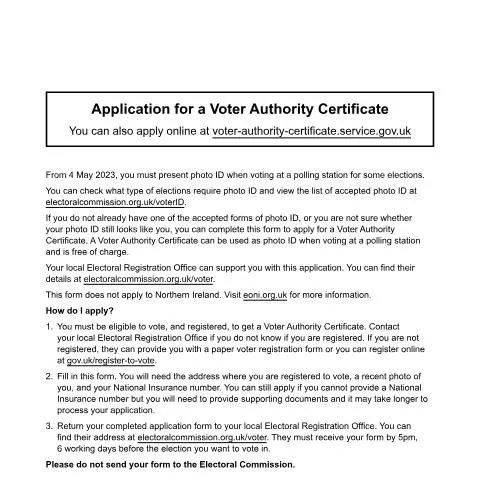
Understanding the Electoral ID Revolution: Navigating Voter Authority Certificates in Modern Britain
The electoral landscape in the United Kingdom underwent a significant transformation on 4 May 2023, when photo identification became a mandatory requirement for voting at polling stations across England, Scotland, and Wales. This legislative shift, implemented by the Department for Levelling Up, Housing and Communities, represents one of the most substantial changes to British voting procedures in recent decades. For millions of citizens who lack accepted forms of photo ID, the Voter Authority Certificate (VAC) has emerged as a crucial lifeline, ensuring that the fundamental right to vote remains accessible to all eligible citizens regardless of their circumstances.
The introduction of this requirement has created both challenges and opportunities within the democratic process. While some citizens possess valid passports or photocard driving licences, a significant portion of the electorate—particularly older voters, those from lower socio-economic backgrounds, and individuals who rarely travel—found themselves suddenly facing potential disenfranchisement. The VAC system was specifically designed to address this democratic gap, providing a free, purpose-built identification solution that maintains electoral integrity whilst preserving universal access to the ballot box.
Decoding Eligibility: Who Qualifies for a Voter Authority Certificate
The eligibility framework for obtaining a VAC operates on a straightforward principle: if you're registered to vote, you can apply for a certificate. However, this seemingly simple requirement encompasses several nuanced scenarios that applicants must navigate carefully.
The primary prerequisite involves active voter registration with your local Electoral Registration Office. This registration must be current and accurate, reflecting your present residential circumstances. Citizens who have recently moved, changed their names through marriage or deed poll, or who are uncertain about their registration status should verify their details before initiating a VAC application. The Electoral Registration Office maintains comprehensive records that can be consulted to confirm registration status, and they possess the authority to provide paper registration forms for those requiring immediate updates.
Age-Related Considerations and Special Circumstances
The VAC system accommodates voters across all eligible age groups, with particular attention paid to younger citizens approaching voting age. Individuals aged 16-17 can apply for certificates in preparation for their eligibility at 18, ensuring seamless transition into active electoral participation. This forward-planning approach proves especially valuable for first-time voters who may lack traditional forms of photo identification.
For applicants unable to provide standard documentation such as National Insurance numbers or precise birth dates, the system incorporates alternative verification pathways. These accommodations recognise that certain vulnerable populations—including some elderly citizens, recent immigrants with settled status, or individuals who have experienced homelessness—may face documentary challenges whilst remaining fully entitled to electoral participation.
The Application Journey: From Submission to Certificate Receipt
The VAC application process operates through two distinct channels: online submission via the dedicated government portal and traditional postal application using the official form. Each pathway offers specific advantages depending on individual circumstances and technological comfort levels.
Digital vs Postal Applications: Choosing Your Route
The online system at voter-authority-certificate.service.gov.uk provides streamlined processing for applicants who can supply both their National Insurance number and date of birth. This digital route typically offers faster processing times and immediate confirmation of submission, making it particularly suitable for tech-savvy voters with complete documentation.
Conversely, postal applications accommodate those preferring traditional methods or requiring alternative documentation pathways. The physical form allows for comprehensive supporting document submission and provides tangible proof of application submission through postal tracking systems.
| Application Method | Processing Time | Required Documents | Best Suited For |
|---|---|---|---|
| Online Portal | Standard processing | National Insurance number + Date of birth + Photo | Complete documentation, tech-comfortable applicants |
| Postal Form | Standard or extended | Variable depending on circumstances | Alternative documentation needs, traditional preference |
Critical Timing Requirements and Deadline Management
The electoral calendar imposes strict deadlines that applicants must observe meticulously. Electoral Registration Offices must receive completed VAC applications by 5pm, six working days before any election in which the certificate will be used. This timeline excludes weekends and bank holidays, requiring careful calculation to ensure compliance.
For instance, if a local election is scheduled for Thursday, the absolute deadline for VAC applications would typically fall on the preceding Wednesday of the previous week. This compressed timeframe emphasises the importance of early application submission, particularly during periods of high electoral activity when processing volumes increase substantially.
Documentation Pathways: Navigating Identity Verification Requirements
The VAC verification system employs a tiered documentation approach designed to accommodate diverse citizen circumstances whilst maintaining security standards. Understanding these pathways proves crucial for successful application completion.
Standard Documentation Route
Applicants providing both date of birth and National Insurance number follow the streamlined verification process. The National Insurance number serves as the primary identity anchor, cross-referencing with HMRC records and other government databases to confirm applicant details. This number appears on various documents including P60 certificates, payslips, pension correspondence, and benefits communications.
Alternative Documentation Framework
When standard documentation proves unavailable, the system offers structured alternatives through carefully categorised document lists. List A documents carry higher verification weight, including birth certificates, marriage certificates, firearms licences, and certain driving licences. These documents typically require official issuance within UK jurisdictions or recognised territories.
List B documents encompass routine correspondence and statements that demonstrate ongoing residence and engagement with UK institutions. Bank statements, utility bills, council tax demands, and benefits correspondence fall within this category. The system requires either three documents (minimum one from List A) or four documents exclusively from List B.
- Birth, marriage, or adoption certificates provide foundational identity proof
- Financial statements demonstrate ongoing UK residence and activity
- Government correspondence establishes official recognition
- Utility bills confirm address verification and regular engagement
Photographic Standards and Technical Requirements
The photographic component of VAC applications demands adherence to specific technical and quality standards that mirror those used for official identification documents. These requirements ensure that certificates function effectively at polling stations whilst maintaining security against fraudulent use.
Recent photographs must clearly display the applicant's current appearance, accounting for natural aging, style changes, or medical treatments that might affect recognition. The image should demonstrate good lighting, sharp focus, and neutral facial expression against a plain background. Digital photographs submitted through online applications must meet minimum resolution standards, whilst postal applications require physical prints of professional quality.
Addressing Appearance Changes and Medical Considerations
Citizens who have experienced significant appearance changes due to medical treatments, weight fluctuation, or natural aging should consider applying for updated VACs rather than relying on older identification documents. The certificate's purpose-built nature for electoral use means that polling station staff receive specific training in VAC recognition, potentially offering more accommodating verification than with commercial identification documents.
Certificate Validity, Renewal Cycles, and Long-Term Planning
Voter Authority Certificates operate within defined validity periods that require periodic renewal to maintain current status. Understanding these cycles enables voters to plan effectively and avoid last-minute application pressures during active electoral periods.
The certificate design incorporates security features and expiration dates that align with electoral administration cycles. Renewal applications follow identical procedures to initial applications, requiring updated photographs and confirmation of continued voter registration. Citizens should monitor expiration dates carefully, particularly those who vote regularly in local, national, and European elections.
Managing Multiple Electoral Cycles
Active voters participating in various electoral cycles—including local council elections, parliamentary elections, police and crime commissioner elections, and mayoral contests—benefit from maintaining current VACs throughout extended periods. The certificate's universal acceptance across all photo ID-required elections eliminates the need for cycle-specific applications.
| Election Type | Photo ID Requirement | VAC Accepted | Frequency |
|---|---|---|---|
| Local Council | Yes | Yes | Every 4 years (varies) |
| Parliamentary | Yes | Yes | Maximum 5 years |
| Police & Crime Commissioner | Yes | Yes | Every 4 years |
| Mayoral | Yes | Yes | Every 4 years |
Accessibility Provisions and Inclusive Design Features
The VAC system incorporates comprehensive accessibility provisions recognising that electoral participation must remain genuinely universal. These accommodations extend beyond basic application processes to encompass certificate delivery, usage guidance, and ongoing support throughout the electoral cycle.
Format Accommodations and Communication Preferences
Applicants can request certificate-related information in braille, large print, or easy-read formats featuring simplified language and visual aids. These provisions ensure that citizens with visual impairments, learning difficulties, or literacy challenges receive appropriate support materials alongside their certificates.
The Electoral Registration Office network provides personalised assistance for applicants requiring additional support during the application process. This includes telephone guidance, in-person appointments, and liaison with advocacy organisations supporting disabled citizens or those with complex needs.
Collection and Delivery Alternatives
While standard VAC delivery occurs via postal service to registered addresses, alternative arrangements accommodate citizens facing delivery challenges. Temporary address changes, secure collection from Electoral Registration Offices, or coordination with support workers ensure that all eligible voters receive their certificates regardless of housing circumstances.
Troubleshooting Applications: Resolving Common Complications
VAC applications occasionally encounter complications requiring resolution before certificate issuance. Understanding these potential issues and available remedies enables applicants to respond effectively and maintain their electoral participation timeline.
Documentation Challenges and Alternative Pathways
Applicants unable to provide standard documentation face extended processing times but retain pathways to certificate approval. Electoral Registration Offices possess discretionary authority to accept alternative evidence and conduct additional verification through multiple government databases and local knowledge.
Citizens experiencing homelessness, recent immigrants with complex documentation histories, or individuals affected by domestic violence may qualify for specialised support pathways. These accommodate circumstances where traditional documentation proves unavailable whilst maintaining security standards.
Application Status Monitoring and Communication
Providing telephone numbers or email addresses during application submission enables Electoral Registration Offices to maintain communication throughout processing. This contact proves particularly valuable when applications require clarification, additional documentation, or expedited processing due to approaching electoral deadlines.
Applications submitted without adequate contact information may experience processing delays, particularly if verification questions arise. The postal application form specifically emphasises communication importance, noting that contactability directly impacts processing speed.
Legal Framework and Regulatory Compliance
The VAC system operates within strict legal parameters established by the Elections Act 2022 and associated regulations. These frameworks define not only application procedures but also the certificate's legal status, acceptable usage parameters, and consequences for misuse.
Certificate holders must understand that VACs serve exclusively electoral purposes and cannot substitute for general identification in commercial or administrative contexts. Attempting to use VACs for non-electoral identification may result in rejection and could potentially compromise the certificate's integrity for future electoral use.
Fraud Prevention and Legal Consequences
The application declaration includes explicit warnings regarding false information provision. Deliberate submission of incorrect details constitutes a criminal offence carrying potential fines and imprisonment. This legal framework maintains system integrity whilst protecting legitimate applicants from fraudulent manipulation.
Electoral Registration Offices possess extensive verification capabilities through cross-database checking and local knowledge systems. These safeguards detect inconsistencies whilst processing legitimate applications efficiently for citizens providing accurate information.
The VAC represents more than administrative convenience—it embodies the democratic principle that electoral participation should remain accessible to all eligible citizens regardless of their documentation circumstances. As the system matures and electoral cycles progress, the certificate's role in maintaining inclusive democracy continues evolving, ensuring that the fundamental right to vote remains protected within modern Britain's changing social landscape.
Special Circumstances and Alternative Documentation Routes
While the standard postal application process covers most situations, certain circumstances require additional consideration or alternative approaches. Understanding these scenarios can save significant time and prevent unnecessary delays in your application.
If you're temporarily away from your registered address—perhaps for work, study, or caring responsibilities—you can still apply by post, but you'll need to arrange for someone to receive correspondence on your behalf. The Electoral Registration Officer must be able to contact you at the address provided, so ensure any temporary contact details remain valid throughout the processing period.
For applicants with learning disabilities or mental health conditions, additional support may be available through your local authority's electoral services team. While the standard application form must still be completed, some councils offer telephone support or can arrange for a member of staff to assist with the paperwork. This doesn't replace the postal application requirement but provides valuable guidance through the process.
Service personnel stationed overseas face unique challenges when applying for a Voter Authority Certificate. If you're registered as an overseas voter but temporarily visiting the UK, you can apply using a UK address where you're staying, provided you can receive post there reliably. However, if you're permanently stationed abroad, you may need to use the address of a relative or friend in the UK, with their written consent.
Students living away from home during term time have several options. You can apply using either your home address or your term-time address, depending on where you're registered to vote. If registered at both addresses, you'll need separate applications for each location. Many universities provide guidance on electoral registration, but the Voter Authority Certificate application remains an individual responsibility.
Homeless individuals or those in temporary accommodation can still apply for a Voter Authority Certificate. The application can be made using the address of a shelter, hostel, or day centre where you regularly receive mail. Some local authorities have specific procedures for supporting homeless voters, including accepting alternative contact arrangements through support organisations.
Care home residents should note that while they can apply independently, the care home staff cannot complete the application on their behalf unless they hold formal power of attorney. Family members can assist with posting the application but cannot sign it for the resident. If mobility issues prevent posting the application personally, many care homes will assist with posting completed forms.
For those with severe mobility restrictions or chronic illnesses that prevent leaving home, the postal application route remains the primary option. While emergency proxy voting arrangements exist for sudden illness on polling day, these don't extend to Voter Authority Certificate applications. Planning ahead becomes crucial, particularly if medical appointments might affect your ability to vote.
Managing Application Timelines and Potential Delays
Understanding the realistic timelines for postal applications helps set appropriate expectations and avoid last-minute complications. While the official guidance states applications should be processed within a reasonable timeframe, several factors can influence actual processing times.
Peak periods significantly impact processing speeds. Applications submitted in the weeks immediately before major elections face longer processing times due to increased volume. Local elections in May, general elections, and referendum periods create substantial backlogs. Submitting your application at least six weeks before any planned voting date provides a comfortable buffer against these delays.
The verification process itself varies in complexity depending on your documentation. Passport holders typically experience faster processing, as the verification against HMRC records is more straightforward. Birth certificates require additional cross-referencing, potentially adding several days to the process. Bank statements and utility bills need manual verification of addresses and dates, which can extend processing time further.
Document quality significantly affects processing speed. Poor photocopies, unclear images, or documents where key details are obscured require additional verification steps or may trigger requests for alternative documentation. Ensuring all text is clearly legible and all four corners of documents are visible in copies prevents these delays.
Postal service variations across different regions can impact both submission and response times. Rural areas or locations with limited postal services may experience additional delays in both directions. Royal Mail's standard delivery targets don't guarantee next-day delivery for all locations, particularly for second-class post.
If your application requires additional verification—perhaps due to recent address changes or discrepancies in documentation—the Electoral Registration Officer may need to contact you for clarification. This correspondence adds time to the process, particularly if you're not immediately available to respond. Providing a reliable telephone number and email address can expedite this communication.
Bank holidays and local authority closure periods affect processing times. Applications submitted just before Christmas, Easter, or summer closure periods may not be processed until staff return. Local elections often coincide with bank holiday periods, compounding these delays.
For urgent situations where you need to vote soon after submitting your application, contact your local Electoral Registration Officer directly. While they cannot expedite processing inappropriately, they can advise on realistic timelines and may suggest alternative voting arrangements if your certificate won't arrive in time.
Tracking your application's progress can prove challenging, as not all local authorities provide online tracking systems. However, most will respond to telephone enquiries about application status, particularly if submitted more than two weeks previously. Keep your application reference number if provided, as this facilitates status enquiries.
Integration with Broader Electoral Registration Requirements
The Voter Authority Certificate application process intersects with several other electoral registration requirements, creating both opportunities for efficiency and potential complications that require careful navigation.
Annual canvass forms, typically sent between July and November, provide an opportunity to update your electoral registration details before applying for a Voter Authority Certificate. If you've recently moved or changed name, completing the canvass form first ensures your voter registration details are current, potentially simplifying the certificate application process.
However, timing becomes crucial during canvass periods. If you submit a change of address through the annual canvass while a Voter Authority Certificate application is being processed, this can create confusion in the system. The certificate may be issued to your previous address, or processing may be delayed pending verification of your new details.
Student registration presents particular complications during the transition between term-time and home addresses. If you're registered at both addresses, you'll need separate Voter Authority Certificates for each location. The timing of university term dates affects when you might need each certificate, requiring careful planning around application submissions.
Recent marriage or civil partnership creates documentation challenges that extend beyond simple name changes. While you can apply for a Voter Authority Certificate in your new name, the supporting documentation must reflect this change consistently. If your electoral registration shows your previous name, you may need to update this first, potentially delaying your certificate application.
Proxy and postal vote arrangements interact with Voter Authority Certificate requirements in complex ways. If you have a standing postal vote arrangement, you won't need a Voter Authority Certificate for postal voting. However, if you occasionally vote in person despite having postal vote arrangements, you'll still need the certificate for those occasions.
Emergency proxy applications, typically submitted close to polling day due to sudden illness or work commitments, cannot be combined with Voter Authority Certificate applications. If you don't have a certificate and need to arrange emergency proxy voting, the proxy voter will need their own valid identification to vote on your behalf.
Overseas voter registration adds another layer of complexity. If you're registered as an overseas voter but temporarily in the UK, you can apply for a Voter Authority Certificate using a UK address. However, if your overseas registration expires, you'll need to re-register domestically before the certificate becomes valid for UK elections.
Corporate or institutional address changes affect multiple voters simultaneously. If you live in student accommodation, military housing, or other institutional settings where address changes are managed centrally, coordinate with the institution to ensure electoral registration updates are completed before individual Voter Authority Certificate applications.
The interaction between different types of elections also requires consideration. A Voter Authority Certificate valid for local elections is also valid for parliamentary elections, European Parliament elections (when applicable), and referendums. However, some local referendums or neighbourhood planning referendums may have different voter eligibility criteria, affecting whether your certificate applies.
Data protection considerations extend beyond the application itself to the ongoing use of your certificate. The Electoral Registration Officer retains records of issued certificates, and this information may be shared with polling station staff and other electoral administrators as necessary for election administration purposes.