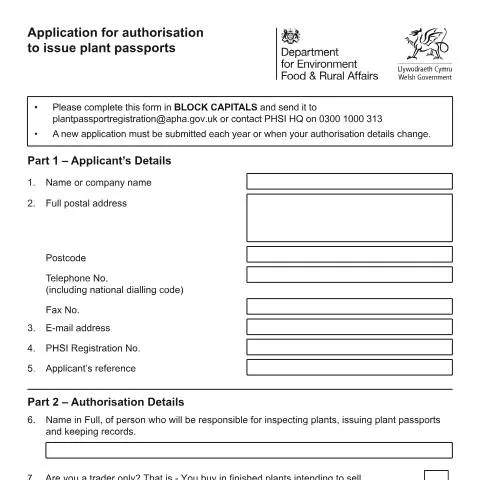
The Plant Passport Authority System: Understanding Britain's Horticultural Licensing Framework
The movement of plants across Britain operates under a stringent regulatory framework designed to prevent the spread of harmful pests and diseases. At the heart of this system lies the plant passport – a certification that allows commercial operators to move regulated plant material throughout the UK and European Union without additional phytosanitary inspections at each transaction point. However, the authority to issue these crucial documents doesn't come automatically; it requires formal authorisation from the Animal and Plant Health Agency through a comprehensive application process.
This authorisation system represents a fundamental shift from traditional inspection-based controls to a self-certification model where approved businesses take responsibility for ensuring their plant material meets regulatory standards. The implications extend far beyond simple paperwork – obtaining plant passport authority can determine whether a horticultural business can operate efficiently in today's interconnected market or faces constant delays and additional costs.
Navigating the Application Categories: From Traders to Growers
The application process immediately distinguishes between different types of commercial operators, each carrying distinct obligations and inspection requirements. Understanding these categories proves crucial for determining both the complexity of your application and the ongoing responsibilities once authorised.
Trader-Only Classification
Trader-only businesses represent the simplest category within the plant passport system. These operators purchase finished plants with existing passports and sell them directly without any growing, repotting, or modification activities. Their primary obligation centres on maintaining accurate records of plant movements and ensuring passport documentation remains intact throughout the supply chain.
For trader-only applicants, the application process streamlines significantly. After confirming this status in Part 2, section 7, they proceed directly to the declaration on page 5, bypassing the complex plant lists and growing condition assessments that occupy the bulk of the form. However, this apparent simplicity shouldn't obscure the ongoing record-keeping obligations and the requirement for annual re-authorisation.
Growing Operations and Regulatory Complexity
Businesses involved in any aspect of plant production face considerably more complex requirements. The form categorises regulated plants into distinct sections, each carrying specific inspection and certification obligations:
| Section | Plant Types | Inspection Requirements | Key Obligations |
|---|---|---|---|
| Section A | High-risk genera (Begonia, Chrysanthemum, Pelargonium, etc.) | Growing season inspection by APHA at all growth stages | Continuous monitoring down to final retailer |
| Section B | Professional production plants (Allium species, Asparagus, ornamental bulbs) | Standard inspection protocols | Sales restricted to professional plant producers |
| Section C | Seeds requiring passport certification | Potential seed testing requirements | Additional seed marketing regulations may apply |
| Section D | Other grown plants not listed above | Audit requirements without growing season inspection | Self-assessment and record maintenance |
Soil-Grown Plants: The Potato Cyst Nematode Challenge
Part 3 of the application addresses one of the most significant phytosanitary challenges facing British horticulture: Potato Cyst Nematode (PCN) prevention. This microscopic pest poses such a serious threat to agricultural production that specific protocols govern any plants grown in soil, regardless of the species involved.
The application presents six critical questions designed to determine PCN risk levels. Answering 'yes' to any single question allows the application to proceed normally, but failing all six triggers mandatory soil sampling by Plant Health and Seeds Inspectorate (PHSI) personnel before authorisation can be granted.
PCN Risk Assessment Criteria
The six assessment criteria reflect different approaches to managing PCN risk:
- Closed-loop production: Plants remaining on the same site where they were raised
- Disinfestation processes: Treatments that eliminate PCN transmission risk
- Soil removal procedures: Washing or brushing that removes soil-borne threats
- Historical PCN freedom: Twelve-year testing records demonstrating absence of the pest
- Crop history documentation: Records showing no solanaceous crops (potatoes, peppers, aubergines, tomatoes) for twelve years
- Non-host crop production: Growing only plants that don't support PCN development
The twelve-year timeframe reflects PCN's remarkable persistence in soil. Cysts can remain viable for over a decade, making historical land use a critical factor in risk assessment. This requirement often proves challenging for businesses operating on rented land or sites with incomplete agricultural records.
Field Plans and Site Documentation Requirements
Beyond the basic application details, businesses growing field crops must provide comprehensive site documentation. These field plans serve multiple regulatory purposes, from enabling targeted inspections to facilitating rapid response during disease outbreaks.
Each growing site requires separate documentation showing the precise layout of different genera and varieties. The plans must include full site addresses and clearly demarcate growing areas for different plant types. This granular mapping enables PHSI inspectors to conduct efficient, targeted inspections and helps businesses maintain the detailed records required for passport issuance.
Multi-Site Operations
Businesses operating across multiple locations face additional complexity. Each site requires separate field plans and individual risk assessments, particularly regarding PCN status. The application doesn't accommodate consolidated submissions, meaning complex operations may need to coordinate multiple parallel applications or consider structural changes to simplify their authorisation requirements.
The Annual Renewal Imperative and Change Notifications
Plant passport authorisation operates on an annual cycle, requiring fresh applications each tax year regardless of how established the business might be. This system ensures that APHA maintains current information about all authorised operators and can adapt to changing business circumstances or regulatory requirements.
The annual renewal requirement extends beyond simple re-submission. Any changes to authorisation details during the year trigger the need for a new application, including:
- Changes in responsible personnel for plant inspection and passport issuance
- Modifications to the range of plants being grown or traded
- Site relocations or additions to growing operations
- Alterations to business structure or ownership
This change notification requirement reflects the regulatory system's emphasis on maintaining accurate, current information about all participants in the plant passport network.
Specialised Plant Categories and Regulatory Nuances
The application reveals the intricate nature of plant health regulation through its detailed species lists and specific exclusions. Understanding these nuances proves essential for businesses dealing with specialised plant material or operating in niche markets.
Fireblight Host Plants
Section A includes a specific category for fireblight host plants – fruit trees and related species susceptible to this devastating bacterial disease. The regulation covers plants intended for planting and pollen for pollination but specifically excludes fruit and seeds. This distinction reflects the different pathways through which fireblight spreads and the varying risk levels associated with different plant parts.
Notable species include traditional orchard trees (Malus, Pyrus, Prunus) alongside ornamental varieties (Cotoneaster, Pyracantha, Photinia). The inclusion of Pyrus species carries additional complexity due to dual regulation for both fireblight and pear decline mycoplasm, requiring enhanced monitoring protocols.
Professional Production Restrictions
Section B plants carry a crucial limitation often overlooked during application: sales restrictions to persons professionally engaged in plant production. This means authorised businesses cannot sell these plants directly to amateur gardeners or non-commercial end users, creating distinct market channels and business model implications.
This restriction applies to common commercial crops including onions, leeks, garlic, and various ornamental species. Businesses must establish clear protocols for verifying customer status and maintaining records demonstrating compliance with these sales restrictions.
Seed Certification and Dual Regulatory Requirements
The seed category in Section C highlights one of the most complex aspects of plant health regulation: the intersection between plant passport requirements and seed marketing regulations. Many species marked with triple asterisks (*) require authorisation under both the plant passport system and separate seed marketing regulations.
This dual requirement creates particular challenges for businesses entering seed production or trading. The application references additional guidance on seed marketing regulations, but applicants must navigate both regulatory frameworks simultaneously. Common affected species include:
- Vegetable seeds: onions, leeks, peppers, tomatoes, beans, peas
- Agricultural seeds: rapeseed, field mustard, soya bean, linseed
- Forage crops: alfalfa, field bean, white mustard
The seed testing requirements mentioned in the application add another layer of complexity, with specific protocols varying by species and intended use.
Digital Submission and Contact Protocols
The application specifies submission via email to [email protected], reflecting APHA's move toward digital processing systems. However, the requirement for block capitals throughout the form suggests ongoing integration challenges between digital submission and legacy processing systems.
For businesses requiring guidance during application completion, PHSI HQ operates a dedicated helpline (0300 1000 313). This contact point proves particularly valuable for complex applications involving multiple sites, unusual plant species, or uncertain regulatory classifications.
The digital submission system enables faster processing compared to postal applications, but businesses must ensure all supporting documentation, particularly field plans, submits clearly and completely. Incomplete digital submissions can face significant delays while additional information is requested and processed.
Understanding the plant passport authorisation system requires recognising its role as both a regulatory gateway and an ongoing business obligation. The application represents just the beginning of a relationship with APHA that continues throughout the business year, involving inspections, record-keeping, and constant vigilance for the plant health threats that make this entire system necessary. For horticultural businesses, successful navigation of this process opens doors to efficient plant movement throughout Britain and beyond, while failure to engage properly with the system can result in costly delays and restricted market access.
Maintaining Your Plant Passport Authority: Ongoing Compliance and Quality Assurance
Once you've secured your plant passport authorisation, maintaining compliance becomes a continuous responsibility that extends far beyond the initial approval. The Animal and Plant Health Agency conducts regular inspections and audits to ensure authorised operators maintain the standards that qualified them for their licence.
Your inspection schedule typically depends on your risk category and compliance history. High-volume nurseries or those dealing with particularly sensitive plant species may face quarterly visits, whilst smaller operations with excellent compliance records might see inspectors annually. The APHA doesn't announce routine inspections in advance, so your systems must be audit-ready at all times.
During inspections, officials examine your plant passport registers in detail, checking that issued passports correspond to actual plant movements and that all mandatory information appears correctly. They'll verify your traceability systems by selecting random batches and following the paper trail from source to destination. Any gaps or inconsistencies can trigger enforcement action ranging from additional training requirements to temporary suspension of your authorisation.
Record-keeping standards remain stringent throughout your authorisation period. You must maintain comprehensive registers showing every plant passport issued, including the unique identifier, plant species, quantity, origin details, and destination information. These records must remain accessible for inspection purposes for at least three years, though many operators retain them longer for their own business continuity.
Quality assurance protocols require regular self-auditing of your procedures. Many successful operators establish monthly internal reviews of their passport issuance processes, checking for common errors such as incorrect botanical names, missing phytosanitary information, or inadequate traceability documentation. This proactive approach helps identify potential compliance issues before they escalate into regulatory problems.
Staff training requires ongoing attention, particularly when regulations change or new plant health threats emerge. The APHA occasionally issues technical updates or revised guidance documents that may affect your passport issuance procedures. Ensuring all relevant staff receive timely updates about these changes forms part of your compliance obligations.
Technology systems supporting your plant passport operations need regular maintenance and backup procedures. Many operators have discovered that system failures during critical shipping periods can cause significant business disruption, especially when paper-based backup systems haven't been properly maintained. Cloud-based solutions offer improved reliability, though data protection requirements under UK GDPR still apply to any personal information processed through your systems.
Cross-Border Trade Implications and International Recognition
Plant passport authorisation significantly impacts your ability to engage in international plant trade, though the relationships between domestic plant passports and export documentation can prove complex. Understanding these interactions becomes crucial for businesses planning to expand beyond UK borders or those already engaged in international commerce.
European Union recognition of UK plant passports ended following Brexit, creating new requirements for businesses trading with EU member states. Plants previously moving freely under plant passport arrangements now require phytosanitary certificates for EU export, issued by the APHA after appropriate inspection and certification procedures. This represents a fundamental shift from the mutual recognition system that previously operated.
However, your plant passport authorisation demonstrates to international partners that your business maintains high phytosanitary standards and robust traceability systems. Many overseas buyers view plant passport authority as evidence of professional competence and regulatory compliance, potentially providing competitive advantages in international markets.
Export documentation requirements vary significantly between destination countries, with some requiring additional certifications beyond standard phytosanitary certificates. Your plant passport records can support these export applications by providing detailed traceability information about plant origins, treatment histories, and quality assurance procedures. Maintaining comprehensive passport records therefore supports both domestic compliance and international trade opportunities.
Import procedures for plants entering the UK have also evolved, with enhanced border controls and documentation requirements. Understanding these changes helps plant passport holders advise their suppliers about necessary documentation and compliance requirements, potentially reducing delays and rejections at UK ports of entry.
Third-country trade relationships present different challenges and opportunities. Countries outside the EU may have specific bilateral agreements with the UK governing plant trade, or they may apply their own independent recognition criteria to UK plant health certifications. Your plant passport authority may influence how these countries assess your applications for import permits or trading partnerships.
Currency fluctuations and changing trade patterns following Brexit have also affected the economics of international plant trade. Some businesses have found that enhanced domestic market focus, supported by plant passport systems, offers more stable revenue streams than volatile international markets. Others have successfully leveraged their plant passport credentials to access new international opportunities in markets previously dominated by EU suppliers.
Sector-Specific Considerations and Specialised Applications
Different sectors within the plant industry face varying challenges and requirements when operating under plant passport authorisation, with specialised considerations that extend well beyond standard compliance obligations. Understanding these sector-specific nuances helps operators optimise their systems and avoid common pitfalls.
Commercial forestry operations deal with unique challenges related to large-scale plant movements and extended growing cycles. Forest nurseries often manage thousands of trees across multiple sites, requiring sophisticated tracking systems to maintain passport compliance whilst managing practical forestry operations. Seasonal planting programmes create concentrated periods of high passport issuance activity, demanding robust systems capable of handling volume spikes without compromising accuracy.
Retail garden centres face different pressures, particularly around customer education and point-of-sale passport management. Many customers remain unfamiliar with plant passport requirements, necessitating staff training programmes that enable effective customer communication about passport obligations. Garden centres also manage diverse plant inventories from multiple suppliers, each potentially requiring different passport handling procedures.
Specialist growers focusing on rare or endangered species encounter additional regulatory layers beyond standard plant passport requirements. CITES regulations may apply to certain protected species, creating complex interactions between plant passport systems and international wildlife trade controls. These operators often require specialised legal advice to navigate overlapping regulatory frameworks effectively.
Research institutions and botanical gardens operate under different parameters, often dealing with plant materials for scientific rather than commercial purposes. Their plant passport requirements may involve unique considerations around research specimen tracking, international scientific exchanges, and conservation programme documentation. Academic institutions particularly benefit from understanding how plant passport systems integrate with research compliance frameworks.
Landscaping contractors represent another distinct sector, often receiving plants from multiple suppliers before installing them at client sites. Their plant passport obligations focus heavily on traceability maintenance through the supply chain, ensuring passport information remains accessible throughout project lifecycles. Large landscaping projects may involve plants from dozens of different suppliers, creating complex documentation management requirements.
Online plant retailers face specific challenges around remote customer interaction and digital passport management. These businesses must ensure customers receive appropriate passport documentation alongside their plant purchases, often requiring integration between e-commerce systems and plant passport databases. Customer service teams need training to handle passport-related enquiries and resolve documentation issues remotely.
Agricultural suppliers dealing with crop plants encounter seasonal demand patterns that can strain passport issuance systems. Spring planting seasons create intense activity periods where passport processing efficiency directly impacts customer satisfaction and business success. These operators often benefit from automated systems capable of handling high-volume passport generation during peak periods.
Export-focused businesses require particularly sophisticated understanding of how plant passport systems interact with international trade documentation. These operators must maintain passport compliance whilst simultaneously managing export certification requirements, often dealing with multiple regulatory frameworks across different destination countries. Success in export markets frequently depends on seamless integration between domestic plant passport systems and international trade compliance procedures.