Navigating the Waters of Exporting Live Aquatic Animals with Form AUTEXP
Exporting live aquatic animals is a complex process that requires careful planning, adherence to regulations, and thorough documentation. For businesses involved in this field, the Form AUTEXP serves as a pivotal tool for securing the necessary authorisation. This article delves deeply into the nuances of the AUTEXP form, addressing the various aspects that potential applicants must consider before submission.
The Landscape of Aquatic Animal Exportation
In the UK, the export of live fish and shellfish is governed by the Aquatic Animal Health (England and Wales) Regulations 2009. This framework is crucial not only for the health and welfare of the animals but also for the protection of biodiversity and the environment. Certain businesses, such as aquaculture farms, scientific research institutions, and ornamental trade suppliers, are typically involved in exporting aquatic life.
- Aquaculture Farms: Engage in breeding and harvesting aquatic animals for export.
- Scientific Institutions: Export specimens for research and conservation purposes.
- Ornamental Traders: Deal with tropical and coldwater species for decorative purposes.
Each of these categories has specific compliance obligations, and understanding your position within this landscape is the first step toward successful exportation.
Dissecting the Form: A Step-by-Step Guide
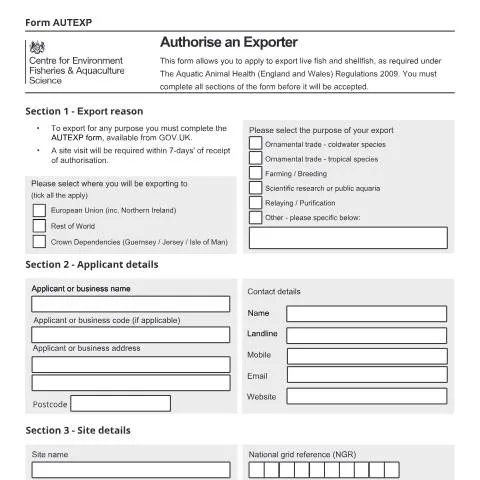
The completion of the AUTEXP form involves methodical attention to detail. It consists of several sections, each requiring specific information. Below, we dissect these sections to illuminate what is required.
Section 1: Export Reason
In this initial section, you are prompted to indicate the purpose of your export. The options include:
- Ornamental trade - coldwater species
- Ornamental trade - tropical species
- Farming / Breeding
- Scientific research or public aquaria
- Relaying / Purification
- Other (please specify)
Ensure that your selection accurately reflects the nature of your business activities. Incorrect information at this stage may lead to complications down the line.
Section 2: Applicant Details
Here, you need to provide your business name, address, and, if applicable, a business code. Accuracy is paramount, as any mismatches with existing records may delay the approval process. Be sure to double-check:
- Your business's registered address
- The correct postcode
Section 3: Site Details
This section requires you to furnish details about the location from which the aquatic animals will be exported. Information required includes:
- Site name
- Site code (if applicable)
- Contact details (landline, mobile, email)
- National grid reference (NGR)
Be prepared for a site visit within seven days of your application. This will be conducted by a Fish Health Inspectorate to ensure your facilities comply with the required standards.
Section 4: Species for Export
In this part, you are required to list the species you intend to export. The details to provide include:
- Scientific name
- Common name
- Commodity Code
For multiple species, it's advisable to use an additional sheet. Providing correct species identification is critical, as it influences the health assessment undertaken by regulatory bodies.
Section 5: Additional Information
This optional section allows you to include any pertinent information that might aid your application. While not mandatory, this is an opportunity to clarify special circumstances or additional details that could support your case.
Section 6: Signature
Finally, the form concludes with a declaration. Here, you must confirm that all provided information is accurate to the best of your knowledge and belief. Remember to include:
- Your full name
- Your position within the company
- Date signed
A missing signature or date can result in rejection of the application, so ensure that this section is complete before submission.
From Submission to Approval: The Timeline Explained
Once the AUTEXP form is completed, the next step is submission. You can send it to the Fish Health Inspectorate via post or email. The details are as follows:
Address: Fish Health Inspectorate, Cefas, Barrack Road, Weymouth, Dorset, DT4 8UB
Email: [email protected]
After submission, various steps unfold:
- Immediate Review: The Fish Health Inspectorate will conduct an initial review of your application.
- Site Visit: A visit will be arranged within seven days to assess your facilities.
- Final Decision: You will receive notification regarding the status of your application.
The timelines can fluctuate based on the volume of applications, so it is prudent to apply well in advance of your intended export dates.
What Happens in Case of Refusal?
Receiving a refusal can be disappointing, but it's essential to understand your options moving forward. If your application is declined, the Fish Health Inspectorate will typically provide reasons for the refusal. Common issues could include:
- Insufficient details or inaccurate information
- Non-compliance with animal health standards
- Failure to meet facility requirements during the site visit
In such cases, you can:
- Address the highlighted issues and reapply.
- Request a re-evaluation by contacting the Fish Health Inspectorate directly.
Documenting all communications and keeping comprehensive records will be beneficial if you choose to appeal or seek clarification on the decision.
Understanding the Regulatory Framework
Form AUTEXP is not an isolated document; rather, it fits into a broader regulatory framework designed to safeguard aquatic animal health and ensure environmental protection. All exporters must navigate the complexities of:
- Animal health regulations
- Biodiversity conservation laws
- Trade agreements, including protocols for exporting to the EU and other regions
It's crucial for businesses to stay informed about any changes in these regulations, as they can directly impact your eligibility to export.
The Importance of Compliance in Exporting
Non-compliance with the regulations associated with exporting live aquatic animals can lead to severe consequences, including:
- Fines and penalties from regulatory bodies
- Legal action stemming from breaches of animal welfare laws
- Reputation damage within the industry
Establishing a compliance culture within your organisation by training personnel and regularly reviewing practices can mitigate risks associated with exportation.
Final Thoughts: Preparing for Export Success
Successfully navigating the complexities of exporting live aquatic animals requires meticulous preparation and a detailed understanding of the relevant regulations. Completing the Form AUTEXP correctly is just the beginning. Ensure that your business is positioned well to meet compliance obligations and that you have a contingency plan in the event of complications.
As you embark on your export journey, treat every step with diligence, and maintain open lines of communication with regulatory bodies. This proactive approach not only enhances your chances of success but also contributes positively to the health of aquatic ecosystems.
Understanding Export Controls for Live Aquatic Animals
When considering the application to export live aquatic animals under the AUTEXP form, it's essential to understand the various controls and regulations in place within the UK. The export of live aquatic animals is regulated to protect animal welfare, ensure the health of aquatic species, and comply with international agreements. This section delves into the specific requirements and conditions that must be met before you can successfully apply for authorisation.
The primary legislation governing the export of live aquatic animals includes the Animal Health Act 1981 and the EU Council Regulation 338/97 on the protection of species of wild fauna and flora by regulating trade. Additionally, the Animal Welfare Act 2006 applies to ensure that animals are transported humanely. It is crucial to ensure compliance with both UK and international regulations to avoid penalties and ensure a smooth export process.
To begin with, all exports must be pre-approved, and exporters must obtain a Health Certificate (HC) from the relevant authorities, such as the Animal and Plant Health Agency (APHA), certifying that the animals are free from disease and fit for transport. You will need to demonstrate that you can meet standards related to the handling, transport, and care of live aquatic animals, which may involve providing evidence of proper facilities and equipment.
Furthermore, the species being exported may have specific requirements under CITES (the Convention on International Trade in Endangered Species of Wild Fauna and Flora), especially if they are listed in Annex A. Failure to comply with these restrictions could result in confiscation of the animals and legal action against the exporter.
Steps to Complete the AUTEXP Application
Completing the AUTEXP application form can be a complex task, requiring careful attention to detail to ensure all necessary information is provided accurately. Below, you will find a detailed step-by-step guide on how to prepare for and fill out the AUTEXP form effectively.
1. Gather Necessary Documentation
Before you start the application process, make sure you have all the required documentation. This includes:
- Your National Insurance number, which acts as a unique identifier.
- Proof of your business address and legal entity status, such as a registration number.
- Details of the species you intend to export, including scientific names and quantities.
- Health certificates obtained from APHA for the specific aquatic animals.
2. Fill in the Application Form
The AUTEXP form itself requires precise information. Pay attention to the sections that ask for:
- Your contact details, including your business address and phone number.
- The purpose of the export—whether for commercial sale, research, or conservation.
- Details about your handling and transport methods to ensure compliance with welfare standards.
3. Review and Submit
Once the form has been completed, review all sections thoroughly to ensure accuracy. An incomplete or inaccurate application can lead to delays or rejection. After confirming that everything is in order, submit your application through the appropriate online portal, or follow the guidelines provided for postal submissions.
It’s advisable to keep a copy of your application for your records. This is particularly useful for tracking the status of your application or addressing any follow-up queries from the authorities.
Post-Application Procedures and Compliance Monitoring
After you have submitted your AUTEXP application, there are several important considerations regarding compliance and monitoring that you must be aware of as an exporter of live aquatic animals.
First, it is vital to maintain communication with the relevant authorities during the processing of your application. You might receive requests for additional information or documentation; responding promptly can expedite the approval process.
Once granted approval, you must adhere to all the conditions specified in your export licence. This may include routine reporting or inspections conducted by APHA or other designated authorities to ensure compliance with animal welfare standards and health regulations.
Moreover, it is important to be aware that your export activities may be subject to regular audits. Keep detailed records of all transactions, including sales, transport arrangements, and health checks for the animals being exported. In the case of any health issues or incidents, immediately notify the authorities as required by law.
Finally, be prepared for the possibility of changes in regulations or export requirements, especially in light of evolving international treaties or domestic legislation. Regularly check updates from the UK Government's official websites and consider joining industry associations for the latest information and support.