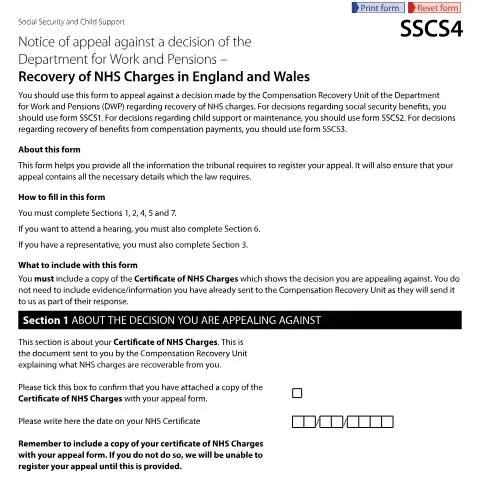
Understanding the Notice of Appeal for NHS Charges Recovery: An Overview
The Notice of Appeal against a decision of the Department for Work and Pensions (DWP) regarding the recovery of NHS charges is a formal process managed by the HM Courts & Tribunals Service in England and Wales. This guide provides essential information about the purpose of the form, who should use it, and how to properly submit an appeal related to NHS charge recovery decisions.
Purpose and Scope of the Notice of Appeal
The primary aim of this notice is to enable individuals or organisations to challenge a decision made by the Compensation Recovery Unit (CRU) of the DWP concerning the recovery of NHS charges. When the CRU determines that a person must repay NHS costs, the affected party has the right to contest this decision through a formal appeal process.
This process is specifically designed for appeals against NHS charges in England and Wales. It is important to distinguish this from other types of social security or child support decisions, which require different forms. For example, appeals related to social security benefits should be made using the SSCS1 form, while those concerning child support or maintenance use the SSCS2 form.
Who Should Use This Form?
This form is intended for individuals or entities who have received a Certificate of NHS Charges from the CRU, which details the charges they are required to pay. If you believe that the charges are incorrect or that the decision to recover these charges is unjustified, you should consider submitting this appeal.
It is essential to include a copy of the Certificate of NHS Charges when submitting your appeal, as this document is the basis of the tribunal’s review. Failure to include this document may delay or prevent the registration of your appeal.
Key Components of the Appeal Process
Filling Out the Form
- Sections to Complete: You must fill out Sections 1, 2, 4, 5, and 7 of the form.
- Attendance at Hearing: If you wish to attend a hearing, you should also complete Section 6.
- Representation: If you have a legal representative, such as a solicitor, Section 3 must be completed to provide their details.
Providing Grounds for Appeal
In Section 4, you must clearly state the reasons why you believe the Certificate of NHS Charges is incorrect. Common grounds include:
- The amount specified is incorrect.
- The charges include treatments that are not NHS-related.
- The charges account for non-NHS ambulance services.
- The basis of the payment does not qualify as a compensation payment.
Timing of the Appeal
According to legal requirements, the appeal must be received within three calendar months from the latest of the following dates:
- The date on the Certificate of NHS Charges.
- The date the associated compensation payment was made.
- The date the certificate was reviewed or a new certificate was issued.
If your appeal is late, you must provide reasons for the delay. The tribunal will consider whether to extend the deadline based on these reasons.
Deciding How Your Appeal Will Be Heard
Individuals can choose how their appeal is processed:
- Hearing in Person: You can request an oral hearing where you or your representative attend and present your case.
- Decided on the Papers: Alternatively, you may opt for a paper-based review, where the tribunal makes a decision based solely on the submitted documents.
It is important to communicate your preference clearly, as changing the method after arrangements are made may not be possible.
Conclusion
The Notice of Appeal (Form SSCS4) is a vital step for those contesting NHS charges recovery decisions. Proper completion and timely submission of the form, along with supporting documents, are crucial for a fair review of your case. Understanding the process ensures your rights are protected and that your appeal is considered thoroughly by the HM Courts & Tribunals Service.