Understanding the Appeal Process for Child Maintenance Decisions in the UK
The Department for Work and Pensions (DWP) Child Maintenance Group (CMG) makes decisions regarding child support and maintenance, which can significantly impact families. If you disagree with a decision made by the CMG, you have the right to challenge it through an official appeal process. This guide provides a comprehensive overview of how to appeal a decision using the official form SSCS2, managed by HM Courts & Tribunals Service (HMCTS).
The Purpose of Form SSCS2
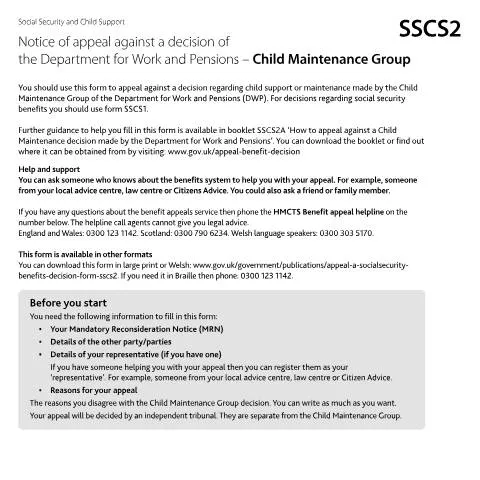
Form SSCS2 is the official document used to submit an appeal against a decision made by the Child Maintenance Group. Whether you are the parent required to make payments or the recipient of child maintenance, this form allows you to formally challenge the CMG's ruling. It is essential to understand that this process is separate from social security benefit appeals, which are handled via a different form (SSCS1).
When to Use Form SSCS2
This form should be used specifically for appeals related to child support or maintenance decisions made by the CMG. If your concern pertains to social security benefits, you should instead file a different appeal using form SSCS1. The SSCS2 process is designed to ensure that your case is reviewed independently by a tribunal, separate from the CMG.
Key Elements to Prepare Before Starting Your Appeal
- Mandatory Reconsideration Notice (MRN): You must have received this notice before appealing. It indicates that the CMG has reviewed its decision.
- Details of the Parties: Information about yourself, the other parent, and any representatives involved in the case.
- Reasons for Disagreement: A clear explanation of why you believe the decision was incorrect or unfair.
Having these details ready will facilitate the accurate and efficient completion of the form and ensure your appeal is properly lodged.
How to Complete the Appeal Form
Section 1: Your Details
In this section, you need to provide your personal information, including your full name, address, date of birth, and National Insurance number. If you wish to receive updates about your appeal via text message or email, you can opt in by ticking the relevant boxes. It is also important to specify your role in the case:
- Paying parent: The person responsible for making child maintenance payments.
- Receiving parent: The individual receiving the child maintenance payments.
- Other: Any other relevant party involved in the case.
Section 2: Details of Your MRN and Appeal Timing
Here, you should state the date of your Mandatory Reconsideration Notice. If your appeal is late (more than one month after this date), you will need to explain the reasons for the delay. The tribunal will consider any objections from the CMG or other involved parties regarding the lateness of your appeal.
Section 3: Information About the Other Party
This section requires details about the other parent involved in the child maintenance case, including their name and address. If you do not know their address, HMCTS can request it from the CMG. Providing accurate contact details ensures that all parties receive relevant documents and updates during the appeal process.
Role of Representatives and Support
If you have someone assisting you, such as a solicitor, advisor from a local advice centre, or a trusted friend or family member, you can appoint them as your representative. This allows them to help prepare your case, submit evidence, and communicate with HMCTS on your behalf. You must provide their details and authorize HMCTS to deal with them regarding your appeal.
Next Steps After Filing the Appeal
Once your form SSCS2 is submitted, HMCTS will acknowledge receipt and proceed with scheduling a tribunal hearing if necessary. The other parties involved will be notified and kept informed throughout the process. It is advisable to gather any supporting evidence or documentation that can substantiate your reasons for appeal, as this will strengthen your case during the tribunal review.
Support and Additional Resources
If you require assistance with the appeal process, you can seek help from organisations such as Citizens Advice, law centres, or local advice agencies. HMCTS also provides a dedicated helpline for benefit appeals, although the agents cannot offer legal advice. Support is available in various formats, including large print, Welsh, and Braille, to ensure accessibility for all appellants.
Conclusion
Appealing a child maintenance decision in the UK involves a clear process that ensures your case is reviewed impartially by an independent tribunal. By understanding the purpose of form SSCS2, preparing your information correctly, and seeking appropriate support, you can effectively challenge decisions that you believe are unjust or incorrect. Remember, timely submission and comprehensive evidence are key to a successful appeal.