Understanding the Appeal Process for Mental Health Decisions in the UK
The Appeal a First-tier Tribunal (Mental Health) decision is a crucial step for individuals who wish to challenge decisions made by the First-tier Tribunal regarding mental health matters. Managed by the HM Courts & Tribunals Service, this process allows appellants to seek a review of decisions they believe involve legal errors, ensuring that justice and proper legal procedures are upheld.
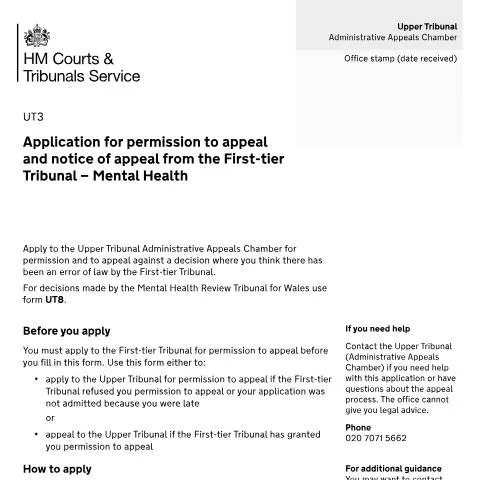
Scope and Purpose of Form UT3
The form UT3 serves as the official application for permission to appeal and as a notice of appeal against decisions made by the First-tier Tribunal (Mental Health). Its primary purpose is to enable individuals, or their representatives, to formally request the Upper Tribunal to review a decision they consider to be legally flawed, particularly where an error of law is suspected.
This process is essential for safeguarding the rights of patients and other stakeholders involved in mental health tribunals, providing an avenue for legal oversight beyond the initial decision-making body. It is designed for those who either did not receive permission to appeal from the First-tier Tribunal or who have been granted permission and now wish to proceed with their appeal.
Who Can Use Form UT3?
- Patients: Individuals detained or subject to mental health proceedings, wishing to challenge the tribunal’s decision.
- Nearest relatives: Family members or close relations acting on behalf of the patient.
- Responsible authorities: Organisations or officials responsible for managing mental health services or detention.
- Legal or formal representatives: Solicitors, advocacy groups, or other authorized persons acting on behalf of the appellant.
Key Stages in the Appeal Process
1. Applying for Permission to Appeal
Before submitting the UT3 form, applicants must first seek permission from the First-tier Tribunal. If permission is refused or the application is late, the individual can then apply to the Upper Tribunal using this form to request permission for an appeal.
2. Filing the Appeal
Once permission is granted, the appellant can proceed to submit the UT3 form as a notice of appeal. The appeal must be received by the Upper Tribunal within one calendar month of the decision date from the First-tier Tribunal, unless an extension is specifically requested and granted in Section 9 of the form.
Information Required on the UT3 Form
The form is structured to gather comprehensive details, including:
- Appeal specifics: Tribunal reference number and date of the decision.
- Appellant’s details: Personal information, contact details, and the capacity in which they are applying.
- Patient’s details: Name, date of birth, address, and detention status.
- Nearest relative’s information: If applicable, their relationship to the patient and contact details.
- Representation details: Information about legal or advocacy representatives involved in the case.
- Responsible authority’s information: Details of the hospital, official, and their contact details.
Important Considerations for Applicants
Applicants should ensure that the form is completed accurately and submitted within the specified timeframe. The Upper Tribunal cannot provide legal advice, so individuals may consider seeking guidance from Citizens Advice or legal professionals, especially if they wish to explore eligibility for legal aid.
It is also advisable to attach any relevant supporting documents, such as the decision letter from the First-tier Tribunal, to facilitate the review process.
Contact and Assistance
For help with the application process or questions about the appeal, the Upper Tribunal’s Administrative Appeals Chamber can be contacted by phone. While they cannot offer legal advice, they can provide information on procedural requirements and next steps.
In summary, the UT3 form is a vital procedural document for individuals seeking to challenge mental health tribunal decisions on legal grounds. Proper completion and timely submission are essential to ensure that appeals are considered fairly and efficiently within the UK legal framework.