Navigating the Waters of Admiralty Claims: The Role of Form ADM15
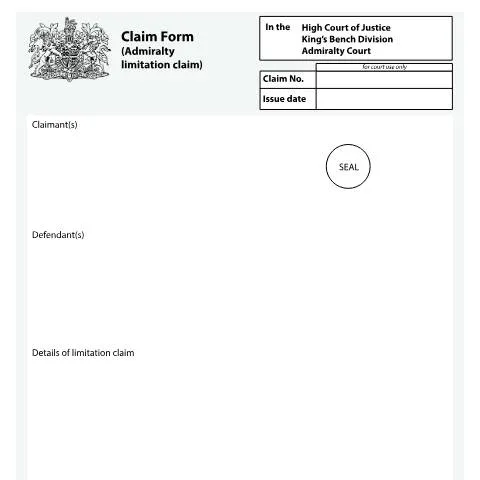
In the realm of maritime law, the introduction of a claim can be a daunting process. The Claim Form (Admiralty limitation claim): Form ADM15 serves as a critical tool for individuals and businesses seeking to limit their liability in admiralty matters under the jurisdiction of the High Court of Justice. Whether you are a ship owner, charterer, or other party involved in a maritime incident, understanding this form is essential to navigating the complex waters of admiralty law.
Understanding the Claim Process: A Step-by-Step Journey
The process of filing a limitation claim begins before the form is even completed. It is crucial to gather all relevant documentation that supports your claim. This includes any contracts, incident reports, correspondence, and witness statements that relate to the incident in question. The following steps outline the chronological journey from decision to file a claim to the ultimate resolution:
- Initial Consultation: Engage with a legal professional who specializes in admiralty law to assess the viability of your claim.
- Gathering Documentation: Compile all necessary papers that substantiate your claim, ensuring accuracy and completeness.
- Filling Out Form ADM15: Complete the form with precise details of the limitation claim and the parties involved.
- Submitting the Form: File the completed form with the Admiralty Registry, ensuring all parties involved are notified.
- Awaiting Court Proceedings: Depending on the specifics of your claim, the court may schedule a hearing.
- Resolution: Following hearings, the court will issue a judgment that resolves the limitation claim.
The Crucial Components of Form ADM15
Form ADM15 comprises several sections that require meticulous attention to detail. Here’s a breakdown of key components within the form and potential pitfalls to avoid:
- Claim Number: Leave this blank when submitting for the first time; it will be assigned by the court.
- Claimant Information: Ensure accurate spelling of names and addresses, as any errors could lead to delays or complications.
- Defendant Details: Clearly state the full name and address of the defendant. Incomplete or inaccurate information here may jeopardise your claim.
- Details of Limitation Claim: Provide a detailed account of the incident, including dates, locations, and nature of the claim. The clarity here is paramount.
- Statement of Truth: This section confirms the veracity of your claim. Fabricating or misrepresenting information can result in severe legal repercussions.
Who Should Be Concerned? Identifying Stakeholders
The ADM15 form is not only relevant to primary claimants but also to a range of stakeholders. Below is a detailed profile of those who might engage with this form:
| Profile | Description |
|---|---|
| Ship Owners | Individuals or companies owning vessels that may face liability claims. |
| Charterers | Entities renting vessels for transport who may be implicated in maritime disputes. |
| Cargo Owners | Individuals or businesses whose goods are transported by sea and may be subject to loss or damage claims. |
| Legal Representatives | Solicitors or legal counsel assisting claimants in the preparation and submission of the ADM15 form. |
Special Considerations: Unique Circumstances for Claimants
Different situations may necessitate unique considerations when completing and submitting Form ADM15:
- Minors: Claims involving minors should include a litigation friend to represent their interests, as stipulated by the court.
- Protected Parties: If a claimant is incapacitated or deemed incapable of managing their affairs, a court-appointed representative must be involved in the process.
- International Claims: For parties located outside the UK, extra steps may be required for serving documents to defendants, including compliance with international law and conventions.
- Urgent Matters: If a claim is time-sensitive, it is imperative to communicate this urgency to the court during submission.
What Happens After Submission? Anticipating the Court's Response
Once Form ADM15 is submitted, claimants might wonder what to expect next. The court follows specific procedures to handle limitation claims:
- Initial Review: The court will conduct a preliminary assessment of the claim to determine its validity.
- Notification to Parties: All parties listed in the claim must be formally notified, which is typically done through service of the claim form.
- Response Period: Defendants are given a specified timeframe to respond to the claim. Failure to respond could lead to a default judgment in favour of the claimant.
- Hearing Arrangements: If the case proceeds to court, a hearing date will be set. Both parties should prepare adequately by gathering supporting evidence and witnesses.
- Judgment: Following the hearing, the court will render a decision, outlining any limitations on liability and detailing the implications for all involved.
Addressing Challenges: What to Do If Things Go Awry
Despite careful preparation, challenges can arise during the limitation claim process. Here are some common issues and strategies for resolution:
- Missing Documents: If you discover that key documents are missing, promptly gather them and submit as supplementary evidence, noting the delay in your communication with the court.
- Wrong Information Submitted: In instances where incorrect information was provided, promptly submit a corrected application along with an explanation to the court.
- Claims Rejected: If your claim is dismissed, seek legal advice immediately. You may have grounds for appeal or may need to revise your claim based on feedback from the judge.
Understanding Time Limits: The Importance of Timely Action
Admiralty limitation claims are governed by strict time limits. The Limitation Act 1980 outlines specific periods within which claims must be filed, depending on the nature of the claim. Failure to adhere to these timelines can result in the loss of the right to claim. Here’s a quick overview of standard limitation periods:
| Type of Claim | Limitation Period |
|---|---|
| Personal Injury Claims | 3 years from the date of the accident or discovery of condition |
| Property Damage Claims | 6 years from the date of the damage |
| Contractual Claims | 6 years from the date of the breach |
Claimants are strongly advised to consult with legal professionals to ascertain the precise limitations that apply to their specific circumstances, as exceptions and extensions may apply in certain situations.
Final Thoughts on Form ADM15: Preparing for Success
The journey through the legal waters of admiralty claims can be fraught with complexities, yet the importance of Form ADM15 cannot be overstated. By understanding its nuances and preparing meticulously, claimants can effectively navigate their limitation claims, ensuring that their rights and interests are robustly defended. Engage with legal experts, adhere to timelines, and maintain transparency throughout the process to enhance your chances of a successful outcome.
Understanding the ADM15 Form: Key Components and Requirements
The ADM15 form is specifically designed for individuals or entities wishing to file an Admiralty limitation claim in the UK. This claims process falls under the jurisdiction of the Admiralty Court, part of the HM Courts & Tribunals Service, which handles maritime legal disputes. Understanding the form's components is crucial to ensure that your submission is complete and accurate.
The ADM15 form requires detailed information about the incident that led to the claim, including:
- Vessel Information: Details about the vessel involved, including its name, registration number, and the owner's details.
- Incident Description: A clear and concise account of the incident, including dates, locations, and the nature of the loss or damage.
- Circumstances Surrounding the Incident: Any relevant circumstances that may impact liability, such as weather conditions, navigational errors, or equipment failures.
- Claimant's Background: Information about the claimant, including their name, address, and any legal representation.
Aside from these essential components, it’s important to attach supporting documentation, such as photographs of damages, witness statements, and any police or Coastguard reports. This documentation not only strengthens the claim but also aids the court in understanding the context surrounding the incident. Failure to include comprehensive details can result in delays or even rejections of the claim.
Navigating the Legal Framework: Admiralty Law in the UK
The Admiralty limitation procedures in the UK are rooted in international conventions and domestic maritime law. The Limitation of Liability for Maritime Claims Act 1989 plays a critical role in determining the liabilities of shipowners and the extent to which they can limit their financial exposure in the event of a maritime claim.
The legal framework serves to balance interests between maritime commerce and justice for claimants. It allows shipowners to limit their liability to the value of the ship and its cargo, provided they can demonstrate that the losses arose without their fault or neglect. Therefore, understanding this aspect is fundamental when filling out the ADM15 form.
Claimants should be aware that the limitation periods prescribed under this law can impact their cases significantly. For example, any claim must be filed within two years from the date of the incident, making prompt submission of the ADM15 vital. Additionally, the court's processes often involve preliminary hearings, where both parties may present their arguments regarding the validity of the claim and the appropriateness of limitation.
It's also essential to be cognizant of the role of the UK Flag State and the applicable maritime laws, especially if the vessel operates under different jurisdictions or is registered abroad. This adds layers of complexity that necessitate seasoned legal advice to navigate effectively.
Potential Challenges and Best Practices When Filing ADM15
Filing a claim using the ADM15 form can present various challenges that necessitate careful preparation and consideration. Understanding these potential hurdles can significantly enhance the likelihood of a successful claim. Here are some common issues encountered and best practices to mitigate them:
- Complexity of Maritime Incidents: Maritime incidents can sometimes result in multifaceted legal scenarios involving multiple parties. It is advisable to consult with maritime legal experts who can help clarify liability and provide guidance on evidence gathering.
- Adherence to Deadlines: As previously mentioned, the two-year limitation period is critical. Keeping a strict timeline and setting reminders can help ensure that all necessary documentation and filings are completed promptly.
- Accuracy in Documentation: Misstatements or incomplete information can lead to complications. It is crucial to double-check all entries on the ADM15 form against supporting documents to ensure consistency and accuracy.
- Responding to Counterclaims: In cases where the vessel owner or other parties dispute the claim, it is essential to be prepared for counterclaims. Understanding the implications of such disputes and having a legal strategy in place can make a significant difference in the outcome.
Moreover, consider maintaining open lines of communication with all parties involved throughout the process. This approach can facilitate the resolution of disputes and help clarify misunderstandings early on, potentially saving time and resources.
Finally, keeping abreast of changes in maritime law or relevant legal precedents can provide valuable insights that may affect your claim. Regularly consulting reputable legal sources and maritime law updates can empower claimants to make informed decisions as they navigate the complexities of the ADM15 process.