Understanding PSC Statement Requirements and Compliance Obligations
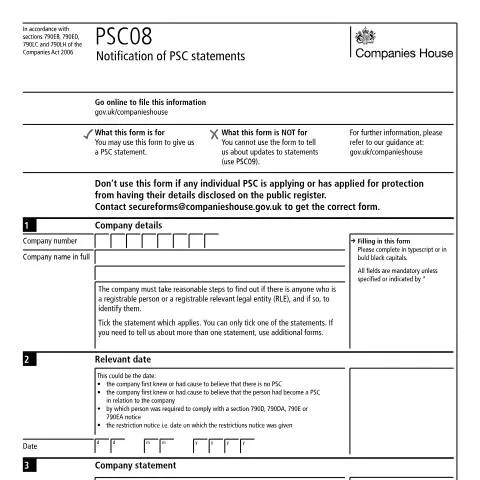
Companies across England, Wales, Scotland and Northern Ireland face ongoing obligations to maintain accurate records of their persons with significant control (PSCs). When circumstances arise where a company cannot identify any registrable PSC, or when specific compliance issues emerge, the PSC08 notification becomes a critical tool for maintaining legal standing with Companies House.
This notification mechanism addresses situations that many company directors find themselves facing: the absence of clear PSC identification, non-compliance with statutory notices, or the need to implement restrictions when information requests go unanswered. Unlike routine PSC updates handled through other forms, the PSC08 specifically deals with statements about the company's PSC position rather than detailed individual records.
The form operates within the framework established by sections 790EB, 790ED, 790LC and 790LH of the Companies Act 2006, creating a structured approach to documenting compliance efforts and declaring specific circumstances that affect PSC transparency requirements.
Core Statement Categories and Their Practical Applications
The PSC08 notification system revolves around four distinct statement types, each addressing specific compliance scenarios that companies encounter in their PSC management responsibilities.
Company Knowledge Statements
The primary statement available through PSC08 declares that "the company knows or has reasonable cause to believe that there is no registrable person or registrable relevant legal entity in relation to the company." This statement becomes relevant when a company has conducted thorough investigations and genuinely cannot identify any individual or entity meeting the PSC criteria.
For this statement to be valid, companies must demonstrate they have taken reasonable steps to identify potential PSCs. This requirement extends beyond casual enquiry—companies should document their investigation efforts, including reviewing shareholding records, examining voting arrangements, and assessing any agreements that might confer significant influence or control.
Person-Related Statements
A second category addresses situations where companies believe someone has become a registrable PSC but lack formal confirmation. This statement acknowledges the company's belief while recognising that complete verification remains pending. Such situations often arise during ownership transitions, complex corporate restructuring, or when dealing with entities that maintain limited transparency about their internal control structures.
Notice Compliance Statements
Two distinct statements address non-compliance scenarios. Section 790D and 790DA notices relate to the company's duty to investigate and obtain information, whilst section 790E and 790EA notices concern the duty to keep information up to date. These statements become necessary when companies have issued statutory notices under the Companies Act 2006 but recipients have failed to provide the required information within specified timeframes.
Companies issuing such notices must allow reasonable time for compliance before filing PSC08 statements. The relevant date recorded should reflect either when the notice was issued or when the compliance deadline expired, depending on the specific circumstances.
Strategic Timing and Relevant Date Considerations
The relevant date field in PSC08 notifications carries significant legal weight, as it establishes the timeline for the company's PSC position and compliance efforts. Companies must carefully determine which date applies to their specific situation.
| Scenario | Relevant Date | Documentation Required |
|---|---|---|
| No PSC identified | Date company first knew or believed no PSC exists | Investigation records, search documentation |
| Person became PSC | Date company first knew or believed person became PSC | Ownership change records, notification timeline |
| Notice non-compliance | Notice compliance deadline date | Copy of issued notice, delivery confirmation |
| Restrictions notice | Date restrictions notice was given | Restrictions notice documentation |
The choice of relevant date affects the company's compliance position and may influence any subsequent regulatory review. Companies should maintain comprehensive records supporting their date selection, particularly when dealing with complex ownership structures or protracted compliance processes.
Restrictions Notices and Enforcement Mechanisms
When companies encounter persistent non-compliance with information requests, the PSC08 form enables notification of restrictions notices issued under paragraph 1 of Schedule 1B to the Companies Act 2006. These notices represent a significant escalation in the company's enforcement efforts and carry substantial legal implications for the affected parties.
Restrictions notices can freeze certain rights associated with shares or voting arrangements, effectively compelling compliance with PSC information requirements. Companies considering this approach should ensure they have:
- Exhausted reasonable attempts to obtain information through standard notices
- Allowed sufficient time for compliance with initial requests
- Maintained detailed records of all communication attempts
- Consulted appropriate legal guidance regarding the proportionality of restrictions
The PSC08 notification of a restrictions notice serves as formal documentation that these enforcement measures have been implemented, creating a public record of the company's compliance efforts and the ongoing information gaps.
Handling Different Types of Registrable Entities
The PSC08 form accommodates various categories of registrable persons and entities, each requiring specific identification approaches and documentation standards.
Individual PSCs
When dealing with individual PSCs, companies may choose to include voluntary information such as full forenames, surname, and month/year of birth. While this information becomes part of the public record, providing it can help distinguish between individuals with similar names and reduce potential confusion in the PSC register.
However, companies must exercise particular caution when individual PSCs have applied for or received protection from public disclosure. In such cases, the standard PSC08 form becomes inappropriate, and companies must contact [email protected] to obtain specialised forms that accommodate protected disclosure arrangements.
Relevant Legal Entities and Other Registrable Persons
Corporate PSCs fall into distinct categories requiring different identification approaches. Relevant legal entities (RLEs) are typically companies or LLPs subject to their own PSC requirements, whilst other registrable persons encompass a broader range of entities including:
- Corporation sole arrangements
- Government departments and agencies
- International organisations with multi-national membership
- Local authorities and government bodies
Each category may present unique challenges in terms of information availability and verification processes. Companies should adapt their investigation approaches accordingly, recognising that government entities and international organisations may operate under different transparency frameworks than commercial enterprises.
Authentication Requirements and Authorised Signatories
PSC08 notifications require authentication by individuals with appropriate authority under sections 270 or 274 of the Companies Act 2006. The form accepts authentication from a comprehensive range of office holders, reflecting the various circumstances under which companies might need to file PSC statements.
Standard company officers including directors and company secretaries can authenticate PSC08 notifications as part of their routine compliance responsibilities. However, the form also accommodates more specialised situations involving insolvency procedures or regulatory oversight.
During insolvency proceedings, liquidators, administrators, administrative receivers, and various types of receivers may authenticate PSC notifications. This flexibility ensures that companies can maintain PSC compliance even when normal management structures have been disrupted by financial difficulties or formal insolvency processes.
Charitable companies and community interest companies benefit from additional authentication options, with Charity Commission receivers and CIC managers able to file PSC statements when standard company officers are unavailable or inappropriate.
Integration with Broader PSC Compliance Systems
The PSC08 notification operates within a comprehensive framework of PSC-related forms and procedures, each serving specific aspects of the overall compliance requirement. Understanding these relationships helps companies develop more effective PSC management strategies.
Relationship with Other PSC Forms
While PSC08 handles statements about PSC positions, companies typically use different forms for routine PSC management. The PSC01 through PSC07 series covers individual PSC appointments, changes, and cessations, whilst PSC09 specifically handles updates to existing statements.
This division means companies cannot use PSC08 to modify previously filed statements—such updates require the dedicated PSC09 form. Companies must therefore plan their filing sequence carefully, particularly when dealing with evolving compliance situations that might require multiple statement updates over time.
Ongoing Monitoring and Review Obligations
Filing a PSC08 statement does not conclude a company's PSC obligations. Companies must continue monitoring their ownership structures and control arrangements, updating their PSC position as circumstances change. This ongoing responsibility means that PSC08 statements often represent snapshots of compliance efforts rather than permanent declarations.
Companies declaring no registrable PSC through PSC08 must remain alert to subsequent changes that might create new PSC relationships. Similarly, companies filing non-compliance statements should continue pursuing information from unresponsive parties whilst maintaining records of their ongoing efforts.
Practical Filing Procedures and Record Management
Effective PSC08 filing requires attention to both immediate submission requirements and longer-term record management considerations that support ongoing compliance efforts.
Submission Methods and Processing
Companies House accepts PSC08 notifications through multiple channels, with online submission generally offering faster processing and immediate confirmation of receipt. The electronic filing system provides built-in validation checks that can identify common errors before submission, reducing the likelihood of form rejection.
Postal submissions remain available for companies preferring paper-based processes or dealing with complex situations requiring additional documentation. However, postal submissions typically involve longer processing times and may require additional correspondence to resolve queries or clarify information.
Regardless of submission method, companies should ensure their company name and number exactly match the information held on the public register. Discrepancies in basic company details frequently cause processing delays and may result in form rejection.
Documentation and Audit Trail Requirements
Companies filing PSC08 notifications should maintain comprehensive supporting documentation that demonstrates the validity of their statements and compliance with investigation requirements. This documentation becomes particularly important if Companies House or other regulatory bodies subsequently review the company's PSC compliance efforts.
Investigation records should document the steps taken to identify potential PSCs, including searches conducted, enquiries made, and responses received. Companies should retain copies of any notices issued, delivery confirmations, and correspondence with potential PSCs or their representatives.
For restrictions notices, companies should maintain detailed records of the circumstances leading to the restrictions, the notice content, delivery methods used, and any subsequent developments. These records support the company's position if restrictions are challenged or if compliance issues require resolution through formal proceedings.
The public nature of PSC08 information means that companies should also consider how their statements might be interpreted by stakeholders, business partners, or potential investors who access the Companies House register. While accuracy and legal compliance remain paramount, companies may benefit from ensuring their PSC statements present a clear and professional picture of their compliance efforts.
Common Scenarios Triggering PSC08 Submissions
Understanding when to submit a PSC08 form requires recognising the various circumstances that trigger the need for public statements about persons with significant control. These scenarios often arise from genuine business situations where traditional PSC identification methods fall short.
One frequent trigger occurs when a company operates under complex ownership structures involving multiple holding companies across different jurisdictions. For instance, if your UK limited company is ultimately controlled by a series of overseas entities, and despite reasonable inquiries, you cannot definitively identify the individual who holds more than 25% of shares or voting rights, a PSC08 statement becomes necessary. This situation commonly affects subsidiaries of multinational corporations where ownership trails through several intermediate companies in various countries.
Another typical scenario involves companies where control is exercised through informal arrangements rather than formal shareholdings. Consider a situation where family members hold shares collectively, but decision-making authority rests with someone who doesn't meet the technical shareholding thresholds. If your investigations cannot establish who actually exercises significant influence or control, and this person cannot be identified through standard PSC criteria, you'll need to file appropriate statements.
Trust arrangements frequently generate PSC08 requirements, particularly when beneficiaries' identities remain confidential or when trustees exercise discretionary powers. If your company's shares are held in trust, and you cannot identify specific individuals who meet PSC criteria—either as trustees with requisite powers or beneficiaries with substantial interests—statements explaining this situation become mandatory.
Partnership structures controlling companies also create PSC08 scenarios. When a partnership holds significant interests in your company, you must look through to identify individual partners meeting PSC thresholds. However, if partnership agreements contain complex profit-sharing arrangements or if partners' beneficial interests cannot be clearly determined, statements may be required to explain why specific individuals cannot be identified as PSCs.
Employee benefit trusts and employee share schemes sometimes necessitate PSC08 submissions, especially when these arrangements involve broad employee participation without clear individual control patterns. If employees collectively hold significant interests but no single employee meets PSC criteria, and the trustee arrangements don't create identifiable PSCs, appropriate statements must explain this position.
Companies undergoing ownership transitions often encounter PSC08 situations. During merger and acquisition processes, control arrangements may temporarily become unclear, particularly when completion depends on regulatory approvals or when ownership structures are being reorganised. These transitional periods may require statements explaining why PSCs cannot be definitively identified.
Record-Keeping and Supporting Documentation Requirements
Maintaining comprehensive records to support your PSC08 submissions is both a legal obligation and practical necessity. Companies House expects you to demonstrate that statements filed are based on thorough investigations and reasonable conclusions, making detailed documentation essential for compliance and potential future scrutiny.
Your PSC register must contain full details of all investigations undertaken to identify persons with significant control. This includes records of when inquiries were made, to whom they were directed, responses received, and conclusions drawn from available information. For PSC08 submissions, you should document specifically why standard identification methods proved insufficient and what steps you took to exhaust reasonable avenues of inquiry.
Communication records form a crucial part of your documentation requirements. Keep copies of all correspondence sent to shareholders, including registered letters, emails, and any formal notices issued under statutory powers. Document response dates, partial responses, and instances where no response was received. If you engaged with intermediaries such as nominee shareholders or corporate service providers, maintain records of these interactions and any information they provided or declined to provide.
Third-party verification efforts should be thoroughly documented. This includes records of searches conducted through professional databases, inquiries made to regulatory bodies in relevant jurisdictions, and any information obtained from legal or financial advisors. When dealing with overseas entities, document the specific challenges encountered in obtaining information and the jurisdictional limitations that prevented full identification.
Board meeting minutes should reflect decisions made regarding PSC investigations and the basis for concluding that statements are necessary. These minutes demonstrate that directors have properly considered their obligations and made informed decisions about PSC identification. Include details of information reviewed, conclusions reached, and the reasoning behind specific statement types chosen.
Financial records supporting ownership analysis should be maintained, including share registers, transfer documents, dividend payment records, and voting records from shareholders' meetings. These documents help establish the factual basis for ownership percentages and control arrangements, supporting conclusions about why specific individuals cannot be identified as PSCs.
When dealing with trust arrangements, maintain copies of trust deeds, beneficiary information (where available), and trustee appointment documents. For partnership-controlled situations, keep partnership agreements, profit-sharing arrangements, and partner identification details. These documents support the analysis of whether control arrangements create identifiable PSCs.
Documentation should extend to legal advice received regarding PSC identification. If you consulted solicitors or other legal professionals about complex ownership structures or control arrangements, maintain records of this advice and how it influenced your conclusions about PSC identification and statement requirements.
Consider implementing a systematic approach to record-keeping, with designated responsibility for maintaining PSC documentation and regular reviews to ensure records remain current and complete. This systematic approach helps ensure compliance and facilitates efficient responses to any future Companies House inquiries about your PSC positions.
Interaction with Other Companies House Filings and Compliance
PSC08 statements don't exist in isolation but form part of your broader Companies House compliance framework. Understanding how these statements interact with other filing requirements helps ensure consistent and compliant reporting across all your statutory obligations.
Your annual confirmation statement must reflect your current PSC position, including any statements filed via PSC08. When completing your confirmation statement, you'll need to confirm that PSC information, including statements, remains accurate as of the confirmation date. If circumstances have changed since your PSC08 submission—for example, if you've subsequently identified a PSC or if control arrangements have altered—you must update your PSC register and file appropriate forms before confirming your annual statement.
Share capital changes reported through forms SH01 or SH06 may impact your PSC position and potentially affect the validity of existing statements. If new share issues alter ownership percentages or if share transfers create new control relationships, you must reassess whether previously filed statements remain accurate. New shareholding patterns might enable PSC identification where this was previously impossible, requiring withdrawal of statements and filing of standard PSC information.
Director and secretary appointments or resignations can influence control arrangements, particularly in smaller companies where directors may also be significant shareholders. When filing forms AP01 or TM01 for officer changes, consider whether these changes affect your PSC analysis. New directors might bring information about beneficial ownership that enables PSC identification, while departing officers might have been key sources of information about control arrangements.
Mortgage and charge registrations sometimes reveal beneficial ownership information not apparent from share registers. When registering charges via form MR01, consider whether security arrangements or guarantor information provides insights into control relationships. Lenders may require beneficial ownership disclosure as part of security documentation, potentially revealing PSCs not previously identifiable.
Statutory accounts filings should be consistent with your PSC position, particularly regarding related party transactions and control relationships disclosed in accounts notes. If your accounts identify controlling parties or significant shareholders, ensure this information aligns with your PSC register position. Discrepancies between accounts disclosures and PSC statements may attract regulatory attention and require explanation.
Dormant company accounts and resolutions interact with PSC requirements, as dormant status doesn't exempt companies from PSC obligations. Even if your company has no trading activity, you must maintain accurate PSC records and file appropriate statements if PSCs cannot be identified. Dormancy applications or withdrawals should prompt PSC position reviews to ensure continued compliance.
Companies involved in group restructuring must coordinate PSC reporting across affected entities. When filing forms for mergers, demergers, or other reorganisations, consider how these transactions affect PSC identification across the group. New control chains created through restructuring may enable PSC identification in companies that previously required statements, or conversely, may create new situations requiring statements.
Strike-off applications via form DS01 require current PSC compliance, as Companies House reviews overall compliance before accepting dissolution applications. Outstanding PSC filing requirements or inconsistencies between PSC records and other filings may delay or prevent successful strike-off applications.
Regular compliance monitoring should include periodic reviews of PSC positions in light of other Companies House filings. Implement procedures to ensure that changes reported in other contexts are considered for their PSC implications, maintaining consistency across your entire compliance framework and avoiding regulatory complications from inconsistent reporting.