Navigating the Notice of Statement of Affairs: A Practical Guide
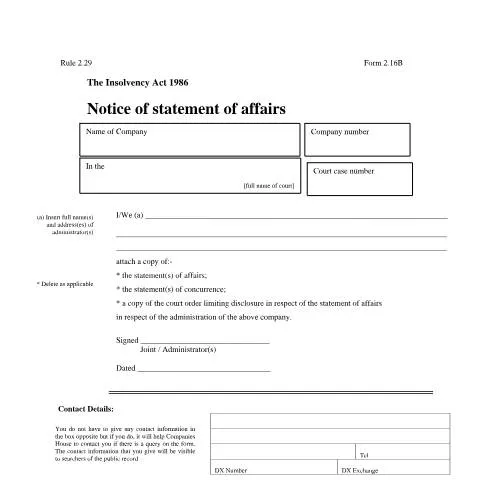
In the intricate world of corporate insolvency, the Notice of Statement of Affairs (Form 2.16B) plays a pivotal role. This document is submitted to Companies House as part of the administration process of a company facing financial difficulties. Understanding its nuances is essential for administrators, creditors, and other stakeholders involved. This comprehensive guide delves into the various facets of this document, ensuring a clear understanding of its purpose and the context in which it is used.
Understanding the Context: When is Form 2.16B Required?
The necessity of submitting a Notice of Statement of Affairs arises primarily in scenarios where a company enters administration or faces insolvency proceedings. This document serves multiple stakeholders, including:
- Administrators: Those appointed to manage the company’s affairs during insolvency need to provide a detailed account of the company’s financial status.
- Creditors: They require insights into the company’s financial situation to make informed decisions regarding their claims.
- Court Officials: The court may necessitate this document to oversee the administration process properly.
Companies are usually mandated to present this notice when an administrator is appointed, establishing transparency in financial dealings and promoting accountability.
The Key Components of Form 2.16B: What to Include
Completing Form 2.16B accurately is crucial for a seamless administration process. The document comprises several key elements that administrators must be aware of:
- Company Information: This includes the full name of the company, its registered number, and the relevant court case number.
- Administrator Details: Full name(s) and address(es) of the administrator(s) must be included. This ensures that all correspondence regarding the administration can be directed appropriately.
- Attachments: The notice must include:
- The statement(s) of affairs, offering a comprehensive overview of the company's assets and liabilities.
- The statement(s) of concurrence, indicating the agreement of creditors to the administration.
- A copy of any court order limiting disclosure about the statement of affairs related to the administration.
Procedural Steps for Submission: Ensuring Compliance
Adhering to the procedural requirements for submitting Form 2.16B is vital to avoid delays or complications. The following steps outline the submission process:
- Prepare the Document: Ensure that all sections are completed accurately, and all necessary attachments are included.
- Signature Requirement: The notice must be signed by the administrator(s) to validate the contents of the submission.
- Date the Submission: Clearly include the date of submission to establish the timeline of the administration process.
- Contact Information: While optional, providing contact details can facilitate communication with Companies House regarding any queries.
- Submit to Companies House: Send the completed form to Companies House at their Cardiff address. Utilizing the correct DX number ensures the document is received without issues.
Interpreting the Statement of Affairs: Key Financial Insights
The statement of affairs is a critical document that provides a snapshot of the financial position of the insolvent company. It typically includes:
| Financial Aspect | Description |
|---|---|
| Assets | A detailed list of all assets owned by the company, including tangible and intangible assets. |
| Liabilities | An enumeration of all liabilities, showcasing the company's financial obligations to creditors. |
| Net Position | The difference between total assets and total liabilities, indicating the overall financial health of the company. |
This statement aids in determining the viability of the company’s recovery and the potential returns for creditors.
Common Pitfalls: Misinterpretations to Avoid
While the Notice of Statement of Affairs is straightforward, several common misinterpretations can lead to challenges:
- Underestimating Financial Obligations: Incorrectly assessing the company's liabilities can create issues during the administration process.
- Neglecting Attachments: Failing to include necessary documents such as the statement of concurrence can lead to delays or rejection of the submission.
- Inaccurate Contact Information: Providing incorrect or incomplete contact details may hinder communication and prolong administrative proceedings.
Being aware of these pitfalls can help ensure a smoother process for all parties involved.
The Interplay with Other Documentation in Insolvency Proceedings
The Notice of Statement of Affairs does not exist in isolation. It interfaces with several other documents in the insolvency framework:
- Administrator's Report: This document complements the statement of affairs by providing an analysis and overview of the insolvency situation.
- Creditor's Voluntary Liquidation (CVL) Documents: In cases where a CVL is initiated, the notice aligns with these additional forms to ensure all creditor interests are represented adequately.
- Company's Financial Statement: Historical financial statements provide context to the current statement of affairs, helping to paint a fuller picture of the company’s financial trajectory.
Conclusion: Maximizing the Utility of the Notice of Statement of Affairs
To effectively navigate the complexities surrounding the administration of a company, understanding the Notice of Statement of Affairs is imperative. By adhering to the procedural guidelines, comprehending the essential components, and avoiding common pitfalls, administrators can significantly enhance the administration process. This document not only serves as a crucial tool for transparency and accountability but also plays a vital role in ensuring that all stakeholders are adequately informed about the financial realities of the company in administration.
Understanding the Statement of Affairs Process
The Statement of Affairs is a critical component in various administrative and legal contexts in the United Kingdom, particularly when dealing with insolvency or bankruptcy. When giving notice of a Statement of Affairs (form 2.16B), it is essential to comprehend the underlying requirements and implications of this document.
The Statement of Affairs provides a snapshot of an individual or business's financial situation, detailing assets, liabilities, and contingent liabilities. This transparency is crucial for all stakeholders, including creditors, debtors, and the courts. Therefore, accurately preparing this statement can significantly influence the outcomes in insolvency proceedings.
When drafting the Statement of Affairs, it is important to ensure that all relevant financial details are disclosed. This includes not only tangible assets such as property and vehicles but also intangible assets like accounts receivable. Furthermore, all liabilities must be listed, including loans, credit card debts, and any other obligations. Engaging with a qualified insolvency practitioner can assist in accurately assessing these figures and ensuring compliance with legal requirements.
The Role of Insolvency Practitioners in the Process
Insolvency practitioners (IPs) play a vital role in the process of giving notice of a Statement of Affairs. They are licensed professionals who can provide invaluable guidance through the complexities of insolvency law. Their involvement often begins with an initial consultation, where they can assess the financial situation and determine the best course of action for the client.
Once engaged, the practitioner will assist in the preparation of the Statement of Affairs, ensuring that it is comprehensive and accurate. This not only involves collating the necessary financial information but also navigating the legal jargon and requirements stipulated by the Insolvency Act 1986 and the associated regulations. An IP can ensure that the document is completed correctly and submitted according to the correct timelines, thereby reducing the risk of complications or disputes arising later. Furthermore, an IP can represent the debtor in negotiations with creditors, adding a further layer of expertise to the proceedings.
Insolvency practitioners also have access to specific resources and networks that can be beneficial in resolving financial difficulties. They may negotiate payment plans or settlements on behalf of their clients, helping to create a manageable pathway for dealing with outstanding debts.
Common Mistakes to Avoid When Submitting a Statement of Affairs
Filing a Statement of Affairs is a serious undertaking, and several common pitfalls can undermine the process. Awareness of these mistakes can help individuals and businesses avoid unnecessary complications.
One frequent error is incomplete information. It is essential to ensure that every asset and liability is accounted for. Omitting even minor details can lead to legal repercussions and may undermine the credibility of the entire submission. This includes not only financial numbers but also any agreements or contracts that may impact the financial situation.
Another common mistake is failing to update the Statement of Affairs when circumstances change. Financial situations can evolve rapidly, and it is crucial that the document reflects the most current status at the time of submission. Staying proactive in updating this information can help maintain transparency and trust with creditors.
Additionally, individuals often underestimate the importance of compliance with deadlines. The Statement of Affairs must be submitted within specific timeframes set out by the relevant authorities. Missing these deadlines can lead to severe consequences, including legal action or the dismissal of the bankruptcy application. Therefore, maintaining a calendar with all important dates related to the submission is highly advisable.
Lastly, individuals sometimes fail to seek professional advice early in the process. Engaging with an insolvency practitioner at the outset can prevent many of these common pitfalls and ensure that the Statement of Affairs is completed accurately and efficiently.