Navigating the IE03 Document: A Comprehensive Guide
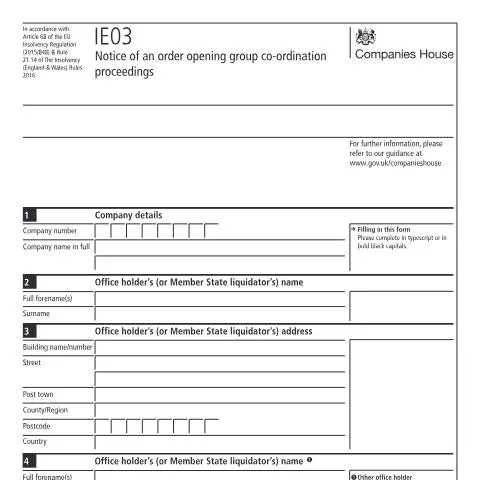
Understanding the IE03 Notice of an order opening group co-ordination proceedings is essential for companies involved in insolvency proceedings in the UK. This document serves as a key notification that communicates the initiation of group co-ordination proceedings to Companies House. These proceedings can significantly impact corporate structures and stakeholder relationships, making familiarity with the IE03 document crucial.
Unpacking the Purpose Behind the IE03 Notice
The IE03 notice is an official document that signals the commencement of group co-ordination proceedings as per the provisions laid down in Article 68 of the EU Insolvency Regulation (2015/848) and Rule 21.14 of The Insolvency (England & Wales) Rules 2016. It is important to understand that this document reflects a legal and formal situation wherein multiple companies under a group structure may face insolvency issues.
The need for co-ordination arises when subsidiaries or affiliated companies are undergoing insolvency, prompting a unified approach to manage their liabilities and protect the interests of creditors. This document, therefore, plays a pivotal role in ensuring that all stakeholders remain informed about the legal proceedings affecting the group as a whole.
Key Components of the IE03 Notice
The structure of the IE03 notice includes several important fields that must be accurately filled out to ensure compliance with legal requirements:
- Company Details: This section includes the full name of the company and its registration number, which must match the public records.
- Office Holder Information: Here, the details of the office holder or Member State liquidator involved in the proceedings must be provided. This includes their name, address, and contact information.
- Date of Court Order: It’s crucial to clearly indicate when the court order was issued to avoid any confusion regarding the timeline of events.
- Signature and Date: The office holder must sign and date the form, affirming that the information provided is accurate.
Additionally, attaching a copy of the relevant court order is mandatory to substantiate the notice. This ensures that Companies House has the necessary documentation to support the proceedings.
Practical Steps for Submitting the IE03 Notice
To effectively utilise the IE03 document within your insolvency proceedings, follow these structured steps:
- Gather Required Information: Collect all relevant details, including company name, registration number, and court order.
- Complete the IE03 Form: Fill out the form in typescript or bold black capitals, ensuring clarity and legibility.
- Attach Supporting Documents: Include a copy of the court order along with the completed notice.
- Submit to Companies House: Send the completed IE03 notice to the appropriate Companies House address, ideally the Cardiff location for quicker processing.
By adhering to these steps, you can ensure that the IE03 notice is submitted correctly and promptly, facilitating the continuation of the group co-ordination proceedings.
Avoiding Common Pitfalls in the IE03 Notification Process
While the process of submitting the IE03 notice may seem straightforward, there are common pitfalls to be aware of:
- Inaccurate Information: Double-check that the company details match those in the public register. Any discrepancies can lead to rejection of the notice.
- Missing Signatures: Ensure that the document is duly signed by the office holder. An unsigned notice may invalidate the proceedings.
- Documentation Failures: Failing to attach the court order can result in delays. Always verify that all required documents are included.
Taking preventive measures against these pitfalls will enhance the likelihood of a smooth process when notifying Companies House.
Understanding Who Needs to Use the IE03 Notice
This document is primarily aimed at companies facing group insolvency. It is particularly relevant for:
- Corporate Groups: Businesses with multiple entities that need to manage insolvency proceedings together.
- Office Holders: Individuals or firms appointed to oversee the insolvency process for the group.
- Stakeholders: Creditors, investors, and other interested parties who need to be informed about the proceedings.
In these scenarios, the proper use of the IE03 is not just a bureaucratic obligation but a critical step towards the effective handling of insolvency issues within the group.
Connecting the IE03 Notice with Other Related Documents
The IE03 notice does not operate in isolation. It is part of a broader framework of documentation required during insolvency proceedings. Here are some key documents to consider:
| Document | Description | Relation to IE03 |
|---|---|---|
| Court Order | Legal document issued by the court initiating group co-ordination proceedings. | Mandatory attachment with IE03. |
| IE04 Notice | Notice for individual company proceedings within the group. | May be necessary depending on specific circumstances. |
| Form 2.12B | Application to Court for Group Co-ordination. | Precedes the IE03 filing. |
Understanding the relationships between these documents can help streamline the process, ensuring that all necessary notifications and applications are filed in a timely manner.
Final Considerations When Using the IE03 Document
When drafting and submitting the IE03 notice, remember that transparency and accuracy are vital. The information presented on this document becomes part of the public record and should reflect the true nature of the proceedings.
Moreover, it is advisable to maintain clear communication with all stakeholders involved, ensuring they are aware of the proceedings and any potential implications for their interests. This proactive approach can mitigate misunderstandings and foster a collaborative environment during a challenging time.
Exploring Further Resources and Guidance
For additional assistance regarding the IE03 notice and the surrounding insolvency process, companies can access comprehensive resources provided by Companies House. Their website offers detailed guidance notes and support that can facilitate compliance and understanding of the regulations involved.
Moreover, consulting with legal professionals who specialise in corporate insolvency can provide tailored advice. This can be particularly beneficial for navigating complex situations where multiple entities are involved.
Understanding Group Coordination Proceedings
Group coordination proceedings in the UK are a mechanism designed to streamline the resolution of group litigation cases. This approach is particularly beneficial when multiple claims arise from similar factual circumstances or legal issues. The process allows for the efficient handling of these claims by designating a lead case, which can then influence subsequent cases, thereby ensuring consistency in judicial decisions. It is crucial for individuals and legal representatives to understand the nuances of this process, particularly when submitting a notice of an order opening group coordination proceedings using form IE03.
The process is governed by the Civil Procedure Rules (CPR), specifically Part 19. This part lays out the framework for group litigation orders, detailing how such cases should be managed and what the responsibilities of the parties involved are. A key benefit of group coordination proceedings is that they can reduce court time, legal costs, and the burden on the judicial system by consolidating related cases. For claimants, this means potentially quicker resolutions and clearer guidance on how their individual claims will be affected by the lead case.
Filling Out Form IE03: A Step-by-Step Guide
Completing form IE03 is a pivotal step in notifying the court of an order opening group coordination proceedings. Each section of the form requires precise information, and understanding how to fill it out can prevent delays or complications in your application.
Begin with the basic information section, where you will need to provide the details of the lead case, including the case number, the names of the parties involved, and the court in which the lead case is being heard. This information is critical as it identifies the primary case around which the other claims will be coordinated.
Next, you will need to detail the nature of the claims. It is important to specify whether the claims arise from a common issue of law or fact. Consider providing a brief overview of the circumstances leading to the claims and how they are interconnected. This context helps the court understand the rationale for group coordination and can support your position.
Further, you must include a section on the expected outcomes of the group coordination proceedings. Describe how the coordination will impact each claimant’s position and what benefits you anticipate from this collective approach. If there are any specific interests or concerns from the group members, these should be highlighted as they can influence the court's consideration of the application.
Finally, ensure that you read through the form carefully before submission. Any mistakes or omissions can lead to delays or a rejection of the application, which can significantly affect the overall litigation timeline. For complex cases, consider seeking legal advice to ensure compliance with the rules and to enhance the quality of your submission.
Common Pitfalls and How to Avoid Them
When navigating the process of notifying the court of an order opening group coordination proceedings with form IE03, several pitfalls commonly arise. Understanding these potential traps can help streamline your application and avoid unnecessary challenges.
One common issue is the misidentification of the lead case. It’s essential to accurately reference the lead case number and court. Inaccuracies can lead to confusion and may result in additional hearings to clarify issues that should have been straightforward. Always double-check the details against the official court documents before submission.
Another frequent pitfall is the failure to include all relevant claimants. In group coordination proceedings, it is vital to ensure that all parties who have an interest in the claims are listed. Omitting parties can not only complicate the proceedings but may also weaken your position in front of the court. It’s advisable to maintain clear communication with all potential claimants to ensure everyone is accounted for.
Additionally, being vague about the common issues that unify the claims can hinder your application. The court needs to understand why the cases are being grouped; therefore, provide clear, concise, and compelling explanations of shared issues. Avoid legal jargon that may confuse readers unfamiliar with the litigation context.
Lastly, ensure compliance with the submission deadlines. The timelines for notifying the court regarding group coordination proceedings are strict, and missing these deadlines can prevent your claims from being heard. Familiarize yourself with the key dates involved in your case to manage your timeline effectively.