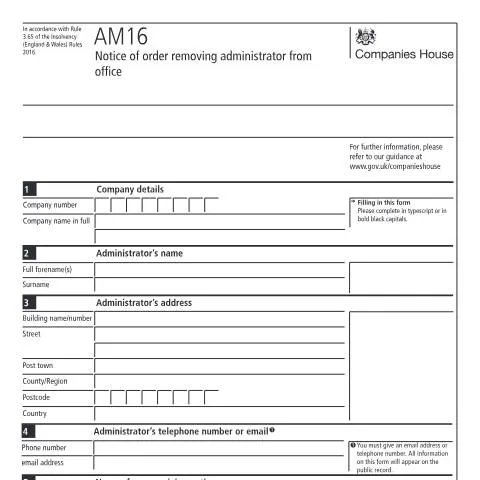
Navigating the AM16: The Essential Guide to Removing an Administrator
When a company in England or Wales finds itself in dire straits, the appointment of an administrator can provide a lifeline. However, circumstances change, and sometimes an administrator must be removed from their role. This is where the AM16 form, the notice of order removing administrator from office, comes into play. Understanding the implications and procedural steps surrounding this document is crucial for any involved parties.
Understanding the Context: When Is the AM16 Form Necessary?
The AM16 is required following a court order that specifies the removal of an administrator. Such a situation typically arises when the company’s circumstances have changed significantly, warranting a shift in management control. This could be due to a variety of reasons, including:
- Change in business direction: The company may have found a new path that requires different leadership.
- Performance issues: The current administrator may not be effectively managing the company's affairs.
- Legal disputes: Conflicts may arise among stakeholders regarding the administrator's authority.
Ultimately, the AM16 serves as a formal notification to Companies House that an administrator is no longer overseeing the company. This step is vital in maintaining accurate records and ensuring compliance with the Companies Act.
The Structure of the AM16: Dissecting Its Components
Understanding the layout of the AM16 form is essential for anyone looking to navigate the process. This official document consists of several key sections that must be completed accurately:
- Company Details: This section requires the full name of the company and its registration number, ensuring that Companies House can identify the correct entity.
- Administrator Information: Here, the name, address, and contact information of the administrator being removed must be provided. It’s crucial that this information is precise to avoid any potential delays.
- Details of the Person Giving Notice: This section captures the details of the individual or entity submitting the AM16, allowing for proper communication regarding the notice.
- Attachment of Court Order: A copy of the court order that mandates the removal must accompany the AM16, serving as the legal basis for the notification.
- Signatures and Dates: The form must be signed and dated to validate the notice officially.
Each component of the AM16 plays a crucial role in the overall process, ensuring that all parties have access to accurate and current information about the company’s administrative status.
Step-by-Step Breakdown: How to Effectively Use the AM16
Utilising the AM16 requires careful attention to detail and adherence to specific procedural steps. Follow this systematic approach to ensure a smooth process:
- Review the Court Order: Before completing the AM16, thoroughly examine the court order to ensure that it clearly states the removal of the administrator.
- Gather Company Information: Collect the relevant details about the company and the administrator, including the company number, full name, and address of the administrator.
- Complete the AM16: Fill out the AM16 with the required information. It’s important to use typescript or bold black capitals for clarity.
- Attach the Court Order: Ensure that you include a copy of the court order with your submission, as this is a legal requirement.
- Submit the AM16: Send the completed form to Companies House. While you can send it to any address, using the designated address in Cardiff is recommended for quicker processing.
By meticulously following these steps, you can avoid common pitfalls that may delay the removal of the administrator.
Common Misinterpretations and Their Corrections
Understanding the AM16 is not without its challenges. Many individuals encounter common misinterpretations that can lead to complications. Here are some prevalent misconceptions:
- Assuming Submission is Optional: Some may believe that submitting the AM16 is a mere formality. In reality, failing to submit this notice can result in inaccurate public records and potential legal issues.
- Overlooking the Court Order Requirement: It is essential to attach the relevant court order when filing the AM16. Neglecting this step may lead to rejection of the form.
- Misunderstanding Signature Requirements: The form must be signed by the person giving the notice. It’s a common mistake to overlook this detail, resulting in processing delays.
Awareness of these misconceptions will enable parties involved to navigate the AM16 process more effectively.
The Audience: Who Should Consider the AM16?
The AM16 is primarily directed at individuals or entities involved in the management or oversight of a company undergoing administration. This includes, but is not limited to:
- Directors of the Company: They may find themselves needing to initiate the removal of an administrator to regain control.
- Creditors: Creditors may wish to challenge an administrator’s management approach and seek their removal through the proper legal channels.
- Legal Representatives: Lawyers and insolvency practitioners play a critical role in ensuring that the court order is appropriate and that the AM16 is completed correctly.
Recognising the diverse audience is essential for understanding the broader impact of the AM16 in various business contexts.
Interconnections with Other Documentation: AM16 and Beyond
When dealing with the removal of an administrator, the AM16 does not exist in isolation. It is interrelated with several other forms and documents that may be required throughout the process:
| Document | Purpose |
|---|---|
| Form AM1 | Notice of appointment of administrator, which may be necessary if a new administrator is being appointed simultaneously. |
| Court Order | The legal document that stipulates the removal of the administrator; must be included with the AM16. |
| Form AA100 | Notice of the administrator’s decision or agreement, relevant if decisions are forthcoming from stakeholders. |
Understanding these connections helps stakeholders maintain clarity and compliance throughout the administrative process.
Final Considerations: Ensuring Compliance and Accuracy
The AM16 serves a pivotal role in maintaining the integrity of company records at Companies House. Effectively managing this process requires diligence and foresight. Stakeholders should take the following into account:
- Double-Check Information: Prior to submission, ensure that all information is accurate and matches official records.
- Documentation: Maintain copies of all submitted forms and accompanying documents for your records.
- Timeliness: Submit the AM16 promptly following the court order to avoid unnecessary complications.
By adhering to these considerations, individuals and companies can navigate the complexities of removing an administrator with confidence and clarity.
Understanding the Reasons for Removing an Administrator
Removing an administrator from their position can stem from various reasons, and understanding these is crucial for any stakeholder involved. According to the UK’s Insolvency Act 1986, an administrator may be removed if they are found to be unfit for the role or if they are not fulfilling their duties effectively. Common reasons for removal include:
Mismanagement of Funds: An administrator is expected to handle the financial affairs of the company with prudence. If it comes to light that they have mismanaged funds or acted in a manner detrimental to creditors, this serves as a strong basis for their removal.
Conflict of Interest: If an administrator has a conflict of interest that compromises their ability to act impartially, stakeholders can petition for their removal. It is essential that the administrator remains neutral and prioritizes the interests of creditors above their own.
Failure to Communicate: Regular and transparent communication with creditors and stakeholders is a fundamental responsibility of any administrator. If they fail to provide necessary updates or respond to inquiries, this may result in a loss of confidence and a formal request for their removal.
Incompetence or Inexperience: In some cases, the appointed administrator may lack the requisite skills or experience to manage the insolvency process effectively. Stakeholders can express their concerns and seek a more competent alternative.
Non-Compliance with Legal Obligations: Administrators must adhere to legal obligations and protocols as outlined in the Insolvency Act. Non-compliance can lead to significant legal ramifications and grounds for removal.
Understanding these reasons not only aids in the formal process of removal but also equips stakeholders with the knowledge necessary to present a strong case.
The Process of Appointing a New Administrator
Once an administrator has been removed from office, the next critical step is appointing a replacement. The process of appointing a new administrator follows specific guidelines, ensuring that the interests of the creditors and stakeholders remain paramount. The following steps outline the procedure:
Call a Meeting of Creditors: Under normal circumstances, a meeting of creditors must be convened to discuss the removal and subsequent appointment of a new administrator. This meeting is an opportunity for creditors to voice concerns and nominate a suitable successor.
Notice Requirements: Proper notice must be given to all known creditors about the meeting, stating the time, date, location, and purpose of the meeting. Notices should be sent out at least 14 days in advance to comply with the statutory requirements, as outlined in the Insolvency (England and Wales) Rules 2016.
Voting Process: During the meeting, creditors will vote on the appointment of a new administrator. The candidate who receives the majority of votes will be appointed. It is essential to ensure that the voting process is conducted transparently.
Filing with Companies House: Following the appointment, the new administrator must submit the relevant paperwork to Companies House, including Form AM16 (Notice of Order Removing Administrator from Office) and Form AM1 (Appointment of Administrator). This step is crucial as it formalizes the new administrator's role and responsibilities.
Communicate with Stakeholders: After the appointment, the new administrator should communicate with all stakeholders, providing them with an overview of the steps that will be taken to manage the insolvency process moving forward. This communication fosters trust and transparency among all parties involved.
By following these steps diligently, stakeholders can ensure a smooth transition to a new administrator, minimizing disruptions to the insolvency proceedings.
Legal Implications and Considerations for Stakeholders
Engaging in the process of removing an administrator is not without its legal implications. Stakeholders must be aware of these considerations to navigate the complexities effectively:
Legal Grounds for Removal: Before initiating the removal process, stakeholders should have a clear understanding of the legal grounds for removal as outlined in the Insolvency Act 1986. Engaging a legal advisor to review the circumstances can help solidify the case.
Potential Legal Challenges: The removed administrator may contest their removal, potentially leading to protracted legal disputes. Stakeholders should prepare for this possibility and understand the legal avenues available to them.
Liabilities of the Administrator: If an administrator is found to have acted improperly, they may be held personally liable for any losses incurred by creditors as a result of their actions. Understanding the liability landscape can inform stakeholders’ decisions regarding litigation.
Impact on the Insolvency Process: The removal of an administrator may have implications for ongoing insolvency proceedings. Stakeholders should consider how the change in administration might affect creditor recovery prospects and ensure that continuity is maintained during the transition.
Data Protection Considerations: In line with the Data Protection Act 2018 and UK GDPR, stakeholders must be cautious about how personal data is handled during the transition. Ensuring compliance with these regulations is vital during the removal and appointment process to avoid potential fines or legal repercussions.
By being aware of these legal implications, stakeholders can make informed decisions and navigate the administrator removal process with confidence.