Understanding Administration Progress Reporting Requirements in Corporate Insolvency
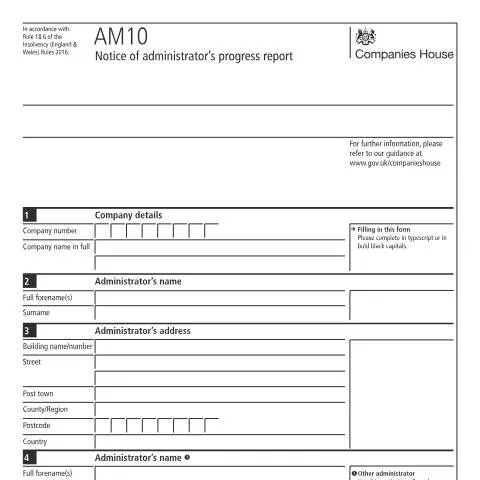
When a company enters administration, the appointed administrator assumes significant responsibilities that extend well beyond the immediate task of rescuing the business or achieving the best outcome for creditors. Among these ongoing obligations lies the requirement to provide regular progress reports to Companies House, documenting the administrator's activities and the company's situation during each reporting period. The AM10 form serves as the formal mechanism for notifying Companies House that such a progress report has been prepared and submitted, creating an essential link in the chain of transparency that governs corporate insolvency proceedings in England and Wales.
This notification process operates under the framework established by Rule 18.6 of the Insolvency (England & Wales) Rules 2016, which mandates that administrators must keep stakeholders informed about their progress through regular reporting. The AM10 form itself represents the public-facing element of this requirement, ensuring that the existence and availability of progress reports become part of the company's public record maintained by Companies House.
The Administrator's Reporting Obligations and Timing Framework
Administration proceedings create a structured timeline for reporting that administrators must navigate with precision. The progress reporting cycle typically begins with the initial administrator's statement and continues through regular intervals throughout the administration period. Each progress report must cover a specific timeframe, and the AM10 form captures these precise dates to establish a clear chronological record of the administrator's activities.
The reporting periods are not arbitrary; they align with statutory requirements that ensure creditors, shareholders, and other stakeholders receive timely updates about the company's situation. Administrators must prepare these reports regardless of whether significant developments have occurred during the reporting period, as the absence of major changes itself constitutes relevant information for stakeholders monitoring the administration process.
Identifying the Reporting Period
Section 6 of the AM10 form requires administrators to specify the exact timeframe covered by their progress report using precise "from" and "to" dates. This dating precision serves multiple purposes: it ensures continuity between successive reports, prevents gaps in the reporting timeline, and provides stakeholders with clear reference points for understanding when particular events or decisions occurred during the administration.
The form's emphasis on date accuracy reflects the legal significance of timing in insolvency proceedings, where specific deadlines and timeframes can affect creditor rights, asset realisations, and the administrator's own statutory powers. Administrators must ensure that their reporting periods align with both statutory requirements and any specific directions received from the court or creditors' meetings.
Multiple Administrator Appointments and Coordination Requirements
Complex administrations often involve the appointment of multiple administrators, either from the outset or through subsequent appointments as circumstances evolve. The AM10 form acknowledges this reality by providing dedicated sections for recording details of additional administrators beyond the primary appointee. This multi-administrator framework reflects the practical needs of large-scale insolvencies where the scope and complexity of the company's affairs may require diverse expertise or geographical coverage.
| Administrator Role | Form Section | Required Information |
|---|---|---|
| Primary Administrator | Sections 2-3 | Full name and complete address details |
| Joint Administrator | Sections 4-5 | Full name and complete address details |
| Additional Administrators | Continuation sheets | Same detail requirements as primary |
When multiple administrators are appointed, questions of coordination and joint responsibility become paramount. The AM10 form requires each administrator to be individually identified, but the progress report itself typically represents the collective work and decisions of all appointed administrators. This joint approach ensures that stakeholders receive a comprehensive view of the administration while maintaining clear accountability for the reporting process.
Joint Administrator Responsibilities
The appointment of joint administrators creates both opportunities and challenges for the reporting process. While multiple administrators can bring diverse expertise and capacity to complex cases, they must also coordinate their activities and present a unified account of their progress. The AM10 form's structure supports this coordination by requiring comprehensive identification of all administrators while allowing for a single, consolidated progress report.
Joint administrators must ensure consistency between their individual actions and the collective narrative presented in their progress reports. This coordination extends beyond mere administrative convenience; it reflects the legal principle that joint administrators typically hold joint and several liability for their decisions and actions during the administration period.
Progress Report Content and Attachment Requirements
The AM10 form operates as a notification mechanism rather than a substitute for the substantive progress report itself. Section 7 of the form includes a simple but crucial checkbox confirming that "I attach a copy of the progress report." This attachment requirement ensures that Companies House receives not merely notification that a report has been prepared, but the actual content that stakeholders need to assess the administration's progress.
Progress reports themselves must meet specific content requirements established by the Insolvency Rules, covering areas such as:
- A summary of the administrator's activities during the reporting period
- Details of asset realisations and disposals undertaken
- Information about ongoing trading activities and their financial impact
- Updates on investigations into the company's affairs and potential claims
- Assessments of prospects for achieving the administration's stated objectives
- Financial information including receipts and payments accounts
The quality and comprehensiveness of these progress reports directly impact stakeholder confidence and can influence creditor support for the administrator's strategy. Companies House's role in making these reports publicly available ensures transparency while creating accountability for administrators to maintain professional standards in their reporting.
Public Record Implications
Once filed with Companies House, the AM10 form and its attached progress report become part of the company's permanent public record. This public availability serves multiple constituencies: creditors can monitor the administration's progress, potential purchasers can assess acquisition opportunities, and regulatory authorities can oversee the insolvency process. The form's prominent warning that "All information on this form will appear on the public record" emphasises this transparency requirement.
The public nature of these filings creates both opportunities and responsibilities for administrators. While transparency supports stakeholder confidence and market efficiency, it also requires administrators to balance comprehensive reporting with commercial sensitivity, particularly regarding ongoing negotiations or competitive information that could affect asset values.
Signature Requirements and Legal Accountability
Section 8 of the AM10 form establishes clear accountability through signature and dating requirements. The administrator's signature serves multiple functions: it confirms the accuracy of the information provided, acknowledges the administrator's responsibility for the attached progress report, and creates a legal record of compliance with reporting obligations. This signature requirement reflects the serious legal consequences that can flow from inadequate or misleading reporting in insolvency proceedings.
The dating requirement accompanying the signature creates an important timestamp for compliance purposes. This signature date establishes when the administrator completed their reporting obligations, which can be crucial for determining whether statutory deadlines have been met and whether any delays in filing might affect the administrator's position or the rights of stakeholders.
Professional Standards and Compliance
The signature requirement on the AM10 form connects to broader professional standards governing insolvency practitioners. Administrators typically hold licences from recognised professional bodies, and their reporting obligations under the Insolvency Rules form part of the regulatory framework that governs their professional conduct. Failures in reporting can trigger disciplinary proceedings and affect an administrator's ability to continue practising in the insolvency field.
The form's emphasis on accuracy and completeness reflects these professional standards while providing Companies House with the information needed to maintain comprehensive public records. This dual function ensures that the AM10 form serves both regulatory compliance and public information purposes effectively.
Filing Procedures and Companies House Processing
The AM10 form can be submitted to any Companies House office, but the form specifically recommends filing at the Cardiff address for expedited processing. This recommendation reflects Companies House's centralised processing systems while acknowledging that administrators may need flexibility in their filing arrangements, particularly in urgent situations or when coordinating with other insolvency proceedings.
The form's checklist emphasises three critical verification points that administrators must address before submission:
- Company identification accuracy: The company name and number must precisely match Companies House records to ensure proper filing and indexing
- Document attachment completeness: The required progress report must be attached to satisfy the form's primary purpose
- Signature verification: The administrator's signature must be present to establish legal accountability for the filing
These verification requirements reflect Companies House's quality control procedures and help prevent processing delays that could affect the administrator's compliance with statutory deadlines. The warning that forms may be returned if incorrectly completed emphasises the importance of careful preparation and review before submission.
Alternative Format Availability and Accessibility
Companies House's commitment to accessibility is reflected in the form's notation about alternative format availability. This provision ensures that administrators with specific accessibility needs can obtain the form in formats that support their filing obligations, maintaining the principle that compliance requirements should not create unnecessary barriers for licensed insolvency practitioners.
The availability of alternative formats also supports the broader goal of maintaining comprehensive public records by ensuring that all qualified administrators can participate effectively in the reporting process, regardless of individual accessibility requirements or technological preferences.
Integration with Broader Insolvency Documentation
The AM10 form operates within a comprehensive framework of insolvency documentation that includes initial appointment notices, creditor meeting documentation, asset disposal notifications, and eventual conclusion reporting. Understanding how the AM10 form fits within this broader documentation ecosystem helps administrators maintain comprehensive compliance while avoiding duplication or gaps in their regulatory obligations.
Progress reporting through the AM10 form represents one element of an ongoing dialogue between administrators and stakeholders, complementing but not replacing other communication requirements such as creditor circulars, court reporting, and direct stakeholder engagement. This multi-channel approach ensures that different stakeholder groups receive appropriate information while maintaining centralised public records through Companies House.
The form's integration with Companies House systems also supports regulatory oversight by providing government agencies, professional bodies, and court officials with accessible records of administration progress. This oversight capability helps maintain confidence in the insolvency system while supporting early identification of cases where additional intervention or support might be needed.
Administrators who understand the AM10 form's role within this broader framework can use their progress reporting strategically, ensuring compliance while building stakeholder confidence and supporting their overall administration objectives. The form's apparent simplicity masks its important function in maintaining the transparency and accountability that underpin effective corporate insolvency proceedings in England and Wales.
Specific Content Requirements for Different Types of Administration
The AM10 form's content requirements vary significantly depending on the type of administration being conducted. Each category demands specific information that reflects the unique challenges and objectives of the proceedings.
For trading administrations, where the business continues operating during the administration period, the progress report must detail ongoing commercial activities. This includes analysis of trading performance, cash flow management, supplier relationships, and employee retention strategies. The administrator must explain how continued trading serves the statutory purposes, particularly whether it's preserving value for creditors or facilitating a going concern sale. Revenue figures, operational costs, and working capital movements require detailed explanation, along with projections for future trading periods.
In break-up administrations, where assets are being realised piecemeal, the focus shifts to asset disposal strategies and realisations achieved. The AM10 must provide detailed schedules of assets sold, methods of disposal used (auction, private treaty, tender), and gross and net realisations compared to initial valuations. Any significant variances between book values, professional valuations, and actual realisations require explanation, particularly if they affect projected returns to creditors.
Pre-pack administrations present unique reporting challenges, as substantial asset disposals typically occur immediately upon appointment. The progress report must address any ongoing scrutiny from creditors regarding the pre-pack process, provide updates on any connected party transactions, and detail compliance with SIP 16 requirements. If an independent evaluation was conducted, the administrator should reference compliance with recommendations and address any post-appointment issues that have emerged.
For administrations involving group companies, coordination between multiple AM10 filings becomes crucial. Each company's report must explain inter-company relationships, cross-guarantees, and how group restructuring affects individual company positions. The administrator must clarify whether costs are being shared across group entities and how this impacts individual company realisations.
Complex financial services companies require additional regulatory considerations in their progress reports. Where Financial Conduct Authority or Prudential Regulation Authority oversight applies, the AM10 must address regulatory compliance, client money protections, and any special arrangements for regulated activities. Customer communications and regulatory reporting obligations need specific attention in these cases.
Creditor Communication Strategies and Response Management
Effective creditor communication extends far beyond the mandatory AM10 filing. The progress report serves as a cornerstone document, but experienced administrators use it strategically within broader stakeholder engagement frameworks.
The timing of AM10 distribution requires careful consideration. While Companies House filing satisfies legal obligations, direct distribution to creditors often occurs simultaneously or shortly after. Email distribution has become standard practice, but administrators must maintain postal distribution lists for creditors who haven't provided electronic contact details or specifically requested hard copies under data protection preferences.
Supplementary communications often accompany AM10 distribution. Many administrators provide covering letters that highlight key developments, explain technical aspects in plain English, or address frequently asked questions. These communications might reference specific sections of the AM10 while providing additional context that wouldn't be appropriate for the formal statutory document.
Managing creditor queries following AM10 publication requires systematic approaches. Common questions relate to dividend prospects, timescales for completion, and asset realisation strategies. Administrators typically prepare standard responses for frequently asked questions while ensuring each creditor receives appropriate individual attention for specific concerns.
The progress report often triggers requests for additional information under creditors' statutory rights. Section 98 of the Insolvency Act 1986 entitles creditors to request sight of administrator's records, though reasonable charges may apply. The AM10 should be sufficiently detailed to minimise such requests while remaining concise and focused on material matters.
Creditor committee relationships require special attention in AM10 preparation. Where committees exist, members often receive advance briefings on progress report content. The formal AM10 then serves to communicate key decisions and developments to the wider creditor body, ensuring transparency while respecting committee members' enhanced involvement in the process.
For disputed claims or contentious matters, the AM10 provides opportunity to update creditors on resolution progress. However, administrators must balance transparency with legal privilege considerations and avoid prejudicing ongoing negotiations or litigation. Strategic disclosure decisions in these areas can significantly impact creditor confidence and cooperation.
International creditor considerations add complexity to communication strategies. Different jurisdictions may have varying expectations for insolvency reporting, and language barriers can affect comprehension. Some administrators provide translated summaries for significant foreign creditors or adapt communication styles to reflect cultural business practices.
Regulatory Compliance and Professional Standards Integration
AM10 preparation occurs within a complex regulatory framework that extends beyond basic statutory requirements. Professional standards, regulatory guidance, and industry best practices create layered compliance obligations that experienced administrators must navigate carefully.
The Insolvency Practitioners Association and other recognised professional bodies maintain detailed guidance on progress reporting standards. These materials supplement statutory requirements with professional expectations around disclosure quality, stakeholder communication, and ethical considerations. Members must ensure their AM10 filings meet both legal minimums and professional standards that may exceed statutory requirements.
Statement of Insolvency Practice 1 (SIP 1) governs advertising and publicising of insolvency appointments, with implications for how administrators present their qualifications and experience in progress reports. While AM10 forms don't typically include extensive biographical information, references to administrator experience or specialist expertise must comply with SIP 1 requirements around truthful and proportionate self-representation.
The Insolvency Service's supervisory role creates additional compliance layers. Their monitoring activities may focus on progress report quality, particularly for high-profile cases or where complaints have been received. Administrators must ensure AM10 content withstands regulatory scrutiny while avoiding defensive or overly technical language that obscures key information.
Anti-money laundering obligations under the Money Laundering, Terrorist Financing and Transfer of Funds Regulations 2017 create disclosure considerations for AM10 preparation. Where suspicious transactions have been identified or reported, administrators must balance transparency obligations with confidentiality requirements around Suspicious Activity Reports or ongoing law enforcement investigations.
Data protection compliance affects both AM10 content and distribution methods. Personal data of directors, employees, or individual creditors requires careful handling. While progress reports are public documents, administrators must consider whether including specific personal information serves legitimate purposes and complies with data minimisation principles under UK GDPR requirements.
Professional indemnity insurance considerations influence AM10 drafting approaches. Insurers increasingly scrutinise insolvency practitioners' communication practices, particularly around forward-looking statements or opinions that might create liability exposure. Progress reports must balance informative disclosure with appropriate caveats and limitations on administrator liability.
The Recognised Professional Bodies regulatory framework creates reporting obligations that may affect AM10 timing or content. Where regulatory investigations are ongoing or disciplinary matters are pending, administrators must consider whether progress reports should address these issues or maintain professional silence pending resolution.
Court reporting obligations in certain administration types may require coordination between AM10 preparation and other regulatory filings. Applications for administration extensions, asset disposal approvals, or other court applications often reference progress report content, requiring consistency across different document types and forums.
For administrators handling regulated entities, additional regulatory frameworks apply. Financial services companies require coordination with Financial Conduct Authority reporting requirements, while other regulated sectors may have specific disclosure obligations that must be reflected in progress reporting approaches.