The Importance of the REC1 Notice in Business Recovery
When a company faces financial distress, the role of an administrative receiver becomes critical. The REC1 Notice serves as a vital communication tool, allowing the administrative receiver to report on the company's financial situation. Understanding its significance goes beyond mere compliance; it can greatly influence the future of the company and its stakeholders.
Identifying the Stakeholders: Who Needs to Know About the REC1?
This notice is pertinent not just for the company and the administrative receiver but extends to various stakeholders:
- Directors: They must understand the implications of an administrative receiver's appointment and the subsequent reporting process.
- Creditors: Knowing the current financial standing of the company allows creditors to make informed decisions about their claims.
- Employees: Staff welfare is affected during financial turbulence. They should be aware of changes in management and company direction.
- Investors: Current and potential investors will be keen to see how the company is managing its recovery efforts.
Unpacking the Contents of the REC1 Document
The REC1 is structured to convey essential information succinctly. Here's what you can expect to find:
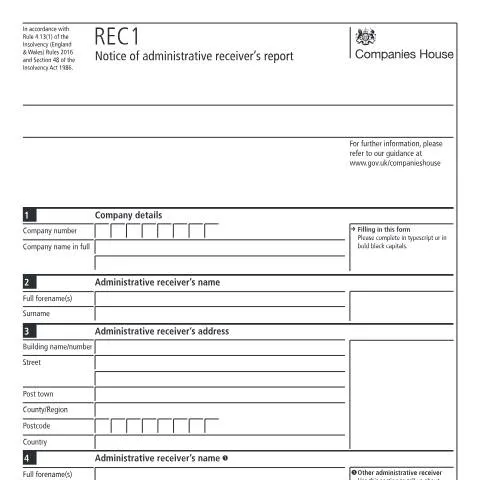
- Company Details: This section requires the full name and registration number of the company to verify its identity.
- Administrative Receiver Information: It details the name and address of the appointed administrative receiver responsible for managing the company's recovery process.
- Attachments: The receiver must include several key documents, including a report, a statement of affairs, and potentially a statement of concurrence.
- Signatures: The notice must be signed and dated by the administrative receiver, ensuring accountability.
Step-by-Step: How to Navigate the REC1 Process
Engaging with the REC1 is a multi-step process that involves careful preparation and adherence to certain protocols. Here’s a concise guide:
- Gather Information: Collect all pertinent company information, including previous financial statements and any related documents that will aid in filling out the REC1.
- Fill Out the Notice: Ensure all details are accurately entered. Use typescript or bold black capitals as stipulated.
- Attach Necessary Documents: Include the administrative receiver’s report, statement of affairs, and any other required documents.
- Sign the Notice: The administrative receiver must sign and date the REC1 before submission.
- Submit the Notice: While you can send it to any Companies House address, it's advisable to use the Cardiff address for quicker processing.
Common Procedural Questions Regarding the REC1
Understanding the processes surrounding the REC1 can alleviate confusion. Here are some commonly encountered procedural aspects:
- What happens if I fail to submit the REC1? Failure to submit the notice can lead to complications in the recovery process, including potential legal repercussions for the administrative receiver.
- Can I amend the REC1 after submission? Amendments are generally not accepted once a document is lodged. If errors are discovered, it is advisable to consult Companies House for further guidance.
- What if I need additional assistance? Companies House offers guidance online, and you can reach out to them via email for specific inquiries.
Understanding the Impact of the REC1 on Company Affairs
The implications of filing the REC1 are significant. It not only informs stakeholders of the company's status but also sets the tone for recovery efforts. Here are key considerations:
| Aspect | Implication |
|---|---|
| Transparency | Filing the REC1 promotes transparency about the company's financial health, which can enhance trust among stakeholders. |
| Legal obligations | The administrative receiver is legally bound to follow the procedures outlined in the Insolvency Act, ensuring compliance with regulations. |
| Stakeholder Communication | The notice facilitates communication with creditors, ensuring they are informed and can prepare for possible outcomes. |
Avoiding Common Misunderstandings About the REC1
Misinterpretations of the REC1 and its purpose can lead to missteps. Here are some common pitfalls to avoid:
- Assuming the REC1 is optional: Some stakeholders mistakenly believe that the REC1 can be bypassed. In fact, it is a requirement under the Insolvency Rules.
- Overlooking attachment requirements: Failing to include necessary documentation can result in delays or rejection of the notice. Ensure all required attachments are present.
- Neglecting timely submission: Delays in submission can have negative consequences for the company's recovery efforts. It's crucial to act swiftly.
Key Concepts to Grasp Beyond the REC1
For a comprehensive understanding of the REC1, grasping the following concepts is essential:
- Administrative Receivership: This is a process by which a receiver is appointed to manage the affairs of a company for the benefit of creditors.
- Statement of Affairs: This document outlines the company's financial situation, including assets, liabilities, and the anticipated recovery for creditors.
- Insolvency Act 1986: This legislation governs the conduct of insolvency proceedings in England and Wales and provides the framework for filing the REC1.
Navigating Post-Submission Scenarios
Once the REC1 has been submitted, it's essential to understand the next steps and potential scenarios:
- Awaiting Acknowledgment: Companies House will typically send an acknowledgment of receipt. Keep this for your records.
- Responding to Queries: Be prepared to respond to any inquiries from Companies House or stakeholders. Having all documentation organized will facilitate this process.
- Monitoring Company Status: Regularly check the public record to ensure the company’s status is accurately reflected following the filing of the REC1.
Final Thoughts on the Role of the REC1 in Corporate Recovery
The REC1 Notice is more than just a procedural document; it plays an essential role in the broader context of business recovery. By ensuring that stakeholders are informed and that the administrative receiver has the necessary tools to act, the REC1 ultimately aims to facilitate a smoother recovery process. Understanding its elements, implications, and procedural requirements is vital for everyone involved in the recovery process.
Understanding the Role of the Administrator in a Company Administration Process
In the context of company insolvency in the UK, the role of an administrator is crucial. An administrator is appointed to manage the affairs of a company that is facing financial difficulties. The primary objective of an administrator is to rescue the company as a going concern. However, if that’s not possible, the focus shifts to achieving a better outcome for creditors than would be possible in a liquidation scenario.
The administrator has several responsibilities, including preparing a detailed report on the company’s financial status and operations during the administration period. This report is critical as it informs creditors and stakeholders about the company’s viability and the administrator’s strategies for addressing its debts. The report must be filed with Companies House, and it typically includes the following:
Details of the Company: This encompasses the registered name, registration number, and the address of the company.
Financial Overview: A thorough analysis of the company's financial position, including assets, liabilities, and cash flow status.
Proposed Actions: The administrator must outline the proposed strategies to either rehabilitate the company or manage its assets in the best interests of creditors.
Creditor Engagement: Information regarding creditor meetings, their involvement, and any agreements reached during the administration process.
Report on Transactions: A summary of significant transactions and decisions made by the administrator, including any sales of assets and negotiations with creditors.
It is worth noting that the administrator is a licensed insolvency practitioner and operates under the Insolvency Act 1986. This legislation outlines the legal framework within which administrators operate, ensuring transparency and accountability. Creditors rely heavily on the REC1 report to understand the circumstances around the company’s difficulties and the administrator's approach to resolution.
Key Differences Between Administrator's Reports and Liquidator's Reports
While both administrators and liquidators play critical roles in managing insolvent companies, their functions, and the reports they produce, serve different purposes and follow distinct protocols. Understanding these differences is vital for stakeholders involved in company insolvency processes.
Objectives:
- Administrator's Report: The primary aim is to rescue the company, if feasible. The administrator seeks to explore various options for restructuring the company to continue trading. The report focuses on potential pathways for recovery and the overall financial health of the business.
- Liquidator's Report: This report is generated when a company is ceasing operations. The liquidator’s primary goal is to sell off the company’s assets to pay creditors. Their report will detail the process of winding up the company, the distribution of assets, and the final outcome for shareholders and creditors.
Nature of the Reports:
- Content in Administrator's Reports: These reports typically provide insight into the business’s potential for recovery, strategic recommendations, timelines, and the nature of stakeholder engagement.
- Content in Liquidator's Reports: Liquidator reports often include a breakdown of asset realisation, creditor claims, and a final distribution summary, emphasizing the liquidation process and its closure.
Stakeholder Impact:
- Administrator's Report: The findings in an administrator’s report can lead to critical decisions regarding the company's future, making it essential for stakeholders such as employees, creditors, and shareholders.
- Liquidator's Report: This document formally details the end of the company’s life, impacting creditors and shareholders by clarifying their financial recoveries or losses.
Understanding these differences not only helps creditors and stakeholders make informed decisions but also aligns their expectations with the possible outcomes of the insolvency process.
Navigating the Regulatory Framework of Administrator Receiver's Reports
The REC1 report, like other formal documents in the UK insolvency framework, must comply with several regulatory standards set forth by various governing bodies. Being familiar with these regulations can significantly enhance the effectiveness and legality of the report provided by the administrator.
Legislative Compliance:
- Insolvency Act 1986: This act provides the statutory framework for administrators, outlining their duties, rights, and the specific requirements for reporting. Understanding the parameters set by this act ensures that the administrator operates within legal confines, thereby safeguarding stakeholder interests.
- Companies Act 2006: The Companies Act sets out additional requirements for documentation and disclosures that the administrator must adhere to when preparing reports. This includes obligations for transparency and accountability to shareholders and creditors.
Data Protection:
- Under the Data Protection Act 2018 and UK GDPR, administrators must ensure that any personal data included in the REC1 report complies with data protection standards. This means that personal identifiers should be minimised and securely processed, ensuring that the privacy of individuals is preserved.
Submission Procedures:
- The REC1 report must be submitted to Companies House within specific deadlines. The administrator is responsible for ensuring that all documents, including the REC1, are filed correctly and timely. Failure to comply with these regulations can lead to penalties and complications within the insolvency process.
Communication with Creditors:
- The administrator must maintain clear communication with creditors and other stakeholders throughout the administration process. This includes presenting the REC1 report in a way that is accessible and understandable, ensuring that all parties are informed of their rights and obligations.
By understanding the regulatory landscape, administrators can enhance the reliability of their reports, ensuring they serve as effective tools for financial recovery and stakeholder engagement. Adhering to these guidelines not only fosters trust but also supports the overall integrity of the administration process.