The Essential Role of the IE05(Scot) Document in Insolvency Cases
In the complex landscape of corporate insolvency, the IE05(Scot) document serves a vital function within the UK legal framework, particularly for companies facing insolvency proceedings abroad. Distinct from other forms related to insolvency due to its unique focus on cross-border situations under EU regulations, this document is crucial for ensuring compliance with both local and EU laws.Understanding the Legal Framework: The Background of IE05(Scot)
The IE05(Scot) statement is governed by Article 48 of the EU Insolvency Regulation (2015/848) and is associated with specific sections of the Insolvency Act 1986. This legal foundation was established to provide clarity and structure within insolvency processes that span multiple jurisdictions, allowing for the smoother management of companies that are undergoing financial distress in more than one member state. The regulation was designed in a time of increasing cross-border insolvency cases, which called for a standardized approach to ensure that proceedings in one member state acknowledged the activities in another. The aim is to protect the interests of creditors and stakeholders, ensuring a fair and orderly process.Navigating the Specificities of the IE05(Scot) Form
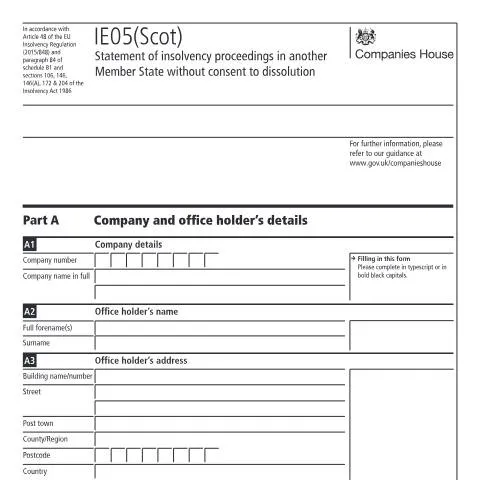
Completing the IE05(Scot) form accurately is paramount for any office holder involved with a company under insolvency proceedings. The form is divided into several parts, each requiring precise information that reflects the current status of the company and any ongoing proceedings in other member states.Section Breakdown: What Each Part Requires
- Part A: Company and Office Holder’s Details
This section captures fundamental information about the company and the office holder. You must provide:
- Company name and number
- Office holder's name and full address
- Part B: Other Insolvency Proceedings
Here, you must confirm if other insolvency proceedings are active in another member state. This is crucial for establishing the company’s current legal standing. Key details include:
- Liquidator’s name and address from the other member state
- Details of the court handling the proceedings
- Part C: Attachments and Signature Signature and any necessary attachments are required here. The office holder must ensure that all supporting documents are included to avoid delays or rejection of the form.
Avoiding Common Pitfalls during Completion
Completing the IE05(Scot) form can be daunting, particularly for those less familiar with legal terminology and administrative nuances. Some common pitfalls include:- Mismatch of Company Details: Ensure that the company name and number match exactly as recorded on the public register to avoid delays.
- Incomplete Sections: Leaving any part of the form blank can result in rejection; every applicable section must be filled out completely.
- Incorrect Signatures: The form must be duly signed by the office holder, and signatures must match the name provided on the form.
Delivery Methods: How to Submit the IE05(Scot)
Once completed, the IE05(Scot) form can be submitted via various channels. Each method has its own set of guidelines and may affect processing times.Online Submission vs. Paper Submission
| Method | Pros | Cons |
|---|---|---|
| Online Submission | Faster processing time; Immediate confirmation of receipt | Requires online access; Potential technical issues |
| Paper Submission | Traditional method; Useful for those without online access | Longer processing time and potential for delays |
Key Dates in the Insolvency Process: Timelines to Consider
In insolvency matters, timing can be critical. The submission of the IE05(Scot) has specific timelines associated with it. Understanding these dates can help ensure compliance and facilitate smoother proceedings.Important Dates and Their Implications
- Submission Deadline: The IE05(Scot) form should be submitted as soon as insolvency proceedings commence in another member state to avoid complications.
- Consequences of Delays: Failing to submit this form in a timely manner could lead to legal challenges or complications in the dissolution process.
The Practical Impact of the IE05(Scot) on Stakeholders
Understanding what the IE05(Scot) means for you as an office holder, a creditor, or a stakeholder can significantly impact the way you approach insolvency proceedings.Rights and Obligations Following Submission
Upon the successful submission of the IE05(Scot), several changes may occur within the corporate structure and obligations:- Rights of Creditors: Creditors may have their interests protected through the transparency provided by the statement, ensuring they are informed of proceedings in multiple jurisdictions.
- Office Holder Obligations: The office holder remains responsible for managing the dissolution process and must comply with any additional requests from Companies House or foreign courts.
Immediate Consequences of Non-Compliance
Any lapses in completing or submitting the IE05(Scot) can have serious repercussions:- Potential rejection of the submission, prolonging the insolvency process.
- Increased scrutiny from regulatory bodies, which may lead to legal challenges.
- Damage to the company's reputation and relationships with creditors and stakeholders.
Final Thoughts: The Importance of Diligence
Engaging with the IE05(Scot) form is not merely a bureaucratic task but an essential part of the insolvency landscape for companies spanning multiple jurisdictions. By understanding its significance, accurately completing the form, and adhering to deadlines, office holders can navigate the intricacies of insolvency proceedings effectively. Taking the time to ensure that every aspect of the process is managed diligently can greatly assist in safeguarding the interests of all parties involved, allowing for a smoother transition during difficult financial times. For additional guidance, stakeholders can refer to the Companies House website or consult with legal advisers specializing in insolvency matters.Understanding the Implications of Insolvency Proceedings in Other Member States
When a business or individual is undergoing insolvency proceedings in another Member State of the European Union, various legal implications arise that can affect both the debtor and their creditors. Under the Recast Insolvency Regulation, which governs cross-border insolvency issues within the EU, the primary jurisdiction is typically where the debtor has their center of main interests (COMI). However, in cases where insolvency proceedings are initiated without consent to dissolution in the UK, it is crucial to understand how these proceedings interact with UK law and the rights of stakeholders involved.
In the UK, particularly in Scotland, the term used for this scenario is known as the IE05(Scot) form. This form is particularly relevant for individuals or companies who find themselves amidst insolvency negotiations under another Member State’s jurisdiction, and means that there could be disturbances in asset recovery processes and creditor claims. Understanding the nuances, including potential conflicts of laws, is vital for anyone involved.
One of the primary considerations is the treatment of creditors' claims. While the insolvency laws of the Member State where proceedings are declared will apply, UK-based creditors may have recourse to make claims through the appropriate channels in the related jurisdictions. Thus, it is important for these creditors to stay informed and actively participate in the proceedings to preserve their rights. This often includes monitoring compliance with local laws and timelines, which can vastly differ from those in the UK.
Steps to Take When Faced with IE05(Scot) Insolvency Proceedings
If you are a debtor or creditor facing insolvency proceedings under the IE05(Scot) framework, it is essential to approach the situation methodically. Here are key steps to follow:
- Consult with an Insolvency Practitioner: Engaging with a licensed insolvency practitioner with expertise in cross-border insolvency is critical. They can provide tailored advice based on the specifics of the case and the involved jurisdictions.
- Gather Documentation: Ensure that you have all relevant documentation readily available, including financial statements, lists of creditors, and any communications regarding the insolvency proceedings in the other Member State. This is vital for both the debtor's and creditors’ positions.
- Notify Stakeholders: Communicate with all interested parties, including shareholders, creditors, and relevant regulatory bodies to ensure transparency and mitigate any potential disputes that may arise from the insolvency proceedings.
- Assess Liability and Asset Recovery: Understand your legal position in the insolvency proceedings. For creditors, this means evaluating the likelihood of recovering debts owed to you and determining the best approach to assert your claims.
- Stay Informed on Legal Obligations: As the proceedings unfold, keep abreast of any legal obligations that may arise and be proactive in fulfilling them to maintain favorable standing.
Cross-Border Insolvency and Data Protection Considerations
In the context of insolvency proceedings, especially those involving cross-border elements, it is vital to consider the implications of data protection laws under the Data Protection Act 2018 and UK GDPR. These regulations govern how personal and sensitive data should be handled, particularly in scenarios where multiple jurisdictions are involved.
When submitting the IE05(Scot) form or any associated documents in insolvency proceedings, data protection compliance must be taken into account. This includes ensuring that any personal data disclosed is done so in line with legal requirements. Debtors and creditors alike should ensure that they process personal data lawfully and transparently, informing affected individuals about how their data will be used.
Furthermore, the cross-border transfer of data between jurisdictions can raise concerns. If the insolvency proceedings disclose personal data to other Member States, it is essential to verify that those jurisdictions maintain adequate data protection standards. This may involve conducting a risk assessment to determine whether the personal data will be adequately protected throughout the proceedings.
Lastly, a breach of data protection laws during the insolvency process can lead to significant penalties. Therefore, all parties involved should be vigilant and take the necessary precautions to ensure compliance at every step of the insolvency proceedings.