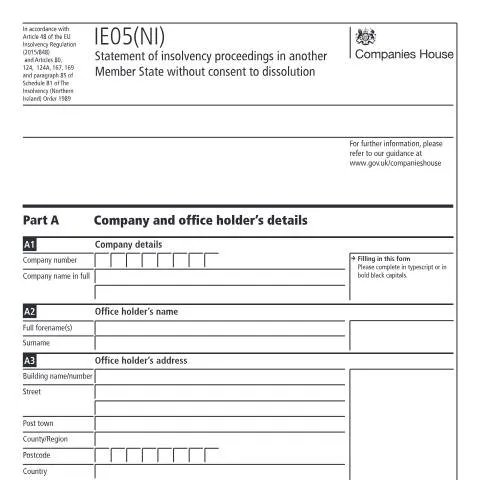
Understanding the IE05(NI) Form for Insolvency Proceedings
When a company finds itself in the throes of insolvency, navigating the required procedural landscape becomes an essential task. The IE05(NI) form, officially titled Statement of insolvency proceedings in another Member State without consent to dissolution, is a critical document in this process. Its primary function is to inform Companies House about insolvency proceedings occurring outside the UK without prior consent for dissolution. This becomes especially relevant in cross-border insolvency situations, which are increasingly common in our interconnected economy.
The Context of Cross-Border Insolvency
Understanding insolvency doesn't only involve legal jargon; it also requires an appreciation for the international framework governing these matters. The EU Insolvency Regulation (2015/848) plays a pivotal role in how insolvencies are handled when companies operate across the borders of EU member states. This regulation facilitates communication and cooperation among member states, ensuring that insolvency proceedings are recognised and respected.
The Insolvency (Northern Ireland) Order 1989, along with other articles relevant to the IE05(NI) form, stipulates the legal backdrop that necessitates the reporting of insolvency events occurring in other jurisdictions. By providing a structured means of reporting, this form aligns with the broader objectives of transparency and accountability within corporate governance.
The Role of Companies House
Companies House serves as the official register of companies in the UK and Northern Ireland, providing an essential service in the public interest. It records statutory information about companies and ensures compliance with legal requirements. Upon receiving the IE05(NI) form, Companies House will update their records to reflect the ongoing insolvency proceedings, thus maintaining a reliable public record.
This is crucial not only for creditors and stakeholders but also helps maintain the integrity of the UK corporate framework. Any significant changes in a company’s operational status, particularly those related to insolvency, must be accurately recorded to protect the interests of all parties involved.
Who Needs to Submit the IE05(NI) Form?
The IE05(NI) form is primarily intended for office holders or representatives of the company undergoing insolvency proceedings. These could include:
- Liquidators appointed in another EU member state
- Administrators managing the insolvency process
- Receivers acting on behalf of creditors
Any office holder dealing with insolvency in a cross-border context will be required to submit this form if they wish to formally notify Companies House about the insolvency proceedings being conducted outside the jurisdiction of Northern Ireland without the consent to dissolve the company.
Situational Considerations for Filing
It's important to consider specific scenarios that may necessitate the submission of the IE05(NI) form:
- Multiple Jurisdictions: If a company registered in Northern Ireland is undergoing insolvency proceedings in another member state, the IE05(NI) form must be filed to avoid complications arising from simultaneous proceedings in different jurisdictions.
- Lack of Consent for Dissolution: The form is specifically for cases where there has been no agreement about dissolving the company—a point that is crucial for maintaining compliance with both local and international regulations.
Filling Out the IE05(NI) Form: A Detailed Breakdown
Understanding how to complete the IE05(NI) form accurately is vital. The form is divided into several parts, each requiring specific information. Here’s a detailed look at what needs to be filled out:
Part A: Company and Office Holder’s Details
This section is foundational. It requires:
- Company Information: You must provide the full name of the company and its registration number as held on the Companies House public register.
- Office Holder’s Information: Details such as the full name, address, and contact information of the office holder managing the insolvency proceedings must be included.
All information should be entered in bold black capital letters, ensuring clarity and legibility.
Part B: Other Insolvency Proceedings
In this section, you must indicate if there are other insolvency proceedings concerning the company in another Member State. Details to provide here include:
- The name of the liquidator appointed in the other country
- The court details handling the case in the foreign jurisdiction
If there are other proceedings related to another company that are pertinent to your case, those should also be documented.
Part C: Attachments and Signature
Finally, the form concludes with a section for attachments and signature. Depending on the situation, you may need to submit additional documents to support your filing. This could include relevant court orders or consent statements from the liquidator in the other Member State.
Prior to submission, ensure that:
- The company name and number match the records at Companies House.
- You have signed the form, verifying the information provided.
The Submission Process: Where and How to File
Once the IE05(NI) form has been completed, it must be submitted to Companies House. You have the option to send it to any address associated with Companies House. However, to expedite the process, it is advisable to send it to:
The Registrar of Companies,
Companies House,
Second Floor,
The Linenhall,
32-38 Linenhall Street,
Belfast, Northern Ireland,
BT2 8BG.
Include a cover letter if necessary, and retain a copy of the completed form for your records. This ensures you have documentation in case of any future disputes or clarification needs.
Important Considerations During Submission
When submitting the form, keep in mind the following:
- Public Record: All information provided will appear on the public record, impacting the company's reputation and stakeholder perceptions.
- Incorrect or Missing Information: Companies House may return forms that are either incorrectly filled out or lack necessary information. Thus, careful attention to detail is paramount.
Understanding the Aftermath of Filing the IE05(NI)
Once the IE05(NI) form is filed, several potential outcomes may arise. Companies House will review the submitted documentation and update the public records accordingly.
Possible Outcomes After Submission
- Confirmation of Receipt: Companies House may issue a confirmation that the form has been processed, allowing you to confirm that the information is now part of the public register.
- Requests for Further Information: Should Companies House require additional details or clarification, they may contact the office holder directly.
- Implications for Creditors and Stakeholders: The information in the IE05(NI) form will serve as notification for creditors and other stakeholders about the company's financial status and any ongoing insolvency proceedings in other jurisdictions.
Mapping the Path Forward: Subsequent Steps
Post-filing, it’s crucial to remain proactive. Depending on the circumstances surrounding the insolvency, office holders may need to engage further with creditors, negotiate terms, or consider potential restructuring options.
Engagement with Creditors
Communicating transparently with creditors is vital at this juncture. They will need to understand the implications of the insolvency proceedings, and why the IE05(NI) has been filed. Regular updates can minimise confusion and foster trust.
Exploring Further Legal Obligations
As part of ongoing obligations, keep abreast of any developments in both domestic and international insolvency laws that may affect your company. Regular consultations with legal advisors, especially those with expertise in cross-border insolvency, can provide essential guidance.
Conclusions That Matter: Ensuring Compliance
Navigating the implications of insolvency, particularly in a cross-border scenario, requires diligence and clarity. The IE05(NI) form provides a structured method for notifying Companies House about insolvency proceedings occurring outside of Northern Ireland without prior consent for dissolution.
Understanding the intricacies of filling out this form correctly, following the submission process, and engaging with all stakeholders can significantly impact the ultimate outcome for the company in distress.
While insolvency is undoubtedly a challenging scenario, being informed and prepared can help mitigate risks and lead to more favourable resolutions. Always keep detailed records of all communications and filings, and consult with professionals when in doubt.
Understanding Insolvency Proceedings in the EU Context
Insolvency proceedings can vary significantly across different jurisdictions within the European Union (EU). When dealing with a statement of insolvency proceedings in another member state, it is essential to understand the principles governing cross-border insolvency. According to the Insolvency Regulation (EU) 2015/848, the primary jurisdiction for opening insolvency proceedings rests with the member state where the debtor has their centre of main interests (COMI).
When a company registered in Northern Ireland, for example, encounters insolvency issues, and proceedings are initiated in another EU member state, the procedures may differ based on local laws and regulations. The statement of insolvency proceedings (IE05(NI)) becomes particularly relevant as it conveys essential information regarding the insolvency process initiated in that member state.
It is important to evaluate the implications of such proceedings on the company's obligations and liabilities in the UK. Notably, the lack of consent to dissolution adds an additional layer of complexity, as it can influence creditor claims and the overall trajectory of the insolvency process. Stakeholders, including creditors and employees, must be aware of their rights and the possible ramifications of foreign insolvency proceedings on their interests.
Furthermore, the Data Protection Act 2018 and the UK GDPR play a pivotal role in how personal data is processed and shared during these proceedings. Stakeholders must ensure that compliance with data protection laws is maintained while handling sensitive information across borders.
Key Steps to Take When Involved in Cross-Border Insolvency Proceedings
If you find your business entangled in cross-border insolvency proceedings, particularly following a statement of insolvency in another EU member state, there are several crucial steps to navigate the situation effectively:
- Engage Legal Counsel: Consult with a solicitor experienced in international insolvency law. Legal expertise is vital to understand the nuances of both the local laws in the UK and the regulations in the member state where insolvency proceedings are taking place.
- Notify Relevant Authorities: Ensure that you inform HM Revenue and Customs (HMRC), Companies House, and relevant creditors about the initiation of proceedings in another member state. Transparency is critical to maintain trust and compliance.
- Assess Your Position: Analyze the potential impact of the insolvency proceedings on your assets, liabilities, and overall business operations. This assessment should include a thorough review of cross-border creditor claims and any obligations that may arise.
- Monitor Developments: Stay informed on the progress of the insolvency proceedings in the other member state. The dynamics may change, influencing your strategy and decision-making process.
- Consider Mediation Options: Explore any available mediation or negotiation opportunities. In some cases, it may be possible to reach a settlement with creditors or to restructure debt obligations amicably.
By taking these steps, businesses can better navigate the complex landscape of cross-border insolvency proceedings while protecting their interests and those of their stakeholders.
The Role of Creditors in Insolvency Proceedings Across Borders
Creditors play a crucial role when it comes to insolvency proceedings, especially in cross-border situations. Their rights and responsibilities are defined not only by the insolvency laws of the member state where the proceedings are taking place but also by the overarching legal frameworks established by the EU.
When a statement of insolvency proceedings is issued in another member state, creditors must be proactive in understanding how these proceedings may affect their claims. Typically, creditors need to file their claims in accordance with the rules of the member state where the insolvency proceedings are initiated. This may involve submitting specific forms, such as proof of debt documentation, within stipulated deadlines to ensure that their interests are safeguarded.
Furthermore, creditors should be aware that their claims might be subject to different classifications depending on the local laws in the member state where the insolvency proceedings are conducted. For example, certain debts may be considered secured or unsecured, impacting the order of priority in claims during liquidation or restructuring processes.
It is prudent for creditors to remain engaged throughout the proceedings, staying updated on any developments that may affect their liquidation rights or potential recoveries. They may also consider forming a creditors’ committee to collectively present their interests and negotiate with the insolvency practitioners managing the case. In situations where there are multiple jurisdictions involved, working closely with legal counsel experienced in cross-border insolvency can provide valuable insights and strategic advantages.