Navigating the Nuances of the Supervisor's Progress Report: An In-Depth Guide
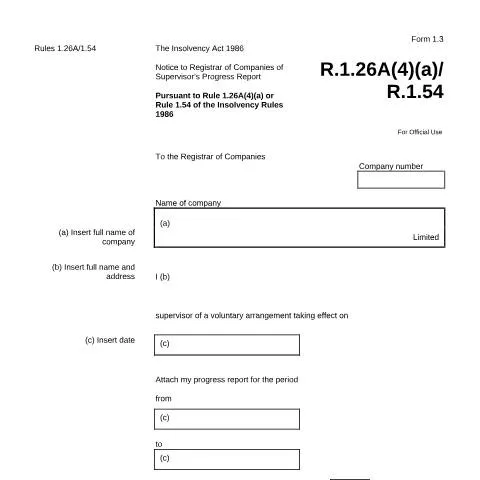
When managing a voluntary arrangement, the role of the supervisor is paramount. As a key figure, the supervisor is responsible for overseeing the arrangement and ensuring compliance with legal requirements. One critical document in this process is the Notice of Supervisor's Progress Report (Form 1.3), submitted to Companies House. This guide delves into the intricacies of this document, shedding light on its significance, usage, and the procedural context within the framework of insolvency law.
Understanding the Context: Insolvency and Voluntary Arrangements
The Insolvency Act 1986 serves as the backbone for handling insolvencies in the UK, providing the legislative framework for both creditors and debtors. Voluntary arrangements allow businesses facing financial difficulties to reorganize their debts under the supervision of an appointed supervisor. These arrangements aim to provide a feasible pathway for companies to continue trading while addressing creditors' claims.
Form 1.3 specifically plays a vital role in this process. It serves as a formal mechanism for the supervisor to communicate progress on the arrangement to the Registrar of Companies. Ensuring that this document is correctly completed and submitted is crucial for maintaining transparency and compliance throughout the arrangement's duration.
The Structure of the Notice: Key Components
The Notice of Supervisor's Progress Report is structured to capture essential information about the arrangement and the progress made. Familiarity with its components can help supervisors avoid common pitfalls associated with its submission.
- Company Identification: The document requires the full name and company number for accurate identification in the Companies House registry.
- Supervisor Details: Supervisors must provide their full name and address, underscoring their accountability.
- Period of Reporting: It is necessary to specify the start and end dates for the reporting period, which allows for a clear assessment of progress made during that time.
- Continuation Sheets: If the progress report extends beyond the initial format, supervisors should note the number of continuation sheets attached.
- Signature and Date: A signature and the date of submission authenticate the document and indicate when the report was finalized.
Interplay with Other Documentation: Ensuring Consistency
Filing Form 1.3 is not an isolated act; it interacts with several other documents within the insolvency process. Understanding these connections can prevent inconsistencies and enhance the overall management of the voluntary arrangement.
- Proposal Document: The initial proposal that outlines the terms of the voluntary arrangement, including payment schedules and creditor agreements, serves as a foundation for the progress report. Aligning the updates in Form 1.3 with the initial proposal fosters clarity.
- Annual Accounts: If applicable, annual accounts submitted to Companies House should reflect the status provided in the progress report, maintaining transparency with stakeholders.
- Reports to Creditors: Any reports or communications sent to creditors regarding the arrangement should echo the findings detailed in Form 1.3, ensuring consistency and trust.
Who Needs to Submit this Notice? Critical Considerations
The submission of the progress report is a responsibility that falls upon the supervisor of the voluntary arrangement. However, several factors influence the necessity and frequency of these submissions:
- Duration of the Arrangement: The length of the voluntary arrangement determines how often progress reports might be required. Generally, reports are filed periodically, often annually, but could be more frequent depending on specific circumstances.
- Complexity of the Case: For more complex arrangements involving multiple creditors or significant financial restructuring, detailed progress reports may be needed to provide a comprehensive overview.
- Regulatory Updates: Changes in legislation or guidance from regulatory bodies may necessitate more frequent reporting, ensuring compliance with evolving standards.
Common Misinterpretations: Clarifying Expectations
Despite its straightforward appearance, the requirements attached to Form 1.3 can often be misinterpreted. Several areas are prone to misunderstanding:
- Time Frames: Misjudging the reporting period can lead to discrepancies. It's essential that supervisors accurately reflect the timeframe of the report, from the commencement of the voluntary arrangement to the present.
- Detail Orientation: Some submitters may assume that brevity is preferred; however, detailed reports that cover all relevant aspects of the arrangement are crucial for proper assessment by the Registrar.
- Obligations vs. Recommendations: Supervisors might confuse legal obligations with recommendations. The filing of Form 1.3 is a legal requirement under the Insolvency Act, not merely a suggestion.
Step-by-Step Approach: Utilizing Form 1.3 Effectively
To maximize the efficacy of Form 1.3, a structured approach can be beneficial. Supervisors should consider the following steps:
- Review Initial Proposal: Begin by revisiting the original proposal to ensure all information aligns and that the progress report adequately reflects the current position.
- Data Compilation: Gather all necessary data regarding payments made, outstanding amounts, and any other critical details relevant to the arrangement's progress.
- Draft the Report: Create a draft that details the progress made within the reporting period, noting any issues encountered or adjustments made to the original terms.
- Verification: Double-check the accuracy of all information, and ensure the report is comprehensive and clear, eliminating any ambiguity.
- Submit Timely: Adhere to the submission deadlines, as late filings can result in complications or legal repercussions.
The Importance of Compliance: Maintaining Legal Standing
Compliance with the filing of Form 1.3 is not just a procedural formality; it has substantial implications for the company under voluntary arrangement. Failing to submit this form can lead to:
- Legal Consequences: Non-compliance may result in penalties or actions from the Registrar of Companies, which could jeopardize the entire arrangement.
- Trust Erosion: Creditors who perceive a lack of transparency or communication may lose trust in the supervisor’s management, leading to disputes or challenges to the arrangement.
- Disruption of Operations: In severe cases, failure to comply can lead to the dissolution of the voluntary arrangement, putting the company's future at risk.
Final Thoughts: Enhancing the Supervisory Role
The Notice of Supervisor's Progress Report is more than just a document; it is a vital communication tool that reflects the management of a voluntary arrangement. By understanding its components, the interrelations with other documents, and the responsibilities attached to it, supervisors can strengthen their role and contribute positively to the insolvency process.
Furthermore, keeping abreast of changes in regulations and maintaining a proactive approach to compliance will enhance the likelihood of a successful outcome for all parties involved. The effective utilization of Form 1.3 exemplifies a commitment to transparency, accountability, and effective governance.
Understanding the Importance of Form 1.3 in Supervision Processes
Form 1.3, formally known as the Supervisor's Progress Report, plays a pivotal role in the regulatory framework surrounding supervision in the UK. This report is essential for maintaining transparency and accountability between supervisors and the regulatory bodies governing various sectors. It provides a structured way for supervisors to report on the progress of the entities they oversee, which can include anything from financial services to educational institutions.
The completion and submission of Form 1.3 is not merely a bureaucratic task; it serves multiple vital functions. Firstly, it allows the regulatory body to assess compliance with relevant laws and regulations. Secondly, the report provides an opportunity for supervisors to highlight any issues or challenges faced by the entities they supervise, thus enabling timely interventions. Additionally, it serves as a historical record that can be valuable in future assessments of the supervisor’s effectiveness and the entity’s performance.
In the context of financial oversight, for example, Form 1.3 can include critical information about the risk management frameworks in place at the supervised entity. This could involve discussing the adequacy of financial reserves, the robustness of internal controls, and any emerging challenges that could affect the entity's stability. For educational institutions, the report might focus on student performance metrics, compliance with educational standards, and the overall health of the institution's academic environment.
Understanding the nuances of this form is key for supervisors looking to navigate the complexities of their responsibilities. Supervisors are advised to maintain a meticulous approach to completing Form 1.3, ensuring that all sections are filled out accurately and comprehensively. This not only aids the regulatory bodies in their assessments but also positions the supervisor as a responsible and diligent overseer.
Common Challenges in Completing Form 1.3
While Form 1.3 is designed to streamline the supervision process, many supervisors encounter common challenges when completing it. Recognizing these issues can help mitigate them and lead to more effective reporting.
One frequent challenge is the gathering of accurate data. Supervisors often have to collate information from multiple sources, each with its own reporting standards and timelines. This can lead to discrepancies or gaps in the data provided. To alleviate this, supervisors should implement a systematic data management strategy that includes regular updates and cross-verification of information from different departments or teams within the supervised entity.
Another challenge is ensuring that the report is submitted within the stipulated deadlines. Given the multi-faceted nature of supervision roles, supervisors may find themselves juggling several responsibilities that can detract from their focus on completing Form 1.3. To address this, it is advisable for supervisors to create a timetable that outlines key milestones leading up to the report's submission date. This proactive approach can help in prioritizing tasks and ensuring timely completion.
Furthermore, the language and terminology used in Form 1.3 can sometimes be a barrier. Supervisors may not always be well-versed in the regulatory jargon or specific technicalities required in the report. To mitigate this, workshops or training sessions focused on the nuances of Form 1.3 can be beneficial. Such initiatives can equip supervisors with the necessary skills and knowledge to produce a high-quality report that meets regulatory standards.
Best Practices for Effective Use of Form 1.3
To ensure that Form 1.3 serves its intended purpose effectively, supervisors can adopt several best practices in their reporting processes. These practices not only enhance the quality of the report but also foster a positive relationship with the regulatory bodies.
Firstly, clarity and conciseness should be prioritized when drafting the report. Supervisors should aim to communicate complex information in a straightforward manner. Using bullet points, headings, and subheadings can help organize the report, making it easier for reviewers to navigate through the content.
Engagement with stakeholders is another best practice. Supervisors should involve key stakeholders from the supervised entity while preparing Form 1.3. This collaborative approach ensures that all relevant perspectives and insights are integrated into the report, leading to a more comprehensive overview of the entity's performance and the challenges it faces.
Moreover, it is vital to provide contextual information when discussing specific findings or metrics. This means not only stating facts but also explaining their significance within the broader landscape of the supervised entity’s operations. For example, if a financial institution has seen a decline in customer satisfaction scores, the report should explore potential reasons for this decline, such as market conditions or changes in consumer behaviour.
Lastly, supervisors should maintain a forward-looking perspective in Form 1.3. While assessing past performance is essential, the report should also outline future goals, initiatives, and areas for improvement. This demonstrates to regulatory bodies that the supervisor is not only reactive but also proactive in fostering a culture of continuous improvement within the supervised entity.