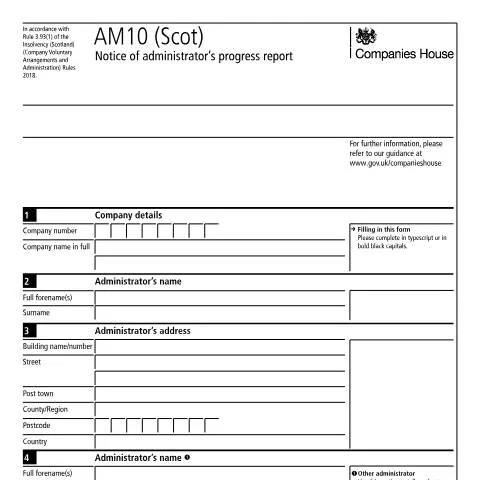
Navigating the AM10 (Scot): Understanding the Administrator's Progress Report for Scottish Companies
In the realm of corporate administration in Scotland, the AM10 (Scot) document plays a pivotal role in informing stakeholders regarding the progress of administration. When a company enters administration, appointed administrators are required to report on their activities. This document serves as a formal notice of these reports, ensuring transparency and accountability in financial recovery processes. It is crucial for directors, creditors, and shareholders to comprehend the nuances of this notice for effective management of their interests and expectations.
Diving Into the Details: What the AM10 (Scot) Covers
The AM10 (Scot) is not merely a form to fill out; it encapsulates several key elements essential to understanding the status of a company undergoing administration.
- Company Identification: The notice requires precise identification of the company, including its full name and company number. This ensures that all stakeholders are aware of which entity's progress is being reported.
- Administrator Information: Details about the administrator(s) are crucial. This includes names, addresses, and other identifiers that facilitate communication and accountability.
- Period of Progress Report: The specified timeframe during which the report pertains is key; it outlines the scope of the administrator's activities and decisions made in that duration.
- Progress Report Attachment: The actual progress report must be attached, providing a detailed account of the administrator’s actions, the financial status of the company, and future plans.
Key Terms and Concepts: Making Sense of Administrative Language
Understanding the terminology used in the AM10 (Scot) is essential for all parties involved. Here are some key concepts:
- Administrator: An individual or firm appointed to manage the affairs of a company that has entered administration. They are responsible for maximizing the return to creditors.
- Administration: A process designed to rescue a company in distress. The company continues to operate while its debts are reorganized or settled.
- Progress Report: A document prepared by the administrator detailing the current status of the company's affairs, including financial performance and any significant actions taken.
Essential Situations: Who Should Use the AM10 (Scot)?
The AM10 (Scot) is indispensable in various scenarios:
- Directors of Companies in Administration: Company directors must understand the implications of the administrator's progress reports and how they affect the company's future.
- Creditors: Creditors need to be informed about the progress of the administration to understand how and when they might recover owed debts.
- Stakeholders: Shareholders and other stakeholders benefit from insights into how the company is being managed and whether their investments may recover value.
Interpreting the Progress Report: Common Misunderstandings
Proper interpretation of the progress report is vital to avoid misconceptions:
- Scope of Reporting: Stakeholders often misinterpret the scope of the report, assuming it covers all aspects of a company’s operations. However, it focuses on specific administrative actions and outcomes.
- Future Projections: The report may address future plans, but stakeholders sometimes take these projections as guarantees, leading to unrealistic expectations.
- Financial Estimates: Figures provided are often estimates and should not be viewed as final. Caution is advised when interpreting financial situations.
Connections to Other Documentation: The Broader Administrative Framework
The AM10 (Scot) does not exist in isolation. It is part of a framework of documents and procedures that govern company administration:
| Document | Purpose | Relationship to AM10 (Scot) |
|---|---|---|
| SA100 Tax Return | Annual self-assessment tax return for individual self-employed taxpayers. | May provide income context for administrators when assessing company viability. |
| P60 Certificate | Summarizes an employee’s total pay and deductions for a tax year. | Relevant for the administrator's understanding of employee liabilities. |
| Statement of Affairs | A document detailing a company's assets and liabilities upon entering administration. | Provides foundational data for the progress report. |
Filing the AM10 (Scot): Practical Considerations and Steps
Filing the AM10 (Scot) effectively requires attention to detail. Here are crucial considerations:
- Correct Company Information: Ensure that the company’s name and number match the public record to avoid delays.
- Administrator's Signature: The document must be signed by the administrator, validating the information contained within it.
- Timeliness: Submit the notice within the required timeframe to adhere to regulations, typically within a specific period after the reporting period ends.
It’s advisable to file with Companies House directly, either in person or via the recommended postal address. Completing this process accurately is crucial, as forms can be returned if filled out incorrectly, which can lead to misunderstandings regarding administration progress.
Final Insights: The Impact of AM10 (Scot) on Stakeholders
The AM10 (Scot) serves a vital function not only in the mechanics of company administration but also in fostering trust among stakeholders involved. By providing clear and detailed reports, administrators can maintain transparency, which is critical during challenging times. Understanding this document equips directors, creditors, and stakeholders with the information necessary to navigate the complexities of a company’s recovery journey.
Understanding the Administrator's Progress Report
The Administrator's Progress Report, specifically the AM10 (Scot) form, is an essential document in the administration process of a Scottish company facing financial difficulties. It is critical for creditors and stakeholders to be informed about the progress made during the administration period. This report not only provides insights into the administration's financial affairs but also serves as a transparency tool that holds the administrator accountable.
Upon submitting the AM10 (Scot) form, administrators must ensure they detail various aspects of the recovery efforts. These include the company’s financial state, asset status, and the steps taken to maximize returns for creditors. The report must be submitted at regular intervals—typically every six months—until the administration process concludes. This regularity ensures that all parties involved are kept up to date with any changes in the company’s situation.
It's also important for administrators to include any challenges encountered and how they plan to address them. Documenting potential risks and outlining contingency plans can provide creditors with a clearer understanding of the overall recovery strategy and the likelihood of successful outcomes.
Legal Implications of the AM10 (Scot) Submission
Filing the AM10 (Scot) form is not merely a procedural task; it comes with significant legal responsibilities and implications for the administrator. Under the Insolvency Act of 1986 and subsequent regulations, administrators are required to adhere to strict guidelines regarding the accuracy and timeliness of their reports. Failure to comply can lead to serious consequences, including potential legal action from creditors or even disqualification from future roles in insolvency proceedings.
Moreover, the Data Protection Act 2018 and UK GDPR plays an important role when handling personal information within these reports. Administrators must ensure that any personal data included in the AM10 (Scot) report is processed lawfully and in compliance with data protection laws. This includes obtaining necessary consent where appropriate and ensuring data is kept secure throughout the administration period.
Additionally, the reports are subject to scrutiny by the court and can be challenged by dissatisfied creditors. It is, therefore, vital that administrators prepare these reports diligently, with a thorough verification of facts and figures included. Misrepresentation or inaccuracies could lead to a loss of trust from creditors, as well as potential professional repercussions for the administrator.
Engaging with Creditors During the Reporting Period
Effective communication with creditors is a key aspect of the administration process and is particularly important during the reporting periods specified in the AM10 (Scot) submissions. Administrators should actively engage with creditors, not only to provide updates but also to solicit feedback and address any concerns they may have. This two-way communication can foster a collaborative atmosphere and may lead to greater support from creditors as the administration progresses.
Furthermore, administrators should consider hosting creditor meetings, either virtually or in person, to discuss the content of the progress reports. These meetings can serve as a platform for transparency and allow for a more comprehensive understanding of the administration’s objectives and hurdles. Keeping creditors informed can mitigate potential disputes and promote a cooperative approach to the administration process.
In addition, ongoing engagement can help in refining the administrator's approach by incorporating feedback from creditors. If creditors feel heard and valued, they are more likely to support the administrator’s strategies, which can result in better outcomes for all parties involved.