Navigating the Statement of Administrator's Proposals: A Practical Guide
When a company enters administration, a structured approach to resolving its debts and obligations becomes paramount. The admin team must provide a clear path forward, which is where the Statement of Administrator’s Proposals (Form 2.17B) comes into play. This document is not just a formality; it acts as a cornerstone for the administration process, outlining the strategy to be pursued for the benefit of creditors and stakeholders.
Understanding the Scope of Form 2.17B
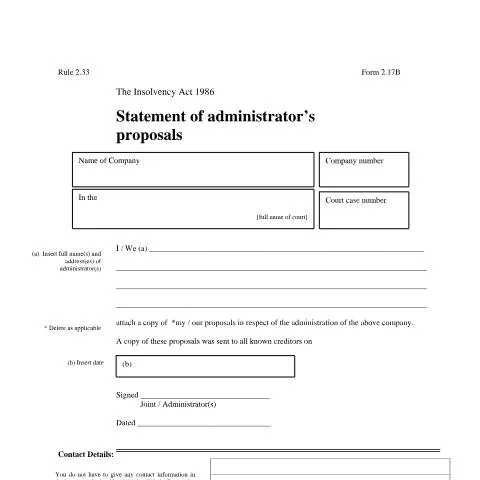
The Statement of Administrator's Proposals template represents a comprehensive outline of how the administrator intends to address the company's financial situation. It captures essential elements that must be communicated to creditors and other relevant parties. This form is integral for maintaining transparency and accountability throughout the administration process.
Key Components of the Document
- Company Information: This includes the full name of the company, its registration number, and the court case number, all of which help to identify the specific administration proceedings.
- Administrator(s) Details: The name and address of the administrator(s) are crucial for establishing who is managing the process and to whom creditors may direct their inquiries.
- Date of Distribution: The document must indicate when a copy of the proposals was sent to all known creditors, underpinning the requirement for communication and engagement with those affected.
Understanding these components is vital for anyone involved in the administration process, as they establish the framework within which the proposals will operate.
Implementing the Proposals: A Step-by-Step Approach
Once the proposals have been formulated, the next steps involve a series of procedural actions that ensure compliance with the Insolvency Act 1986. Here’s a breakdown of the implementation process:
- Preparation of the Proposals: Administrators need to thoroughly assess the company’s financial standing, including debts, assets, and stakeholder interests.
- Drafting the Statement: With a clear understanding of the situation, administrators can now draft the Statement of Proposals. This should align with the guidelines set out in the Insolvency Act.
- Notification of Creditors: Following the drafting, a copy of the proposals must be sent to all known creditors. This step is critical to ensure that all parties are informed and can provide feedback or raise concerns.
- Submission to Companies House: The completed Form 2.17B must then be submitted to Companies House. This final submission solidifies the proposals as part of public record, further ensuring transparency.
By following these steps, administrators can navigate the complexities of company administration while adhering to legal requirements.
Target Audience: Who Needs to Be Aware?
The Statement of Administrator's Proposals is not merely for administrators; it serves a wide array of stakeholders, including:
- Creditors: They need this information to understand how their interests will be protected during administration.
- Shareholders: Any potential changes in their equity stakes or the restructuring of the company can be outlined in these proposals.
- Employees: Staff may have questions regarding job security and potential restructuring, making it essential for them to stay informed.
Thus, the document acts as a communication tool, ensuring that everyone involved is on the same page and aware of the proposed course of action.
Common Procedural Questions and Clarifications
As administrators navigate the process, several procedural questions often arise. Here are some common inquiries:
What if the Proposals Change?
If circumstances change significantly—whether due to new information or creditor feedback—the administrator must consider revising the proposals. This is not uncommon, especially in complex cases where new potential solutions become apparent after initial submission.
Is There a Deadline for Submission?
According to the guidance provided by the Insolvency Act, the proposals must be circulated and submitted in a timely manner. While specific deadlines can vary based on the individual circumstances of the administration, administrators typically aim for a submission as soon as the proposals are finalized to expedite the process.
How Are Creditors Informed?
Creditors must be informed through written communication. It’s advisable to maintain a record of these communications, including dates and methods of delivery. This ensures that all creditors receive timely updates and fosters a sense of transparency.
Interactions with Other Documentation
The Statement of Administrator's Proposals does not operate in isolation. It is part of a broader framework of documents and legal requirements that govern the administration process.
Related Documents
| Document | Purpose | Interrelation |
|---|---|---|
| Administrators’ Report | Provides a summary of the company’s financial status and the proposed course of action. | Often referenced in the proposals to offer detailed context to creditors. |
| Statement of Affairs | Details the company's assets, liabilities, and financial situation. | Essential for understanding the financial landscape addressed in the proposals. |
| Meeting Minutes | Documents the discussions and decisions made during creditor meetings. | Can inform revisions or updates to the proposals. |
This interconnectedness highlights the importance of a cohesive approach throughout the administration process. Each document feeds into the larger narrative, ensuring clarity and comprehension for all parties involved.
Common Misinterpretations of the Document
As administrators and stakeholders engage with the Statement of Administrator's Proposals, several common misinterpretations can arise:
Assuming Proposals Are Binding Immediately
One common misconception is that the proposals become binding upon submission. While they inform creditors of the intended course of action, binding decisions typically require creditor approval. Stakeholders should understand that the proposals serve as a framework for discussion rather than an immediate mandate.
Misunderstanding the Role of the Administrator
Another frequent misunderstanding is the role of the administrator. They are tasked with acting in the best interests of all creditors, but this does not mean they can disregard individual creditor concerns. Stakeholders must recognize that administrators balance multiple interests and must engage with all parties to reach a consensus.
Final Thoughts: The Importance of Engagement
Engagement with all stakeholders is paramount throughout the administration process. The Statement of Administrator's Proposals is more than just a document; it is a vital communication tool that can help navigate complex financial landscapes. Administrators must ensure clarity and transparency to foster trust among creditors, employees, and shareholders.
In the end, while the process may seem daunting, the proper use of the Form 2.17B can streamline the administration journey, paving the way for a structured and informed resolution to the company's challenges. Understanding its intricacies allows all parties to work collaboratively towards a feasible outcome.
Understanding the Role of Administrators in Insolvency Proceedings
In the context of corporate insolvency, administrators play a critical role. They are appointed to manage the affairs of a company in financial distress with the aim of rescuing it as a going concern or achieving a better outcome for creditors than would be possible through a liquidation process. The administrator has a statutory duty to act in the best interests of the creditors and must comply with various legal requirements under the Insolvency Act 1986.
Administrators are typically appointed by the court or by the company’s directors. Once appointed, they take control of the company’s assets and make decisions on how to resolve the company’s financial issues. An important aspect of this role involves providing a clear statement of their proposals to creditors, which is a prerequisite for the administration process to proceed smoothly.
The Process of Giving Notice of Administrator’s Proposals
When administrators formulate their proposals, they must follow a structured process to notify all creditors and stakeholders effectively. This ensures transparency and provides creditors with an opportunity to understand the proposed course of action.
The notice of administrator's proposals must be sent to all known creditors within 28 days of the administrator's appointment. This period is critical, as it allows creditors to review the proposals, ask questions, and voice any objections or support for the administrator's intended strategies. The notice must include detailed information about the company’s situation, the reasons for entering administration, and how the proposals aim to maximize returns for creditors.
Additionally, the proposals must be presented in a clear and accessible manner. Administrators often include summaries or highlights of the key points to facilitate understanding among creditors, recognizing that some may not have extensive knowledge of legal jargon. A well-structured document can help build trust and foster cooperation among stakeholders, which is essential for the success of the administration process.
Appealing Against the Administrator's Proposals
Creditors have the right to challenge the administrator’s proposals if they believe they are not in the best interest of the creditors. This appeal process is governed by specific rules, allowing creditors to voice their concerns formally. Typically, this involves convening a creditors’ meeting, where creditors can discuss the proposals, ask questions, and propose amendments or alternatives.
If a creditor wishes to challenge the proposals, it is essential to act swiftly. The challenge must be lodged within a specific timeframe, usually specified in the notice of proposals. During the meeting, the administrator must respond to the concerns raised and provide justifications for their proposals based on the company’s financial overview.
Should the creditors remain dissatisfied, they may petition the court for a review of the proposals. The court will then consider the evidence presented by both the administrator and the challenging creditors. If the court finds that the proposals are not in the best interest of creditors, it may reject the proposals or order the administrator to revise them.
Understanding this appeals process is crucial for creditors, as it empowers them to actively participate in the administration process and protect their interests effectively.