Navigating the LIQ05 Notice: Essential Context for Liquidators
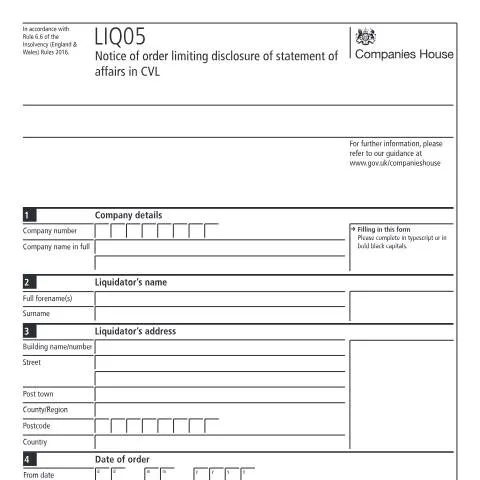
The LIQ05 Notice of Order Limiting Disclosure of Statement of Affairs in CVL serves as a pivotal document for liquidators operating under the Company Voluntary Liquidation (CVL) process. Understanding the intricacies of this notice is crucial, particularly in terms of compliance not only with company law but also with the Insolvency (England & Wales) Rules 2016. This article will provide a comprehensive overview of how to effectively utilize the LIQ05 notice, explore common pitfalls, and clarify essential terminology.
Understanding the Mechanics of the LIQ05 Notice
When a company enters the CVL process, a liquidator is appointed to manage the winding-up of the company. The LIQ05 notice plays a central role in this process by limiting the information disclosed about the company’s statement of affairs, which outlines its financial position. This limitation can be necessary for various reasons, such as protecting sensitive information that could have ramifications for creditors or ongoing legal proceedings.
The Filing Process: Step-by-Step
- Obtain the court order: Prior to completing the LIQ05, a liquidator must secure a court order that explicitly limits the disclosure.
- Complete the LIQ05 notice: Fill in pertinent details including the company name, company number, liquidator's name and address, and the date of the court order.
- Attach supporting documents: Include any necessary attachments that validate the request for limited disclosure.
- Submit the notice: Return the completed LIQ05 to Companies House, preferably at their Cardiff address to ensure prompt handling.
Supporting Documentation: What to Include
While the LIQ05 itself requires specific details, associated documentation is critical for substantiating the notice's claims. The following documents should typically accompany the LIQ05:
- The court order that restricts disclosure.
- The statement of affairs outlining financial details.
- The statement of concurrence from creditors, if applicable.
Common Misinterpretations: Clarifying Key Points
Liquidators often encounter confusion regarding the scope and implications of the LIQ05 notice. Here are several common misinterpretations:
- Scope of Limitation: A limiting order does not absolve liquidators from the responsibility of providing essential financial details to creditors as necessary.
- Public Record Implications: Although the LIQ05 notice limits public disclosure, it does not remove the obligation to ensure that necessary information is accurately filed and remains compliant with legal standards.
Contextual Relevance: Who Needs This Notice?
The LIQ05 notice is specifically tailored for liquidators overseeing a company in CVL. Its relevance extends to:
- Liquidators: They must grasp the importance of this notice to protect both their interests and those of the creditors.
- Creditors: Understanding the potential limitations in access to critical financial information can inform their strategies during the liquidation process.
This document becomes indispensable when sensitive information is involved, such as high-profile mergers, proprietary financial data, or when litigation is anticipated.
Interconnections with Other Documents in CVL Processes
The CVL process is multifaceted, and the LIQ05 notice interacts with several other key documents:
| Document | Purpose | Relation to LIQ05 |
|---|---|---|
| Statement of Affairs | Details of the company’s assets and liabilities. | May be limited in disclosure by the LIQ05 notice. |
| Court Order | Authorizes limitations on disclosures. | Required before submitting the LIQ05 notice. |
| Statement of Concurrence | Consent from creditors regarding the liquidation process. | Can be attached to the LIQ05 to strengthen the case for limited disclosure. |
Practical Guidance for Liquidators: Ensuring Compliance
The process following the issuance of the LIQ05 notice is not devoid of responsibilities. Liquidators must ensure compliance with ongoing obligations under UK law, particularly under the Data Protection Act 2018 and UK GDPR. This includes:
- Data Minimization: Only necessary data should be disclosed, adhering strictly to the court's limitations.
- Timely Communication: Maintain clear communication with creditors regarding the limitations on information, while ensuring compliance with all regulatory requirements.
Conclusion: The LIQ05 Notice as a Tool for Protection and Compliance
In summary, the LIQ05 Notice of Order Limiting Disclosure of Statement of Affairs in CVL is a vital document that liquidators must understand and utilize effectively. Its proper application not only ensures compliance with legal obligations but also protects sensitive information during the liquidation process. The intricacies of this notice demand careful attention, along with a strategic approach to its integration within the wider context of insolvency proceedings. For further information, liquidators are encouraged to visit the official Companies House guidance website or contact relevant authorities for clarification.
Understanding the Implications of a Notice of Order Limiting Disclosure
When a company enters into a Creditors' Voluntary Liquidation (CVL), the process necessarily involves transparency to creditors while also balancing the company's need for confidentiality. The Notice of Order Limiting Disclosure regarding the Statement of Affairs serves as a critical element in this process. It not only protects sensitive information but also establishes the framework within which the liquidator operates.
The implications of such a notice are vast. First and foremost, it influences the flow of information available to creditors and stakeholders. While creditors typically have the right to access information that may affect their recovery prospects, an order limiting disclosure can restrict this access based on various considerations, such as protecting trade secrets or sensitive personal data.
The order is governed by the Insolvency Act 1986, which provides the legal basis for the application. It is crucial for liquidators to clearly articulate the reasons for requesting this order in their application to the court. Notably, the court seeks a balance between the public interest and private commercial interests, making the accompanying justification vital.
Additionally, the liquidator must consider that while the order may temporarily limit disclosure, it does not absolve them of the duty to provide an accurate and comprehensive Statement of Affairs. Transparency remains imperative, and any redactions made must be justifiable and proportionate.
How to Prepare Your Application for A Notice of Order Limiting Disclosure
The process of applying for a Notice of Order Limiting Disclosure requires meticulous preparation. Liquidators must ensure that their application adheres to specific procedural requirements set forth by the Insolvency Rules 2016.
Start by compiling a detailed Statement of Affairs. This document must include all assets and liabilities, along with a narrative that justifies the request for limiting disclosure. It is advisable to categorize sensitive information clearly, specifying which details require protection and why. For example, if the company possesses proprietary technology or confidential client information, these elements should be explicitly mentioned in the application.
Next, support your application with evidence. This could include affidavits or letters of support from management or other stakeholders underscoring the importance of maintaining confidentiality. Remember, the credibility of the request often hinges on such supporting documents.
Once the application is prepared, it must be submitted to the relevant court, typically within the jurisdiction where the company was registered. Ensure compliance with the court's filing requirements, including any necessary fees. Be prepared for a court hearing, where the liquidator may need to justify the request further. Having a well-prepared presentation outlining the rationale and implications for creditors can significantly enhance the chances of approval.
Post-Application Steps and Best Practices
After submitting the application for a Notice of Order Limiting Disclosure, certain best practices should be followed to ensure compliance and transparency throughout the CVL process. First, maintain clear communication with creditors even if specific details are withheld. Keeping them informed about the liquidation process can help manage expectations and potentially mitigate disputes.
Once the order is granted, it’s essential to create a robust system for handling sensitive information. This includes implementing secure data storage solutions and access controls to ensure that only authorized personnel can view confidential documents. Documenting these processes can further enhance accountability and demonstrate compliance if questioned in the future.
Regular audits of the information management practices should be conducted to identify any potential risks related to unauthorized disclosure. This can include reviewing who has access to sensitive information and whether there are adequate measures to safeguard it. Additionally, staying updated with the Data Protection Act 2018 and GDPR guidelines is essential, especially as they pertain to personal data handling during the liquidation process.
Finally, once the CVL is complete, ensure that proper records are maintained, particularly concerning the reasons for limiting disclosure and the information retained. This documentation may be vital for any future inquiries or legal challenges related to the liquidation.