Understanding the Moratorium: A Vital Tool for Companies in Distress
The moratorium serves as a critical measure providing companies financial relief during periods of distress. For those navigating the complexities of the insolvency landscape, understanding the nuances of this process is essential. The Insolvency Act 1986 establishes the framework within which companies can seek protection from creditors, allowing them the opportunity to reorganize their financial affairs without the immediate threat of legal action.
Who Needs to Take Action? Identifying Stakeholders
Companies considering the moratorium must assess their specific circumstances to determine whether this pathway is suitable. The extension or continuation of a moratorium, as articulated in Form 1.12, is particularly relevant for:
- Directors seeking to safeguard their company's assets while formulating a turnaround strategy.
- Creditors who may be impacted by the moratorium and need to understand how it affects their rights.
- Nominee Administrators who play a pivotal role in managing the moratorium process.
Each stakeholder has a unique perspective and involvement in the process, making it important for all parties to be well-informed of their rights and obligations under the law.
Key Documents Intertwined with the Moratorium Process
In the context of seeking an extension or renewal of the moratorium, several documents play crucial roles in the overall procedure. Familiarity with these documents ensures that stakeholders are equipped to navigate the regulatory landscape effectively. Major documents include:
- Original Moratorium Notice: This initial document establishes the moratorium period and the conditions under which it can be extended.
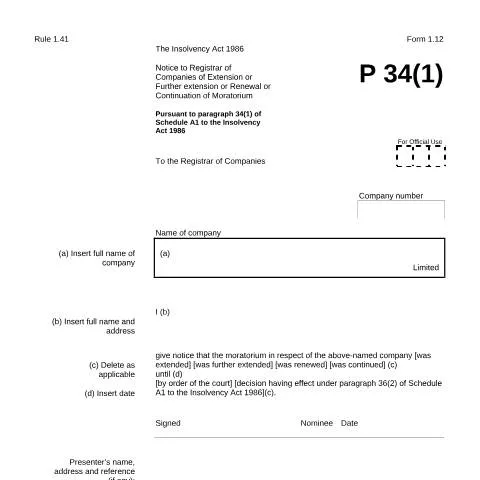
- Form 1.12: The specific notice submitted to the Registrar of Companies to communicate the extension, renewal, or continuation of the moratorium.
- Court Orders: In certain cases, a court order may be necessary to extend the moratorium, particularly if the extension is contested.
Understanding the interplay between these documents is essential for successful navigation of the moratorium process.
A Step-by-Step Guide to Submitting Notice of Extension
To ensure compliance and the successful submission of the moratorium extension notice, it is advisable to follow a structured approach:
- Prepare Necessary Information: Gather details regarding the company name, company number, and the specific terms of the extension.
- Complete Form 1.12: Fill out the form meticulously, ensuring accuracy in the details provided, including the duration of the extension.
- Submit to Companies House: Send the completed Form 1.12 to Companies House via the appropriate channel to ensure timely processing.
- Await Confirmation: After submission, monitor for confirmation from Companies House regarding the acceptance of the moratorium extension.
This methodical approach helps mitigate risks of errors or delays that could jeopardize the moratorium's continuation.
Navigating Common Misinterpretations of the Moratorium
As with many legal frameworks, misunderstandings can arise regarding the moratorium's implications and processes. A few prevalent misinterpretations include:
- The Moratorium is Permanent: Many individuals mistakenly believe that once a moratorium is in place, it remains indefinitely. In reality, moratoriums come with specific time limits and require ongoing management.
- All Creditors are Barred: There is a common belief that a moratorium provides absolute protection from all creditors. However, certain creditors may still be able to initiate actions depending on the specifics of the case.
- Renewal Guarantees Success: The assumption that a mere renewal of the moratorium guarantees financial recovery can be misleading; effective management is necessary for a successful turnaround.
Being aware of these misinterpretations can help stakeholders maintain realistic expectations while navigating the moratorium process.
Procedural Questions that Arise Frequently
As companies engage with the moratorium process, several procedural questions often emerge. Here are some noteworthy inquiries:
- What is the maximum duration of a moratorium? The duration of a moratorium can vary significantly depending on the circumstances, and extensions are subject to specific regulations.
- What happens if I fail to submit the notice in time? Failing to submit the notice of extension on time can result in the immediate termination of the moratorium, exposing the company to creditor actions.
- Can a moratorium be extended multiple times? Yes, a moratorium can be extended several times, provided that each extension complies with the necessary legal requirements and is justified.
Proactively addressing these questions can alleviate concerns and foster a more streamlined engagement with the moratorium process.
Fundamental Concepts to Grasp About Moratoriums
For those involved in the moratorium process, understanding certain core concepts is crucial for effective navigation:
- Moratorium: A legally sanctioned pause on debt repayments, allowing companies to restructure their finances.
- Nominee: A qualified individual responsible for overseeing the moratorium, ensuring compliance with legal requirements.
- Insolvency Practitioners: Professionals who provide guidance and support to companies in financial distress, including during the moratorium phase.
A solid grasp of these concepts will empower stakeholders to engage meaningfully with the moratorium process and make informed decisions.
Impact of the Moratorium on Company Operations
The implications of a moratorium extend beyond financial arrangements, influencing various operational aspects of a company. Key impacts include:
- Operational Flexibility: Companies can temporarily suspend debt repayments, allowing them to redirect funds to critical operational needs.
- Stakeholder Relations: The moratorium can provide breathing room for dialogue and negotiation with creditors, enhancing stakeholder relations.
- Reputational Considerations: While engaging in a moratorium can carry a stigma, effectively managing the process can bolster a company’s reputation as one that proactively addresses its challenges.
Recognizing these impacts can help company directors and stakeholders manage expectations and plan strategically during the moratorium period.
Legal and Regulatory Framework Surrounding the Moratorium
The moratorium process is governed by various legal provisions, primarily encapsulated in the Insolvency Act 1986. Understanding these regulations is essential for compliance:
| Aspect | Description |
|---|---|
| Initiation | The moratorium is initiated by submitting a notice to the Registrar of Companies. |
| Duration | The standard duration can be extended, but specific rules govern these extensions. |
| Nominee Role | A qualified nominee must oversee the moratorium to ensure compliance with legal standards. |
| Creditors' Rights | Creditors have specific rights and powers during the moratorium period, which must be understood. |
Familiarity with this framework enables companies to navigate the moratorium process more effectively, ensuring all legal requirements are met.
Understanding the Moratorium Process in the Context of Corporate Restructuring
A moratorium in the UK can serve as a vital financial breathing space for companies facing insolvency challenges. Section 1.12 primarily deals with notifying relevant authorities about an extension or continuation of this moratorium. To fully grasp this process, it’s essential to recognise the implications of a moratorium on corporate restructuring.
The purpose of a moratorium is to allow a company to evaluate its financial position and explore the viability of a rescue plan without the immediate threat of creditor actions. During this period, which is typically up to 20 business days initially, the company is protected from winding-up petitions and the enforcement of security. However, should the company need additional time for negotiation or restructuring, requesting an extension becomes necessary.
When a company decides to continue the moratorium, it may file for an additional period of up to 12 months. This request must be submitted through the appropriate channels, often requiring the involvement of a licensed insolvency practitioner. It’s crucial to note that the moratorium may only be extended if the company can demonstrate that the extension is in the best interest of creditors and that a viable restructuring plan is in progress.
During this extended moratorium, it is also imperative for companies to maintain transparency with their creditors and ensure proper communication regarding the progress of their restructuring efforts. This openness can improve trust and facilitate cooperative negotiations, which can often lead to a more favourable outcome for all parties involved.
The Role of Stakeholders During the Moratorium Notification Process
A successful moratorium extension requires the active participation of various stakeholders, including company directors, insolvency practitioners, and creditors. Each party has a distinct role in the notification process, which must be carefully adhered to in order to comply with legal obligations dictated by the Companies Act 2006.
Firstly, company directors bear the responsibility of ensuring that the moratorium is justified and in the company's best interests. They must prepare a robust plan outlining the intended steps for recovery and provide adequate evidence to support their request for an extension. This entails a comprehensive assessment of the company's financial health and a clear strategy for addressing outstanding debts.
Insolvency practitioners play a critical role in advising the company throughout the moratorium period. They are responsible for assessing the viability of the proposed restructuring plan, ensuring compliance with legal requirements, and mediating discussions with creditors. Their expertise is invaluable in managing the complexities often associated with such negotiations.
Furthermore, creditors are significant stakeholders in this process; they have a vested interest in understanding how the moratorium impacts their claims. Maintaining effective communication with them is crucial. This means sending formal notifications that outline the purpose of the moratorium, its implications, and the steps being taken by the company. Engaging with creditors early in the moratorium can help alleviate concerns and foster a collaborative approach to debt resolution.
Practical Steps for Filing a Notice of Extension or Continuation
Filing a notice to extend or continue the moratorium is a meticulous process that requires careful documentation and adherence to procedural guidelines. Here are practical steps to ensure compliance with the notification requirements.
1. Prepare the Necessary Documentation: This includes a detailed report outlining the company’s financial status, the reasons for the extension, and the proposed timeline for restructuring. This documentation should also highlight any progress made during the initial moratorium period.
2. Engage an Insolvency Practitioner: Prior to submitting the notice, consult with a licensed insolvency practitioner who can provide valuable insights and assist in drafting the notice. Their expertise is essential in ensuring that the documentation meets all regulatory standards.
3. Submit the Notice to the Court: The notice must be filed with the court where the original moratorium was granted. It is advisable to do this as early as possible, ideally within the last week of the initial moratorium, to avoid any lapses in protection.
4. Notify Creditors: After submitting the notice to the court, it's critical to inform all creditors about the extension. This can be done through formal letters or email communications, clearly stating the reasons for the extension and the anticipated outcomes of the ongoing restructuring efforts.
5. Monitor Compliance: After filing the notice, it is crucial to continuously monitor compliance with the terms of the moratorium. Regular updates to creditors and stakeholders about progress can significantly enhance transparency and trust.
6. Documentation Retention: Ensure that all communications, notices, and supporting documents are retained for future reference, as failure to do so may lead to complications in the event of further inquiries or challenges from creditors.
By following these practical steps meticulously, companies can navigate the complexities of extending a moratorium effectively, thus providing a solid chance for recovery and long-term sustainability.