Understanding the Importance of Ending a Moratorium in Company Insolvency
When a company is experiencing financial distress, it may be granted a moratorium, which temporarily protects it from creditors while it seeks a resolution. This moratorium is crucial for allowing the company to reorganise its debts and attempt to recover financially. However, there comes a time when this moratorium must end, and understanding how to formally give notice of this ending is essential for compliance with the legal frameworks set out in the Insolvency Act 1986.
The Essential Components of the Notice
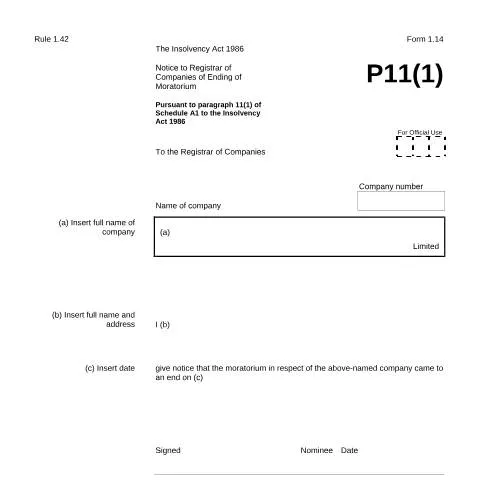
The Notice to Registrar of Companies of Ending of Moratorium (Form 1.14) is a structured document that must be submitted to Companies House to officially declare the conclusion of a moratorium. This notice is not merely a formality; it plays a vital role in ensuring transparency and accuracy in the business registry.
- Company Number: This unique identifier is crucial for the registrar to associate the notice with the correct company.
- Company Name: The full legal name of the company must be provided, including the suffix (e.g., Limited).
- Date of Ending Moratorium: Specifying the exact date when the moratorium ended is essential for clarity and record-keeping.
- Signature of Nominee: The nominee, typically a licensed insolvency practitioner, must sign the notice, confirming the end of the moratorium.
- Presenter’s Information: Including the name and address of the individual or entity presenting the notice is a requirement for follow-up and record-keeping.
Step-by-Step Process for Submitting the Notice
Submitting the notice involves careful steps to ensure accuracy and compliance with the regulations set by Companies House. Let’s explore the process clearly:
- Complete the Form: Make sure all sections of Form 1.14 are filled out accurately. Pay particular attention to spelling the company name correctly and including the correct company number.
- Obtain Necessary Signatures: Ensure that the nominee who managed the moratorium signs the notice. Their signature is a confirmation that the moratorium has indeed ended.
- Submit to Companies House: Once completed, the notice must be submitted to Companies House. This can usually be done via post or in some cases electronically, depending on the nature of the submission.
- Confirmation of Receipt: Following submission, retain any confirmation from Companies House as proof of your notice filing.
Pitfalls to Avoid When Ending a Moratorium
While the process may seem straightforward, there are common pitfalls that companies should be aware of when submitting their notice:
- Inaccurate Company Information: Failing to provide the correct company name or number can delay processing and potentially lead to legal complications.
- Missing Signatures: If the nominee does not sign the document, it will be deemed incomplete, causing further delays.
- Failure to Notify All Relevant Parties: Ensure that all stakeholders, including creditors and shareholders, are informed of the moratorium ending and any subsequent implications.
Interrelation with Other Documentation and Procedures
Understanding how Form 1.14 fits into the larger framework of company insolvency procedures is crucial. The notice not only marks the end of a moratorium but also leads to further actions that a company may need to undertake:
| Document |
Purpose |
When to Submit |
| Notice of Moratorium |
Begins the moratorium process. |
Immediately upon application. |
| Form 1.14 |
Ends the moratorium officially. |
At the conclusion of the moratorium. |
| Insolvency Plan |
Proposes a plan for creditors. |
Following the moratorium, if necessary. |
Who Needs to Be Involved in the Process?
The end of a moratorium involves several key stakeholders:
- Nominee: The licensed insolvency practitioner who managed the moratorium is responsible for signing and submitting the notice.
- Company Directors: They should be aware of the implications of the moratorium ending and any subsequent actions required.
- Creditors: Communication with creditors about the end of the moratorium is essential for maintaining good relations and negotiating any ongoing debts.
- Companies House: As the regulatory body overseeing company registrations and status, Companies House must be notified appropriately.
Practical Considerations Following the Notice Submission
Once the notice has been submitted, companies should consider the following practical steps:
- Monitor Company Health: After the moratorium, keep a close eye on the financial health of the company to avoid falling back into distress.
- Engage With Creditors: Proactively communicate with creditors and seek agreements or compromises where necessary.
- Plan for Future Financial Stability: Consider strategies for avoiding future financial difficulties, such as improved cash flow management or cost-cutting measures.
Conclusion: The Path Forward After a Moratorium
The ending of a moratorium marks a critical point in a company’s journey, one that can lead to recovery and renewed stability if handled correctly. By understanding the importance of submitting Form 1.14 and following the necessary procedures, companies can navigate this challenging phase effectively. Remember, maintaining transparency and communication with all stakeholders is key to fostering trust and establishing a solid foundation for the future.
Understanding the Moratorium Process: Key Considerations
When you’re looking to give notice for the ending of a moratorium under UK law, it’s essential to grasp the underpinning principles that guide the entire process. A moratorium, which effectively provides a temporary relief from creditor actions, can be critical for businesses facing financial difficulties. However, ending a moratorium requires careful consideration of both legal obligations and potential repercussions.
One of the primary components of managing a moratorium is understanding the specific conditions under which it can be terminated. For instance, if the moratorium was initiated under Part A1 of the Insolvency Act 1986, it typically lasts for 20 business days but can be extended. It's vital that the decision to end the moratorium considers whether the company's financial position has improved or worsened during this period. Engage in a thorough assessment of cash flow, ongoing operational costs, and any outstanding debts before proceeding.
Moreover, you must notify all relevant parties of your intention to end the moratorium. This includes creditors, employees, and any other stakeholders who may be affected by this decision. Clear communication is not only a legal requirement but also a practical step that may help in maintaining professional relationships. Be prepared to substantiate your reasons for ending the moratorium, particularly if there are outstanding debts or unresolved financial issues.
Remember that the timing of your notice is crucial. If you are giving notice at the conclusion of the moratorium period, ensure that you comply with all the formalities as prescribed in the governing legislation. Failure to do so can lead to complications, including legal challenges from creditors or regulatory bodies.
Documentation and Compliance: The Legal Framework
In the process of giving notice to end a moratorium, it is crucial to adhere to the documentation requirements set forth by the relevant regulatory authorities. The legal framework surrounding moratoriums is stringent, with specific documentation that must be prepared and submitted. Familiarizing yourself with these requirements is paramount in ensuring compliance.
First and foremost, you must prepare a formal notice to terminate the moratorium. This notice should include essential details such as the name and registered number of the company, the date the moratorium was initiated, and the intended date of termination. Additionally, it is advisable to include a brief explanation of the reasons for ending the moratorium, which can provide clarity and transparency to all stakeholders involved.
You may also need to file additional documentation with Companies House. This might include updates to your company's status or any relevant resolutions passed by directors or stakeholders during the moratorium period. Make sure that all submissions are completed within the relevant deadlines to avoid penalties or complications.
Moreover, the Data Protection Act 2018 and UK GDPR play a vital role in the processing of personal data during this process. Ensure that any information shared in the context of ending the moratorium complies with these regulations. This not only protects the data of individuals involved but also safeguards the company against potential legal repercussions.
Failure to comply with documentation and legal requirements can lead to significant consequences, including the potential for the moratorium to be extended or revoked entirely. Therefore, meticulous attention to detail is necessary to navigate the complexities of this process successfully.
Post-Moratorium Strategies: Moving Forward
Once you have successfully given notice of the ending of a moratorium, it’s crucial to shift focus towards developing robust post-moratorium strategies. The transition from a period of financial protection back to normal operations can be challenging, and having a well-structured plan in place will be critical to your company’s recovery.
Start by assessing your company’s current financial position in detail. Analyze data from the moratorium period, including cash flow statements, outstanding debts, and any shifts in revenue. This analysis should inform your immediate financial strategy. Consider developing a budget that reflects realistic projections based on the current market environment, and identify key areas where expenses can be reduced without compromising operational effectiveness.
Alongside financial planning, assess your relationships with creditors. Open channels of communication are essential here. You may find it advantageous to negotiate payment plans or settlements with creditors who have been affected by your company’s financial situation. Being proactive and transparent in these discussions can often lead to more favorable terms and demonstrate your commitment to fulfilling obligations.
Additionally, it’s wise to revisit your operational strategies. The moratorium period may have provided valuable insights into inefficiencies or obstacles that require attention. Engage with your team to brainstorm innovative solutions or improvements that can enhance productivity and profitability in the long run. Implementing a culture of continuous improvement can help position your company for sustainable growth in the future.
Finally, consider seeking professional advice from insolvency practitioners or financial advisors. Their expertise can offer new perspectives and strategies that you might not have considered. They can assist with navigating the complexities of post-moratorium operations and help you establish a solid foundation for future stability and growth.
As you navigate the period following a moratorium, remain vigilant in monitoring your company’s performance and market conditions, as this will empower you to make agile decisions that foster long-term success.