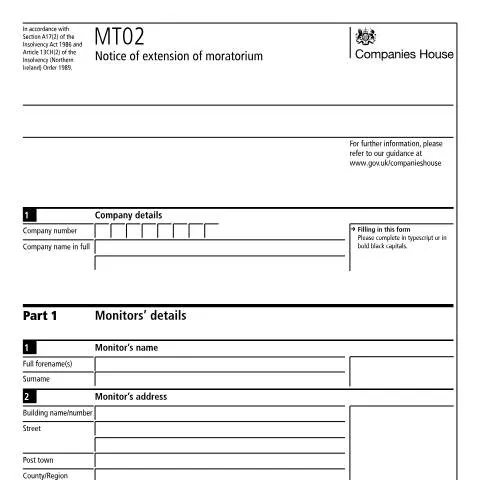
Navigating the MT02 Form: Extension of a Moratorium
In the realm of corporate insolvency, the MT02 form stands as a critical tool for companies seeking to manage their financial difficulties in a structured and legally compliant manner. Specifically, this form is designated for extending a moratorium, which provides a temporary shield from creditor action while a company develops a viable plan to resolve its financial issues.
The Moratorium Explained: A Lifeline for Companies
The moratorium, as outlined in the Insolvency Act 1986, offers companies a critical period during which they can breathe and strategize without the immediate pressure of creditors. This legal respite is particularly essential for directors who may be contemplating a corporate voluntary arrangement (CVA) or other restructuring methods. By completing the MT02 form, a company is officially notifying the relevant authorities and stakeholders that it is seeking an extension of this protective period.
Understanding the Legal Framework
The MT02 form operates under specific sections of the Insolvency Act 1986 and the relevant Northern Ireland Orders. The legal foundations empower directors to seek an extension during two primary scenarios:
- Application for Extension by Directors: This allows the court to consider proposals that could facilitate the company's recovery.
- Pending Proposals for Corporate Voluntary Arrangements: This scenario keeps the moratorium intact while exploring restructuring options.
The Process of Submission: Where and How?
Filing the MT02 form is a straightforward process, but the method of submission can vary based on the company's location. Understanding these nuances ensures compliance and expediency:
| Location | Submission Address | Delivery Method |
|---|---|---|
| England and Wales | Registrar of Companies, Companies House, Crown Way, Cardiff, CF14 3UZ | Post or DX |
| Scotland | Registrar of Companies, Companies House, Fourth floor, Edinburgh Quay 2, EH3 9FF | Post or DX |
| Northern Ireland | Registrar of Companies, Companies House, Second Floor, The Linenhall, BT2 8BG | Post or DX |
Online vs. Paper Submission
Companies House primarily promotes the use of online forms. However, the MT02 can still be submitted in paper format. The choice between these methods can depend on the company’s capacity for electronic submission, the urgency of the matter, and the specific circumstances surrounding the moratorium.
A Step-by-Step Guide to Completing the MT02 Form
Completing the MT02 form requires attention to detail to avoid delays or rejections. Here’s a breakdown of the key sections:
Part 1: Monitor’s Details
- Company Information: This includes the full company name and number, ensuring it matches the public register to prevent discrepancies.
- Monitor's Information: The monitor, usually an insolvency practitioner, must provide their full name, address, contact number, and email address. This ensures that Companies House can communicate effectively regarding the moratorium.
Part 2: Moratorium Details
It’s crucial to indicate whether the moratorium is extended until further notice or until a specific date:
- Tick the Appropriate Box: Select whether the moratorium is extended until further notice or until a specified date. Each option requires you to provide additional information.
- Reason for Extension: Clearly state if the extension is due to a pending court consideration or a proposed CVA.
Part 3: Signature
A valid signature from the monitor is essential, and the date of submission must be included. This section certifies the authenticity of the form and the validity of the claims made within it.
Understanding the Timeline: From Submission to Decision
Once the MT02 form is submitted, the timeline for processing can vary based on several factors:
Initial Review Period
Upon submission, Companies House will review the form for completeness and accuracy. This initial review typically takes a few business days but can extend longer if there are discrepancies or missing information.
Notification to Creditors
If the moratorium is granted, creditors will be notified about the extension. They will be informed of the ongoing protections afforded to the company during this period, which may affect their ability to take legal action.
Subsequent Steps
During the moratorium period, the company must work diligently to prepare a structured recovery plan. The monitor plays a critical role in guiding the company through this phase, ensuring that all legislative requirements are met and that stakeholders are kept informed.
Who Should File the MT02? Demographics and Scenarios
The MT02 form is primarily relevant to directors of companies experiencing financial difficulties. However, it also encompasses various scenarios, including:
- Directors Seeking Protection: Those who anticipate that immediate creditor action could jeopardize the company’s ability to negotiate.
- Monitoring Practitioners: Professionals appointed to oversee the insolvency process and ensure that all statutory obligations are fulfilled.
Special Cases and Exceptions
Not all companies are eligible for a moratorium. Exceptions include:
- Companies already subject to certain insolvency procedures.
- Entities with a history of non-compliance with statutory obligations.
Links to Broader Insolvency Procedures
The MT02 form is intrinsically linked to several other procedures under insolvency law. Understanding its placement within this framework can clarify responsibilities and expectations:
- Corporate Voluntary Arrangements (CVA): The MT02 often serves as the precursor to proposing a CVA, allowing time to formulate the necessary proposals.
- Administration Procedures: Companies may opt for administration if a moratorium fails to yield positive results within the designated timeframe.
Interrelationship with Other Forms
Completing the MT02 may necessitate the concurrent preparation of other forms, such as:
- Form 1.1 and the proposal for a CVA.
- The appointment paperwork for the monitor or insolvency practitioner.
Common Pitfalls and How to Avoid Them
While completing the MT02 form may seem straightforward, certain pitfalls could jeopardize your submission:
- Inaccurate Company Details: Always double-check that the company name and number match exactly what is recorded with Companies House.
- Incomplete Monitor Details: Ensure that the monitor’s contact information is complete and accurate to facilitate communication with Companies House.
Ensuring Compliance with the Data Protection Act
As all information provided on the MT02 form will appear on the public record, it is crucial to adhere to the Data Protection Act 2018 and UK GDPR. Companies must ensure that they do not disclose sensitive personal information that is not necessary for the form.
By proactively managing these considerations, companies can streamline their submission process and enhance their chances of successfully extending their moratorium.
Final Thoughts on the MT02: A Strategic Tool
Ultimately, the MT02 form is more than just a bureaucratic requirement; it represents a strategic opportunity for companies to regain their footing amid financial challenges. By understanding the intricacies of this form, directors and monitors can effectively navigate the complex landscape of insolvency, paving the way for recovery and long-term sustainability.
Understanding the Moratorium Process: Key Stages and Requirements
The moratorium process under the UK insolvency framework is designed to provide temporary relief to companies facing financial difficulties. The MT02 application represents a critical first step in this process. To navigate this effectively, one should understand the key stages involved.
Initially, the company must demonstrate a genuine intention to seek a viable solution to its financial predicament. This necessitates compiling relevant financial statements and forecasts to present a clear picture of the entity's current status and potential recovery avenues. The company directors are required to assess whether a moratorium is necessary by evaluating their current financial obligations against their projected income and expenses.
Once the decision to apply for the MT02 moratorium is made, the directors must file Form MT01, which specifies the reasons for the moratorium and any applicable debts. Important details include the names and addresses of all creditors, the nature of the debts outstanding, and the company’s financial position. This initial submission lays the groundwork for understanding how creditors might respond to the proposed moratorium.
Upon acceptance of the MT02 application, a designated monitor will be appointed, usually a licensed insolvency practitioner. This monitor plays a crucial role, overseeing the moratorium period and reporting back to HMRC, creditors, and the company itself. Effective communication with the monitor is essential to ensure compliance with any conditions set forth during this period, including the requirement to file monthly reports detailing the company's financial status and any changes that may arise.
Effects of a Moratorium on Creditors and Stakeholders
One of the most significant aspects of the moratorium process is its impact on creditors and other stakeholders. When a moratorium is in effect, it provides a 'breathing space' for the company, meaning that creditors are generally prohibited from taking legal action to recover debts or enforcing security interests. This temporary halt on creditor actions can be crucial for a company attempting to reorganize its finances or seek alternative funding solutions.
However, it is important to note that the moratorium does not eliminate the debt; it merely postpones enforcement actions. Creditors retain the right to challenge the moratorium under specific circumstances. They may argue that the company does not meet the eligibility criteria or that the moratorium is being misused. In addition, certain debts, such as employee wages and some tax obligations, may continue to accrue during this period, adding layers of complexity to the financial landscape.
Moreover, stakeholders, including employees and shareholders, must stay informed throughout the moratorium. Employees may face uncertainty regarding job security, whereas shareholders may become concerned about the company’s long-term viability. Open communication channels and updates can help mitigate anxiety and build trust among all parties involved.
Post-Moratorium Considerations: Next Steps for Companies
Once the moratorium period concludes, the company must be prepared for the next steps, which may include entering administration, the implementation of a Company Voluntary Arrangement (CVA), or, in some cases, liquidation. The decisions made during this time will significantly influence the company’s future and the recovery prospects for creditors.
If the moratorium was successful in stabilizing the company’s finances, the directors should work closely with their appointed insolvency practitioner or advisor to develop a robust recovery plan. This plan might involve negotiating new payment terms with creditors, securing fresh investment, or restructuring existing debts to improve cash flow.
For companies that are unable to recover, understanding the process of moving to administration or liquidation becomes critical. These steps involve a different set of legal requirements and obligations, including the need to submit additional forms to Companies House and notifying affected stakeholders.
Finally, companies should take this opportunity to reflect on the challenges that led to the moratorium. Developing effective strategies for financial management, risk assessment, and operational efficiency can help prevent future instances of financial distress. Continuous education and engagement with financial advisors can further bolster a company’s resilience in the face of economic challenges.