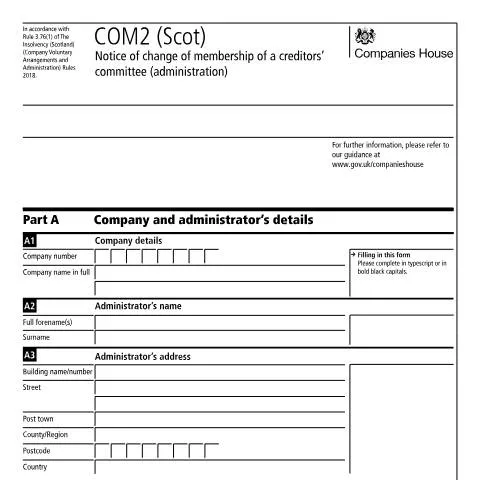
Navigating the COM2 (Scot) Notice: Essential Insights
In the intricate landscape of corporate governance and insolvency in Scotland, the COM2 (Scot) notice serves a pivotal role. This document is a formal notification that communicates changes in the membership of a creditors' committee during administration proceedings. Understanding the scope of this notice and how to effectively utilize it is paramount for administrators and stakeholders alike. With the right approach, those involved can ensure compliance with legal requirements and maintain transparent communication among creditors.
Understanding the Role of a Creditors' Committee
A creditors' committee plays an essential part in the administration of a company, representing the interests of creditors and aiding the administrator in decision-making processes. This committee is established under the Insolvency (Scotland) (Company Voluntary Arrangements and Administration) Rules 2018, specifically noted in Rule 3.76(1). Key to the functionality of this committee is the COM2 (Scot) notice, which details the individuals or corporate members involved.
Membership changes can occur for various reasons, including resignations, new appointments, or changes in corporate status. Each alteration must be recorded formally to ensure that all creditors are informed and that the committee operates effectively. Failing to notify changes can lead to complications in the administration process, including disputes over creditor rights.
Step-by-Step Process of Utilizing the COM2 (Scot) Notice
Effectively executing the COM2 (Scot) notice involves several critical steps:
- Gather Company and Administrator Information: Collect the full legal name of the company and the administrator's details, including their contact address and personal information.
- Detail Current Members: Identify existing members of the creditors' committee. This includes both individual and corporate members, along with their respective addresses.
- Clarify Membership Status: For each member, indicate whether they have joined the committee since the last notice was issued. This is crucial for transparency and accuracy.
- List Former Members: Document any members who have ceased to be part of the committee since the previous notice. This includes noting the dates their membership ended.
- Completion and Submission: Once all details are verified and filled out accurately, submit the notice to Companies House. Ensure that the information is typed clearly, as specified in the guidance.
Common Pitfalls in Interpreting the COM2 (Scot) Notice
While the COM2 (Scot) notice is straightforward, misunderstandings can arise. Here are some common areas to watch out for:
- Misidentification of Members: Ensure that all names are accurate and match the official records. Mistakes here can lead to legal complications.
- Incorrect Dates: Pay close attention to the membership dates. Incorrect recording can raise questions about the validity of the committee decisions.
- Assuming Previous Notices Cover New Changes: Each change must be documented in a new COM2 (Scot) notice, even if they seem trivial or similar to past submissions.
- Neglecting Corporate Members: Remember that both individual and corporate members need to be reported. Failing to include corporate entities can lead to incomplete records.
The Importance of Timeliness in Notice Submission
Timely submission of the COM2 (Scot) notice is not just a best practice; it is a legal requirement. The Insolvency (Scotland) (Company Voluntary Arrangements and Administration) Rules 2018 specify that changes must be communicated promptly to ensure that creditors are adequately informed. The timeline for submitting this notice will depend on the circumstances of the membership changes:
- Immediate Changes: If a member resigns or a new member is appointed, it is advisable to submit the notice as soon as possible to uphold the integrity of the committee.
- Scheduled Filings: In situations where regular updates are expected (e.g., quarterly or bi-annually), aligning the submission with these schedules can facilitate smoother operations.
- Legal Deadlines: Be aware of any specific legal deadlines that apply to the administration process. Late filings can lead to sanctions or disrupt the administration efforts.
Who Should Utilize the COM2 (Scot) Notice?
The primary audience for the COM2 (Scot) notice includes administrators and members of creditors' committees. However, other stakeholders play a vital role in the process:
- Company Directors: Understanding the implications of membership changes can influence strategic decisions during administration.
- Legal Advisors: Solicitors and legal representatives should be familiar with this notice to advise their clients accurately regarding creditor rights and obligations.
- Creditors: While creditors will not file the notice themselves, remaining informed about committee membership is essential for their awareness of representation and advocacy.
Integration with Other Documentation in Administration
The COM2 (Scot) notice does not stand alone; it must be viewed in the context of other relevant documentation in the administration process:
- Insolvency Practice Directions: Familiarity with these directions helps in understanding the broader requirements that may influence how notice changes are viewed legally.
- Creditor Reports: These reports often summarize the activities of the creditors' committee and may reference member changes noted in the COM2 (Scot) submission.
- Other Notices: Depending on the nature of the administration, other notices may be required, which should be coordinated with the COM2 (Scot) notice to avoid conflicts or omissions.
Implications of Failure to File the COM2 (Scot) Notice
Neglecting to file the COM2 (Scot) notice can lead to serious ramifications:
- Legal Repercussions: Failure to comply with the submission requirements can attract penalties, including fines imposed by Companies House.
- Challenges to Committee Decisions: If membership changes are not documented correctly, decisions made by the creditors' committee may be challenged, leading to disputes among creditors.
- Loss of Creditor Trust: Transparency is crucial in administration. Failure to notify changes may result in a loss of confidence among creditors, complicating further negotiations.
Final Considerations for Effective Administration
In the realm of corporate insolvency in Scotland, the COM2 (Scot) notice is a vital component of maintaining clarity and order within the creditors' committee. Administrators must approach the notification process with diligence and attention to detail. By ensuring that all information is accurately captured and submitted in a timely manner, parties involved can minimize risks and uphold the integrity of the administration process.
Furthermore, continuous learning and adaptation are key. Stay informed about changes in the regulatory landscape and best practices for insolvency procedures. By prioritizing these aspects, administrators can navigate the complexities of the insolvency framework with greater confidence and efficiency.
Understanding the Role of a Creditors' Committee in the Bankruptcy Process
The creditors’ committee plays a crucial role in the bankruptcy process of a Scottish company. Formed under the Insolvency Act 1986, this committee is composed of a selected group of creditors who have a vested interest in the outcome of the insolvency proceedings. They are appointed to protect the interests of the wider creditor body and to provide oversight to the insolvency practitioner managing the case. This committee has the authority to make representations to the insolvency practitioner, propose solutions, and even challenge certain decisions made during the proceedings.
To ensure the committee operates effectively, it is essential that any changes in its membership are communicated clearly and promptly. This is vital not only for maintaining transparency but also for ensuring that all creditors are represented adequately. Failure to do so may lead to lack of trust or dissatisfaction among creditors, potentially affecting the outcome of the insolvency process.
Procedures for Notifying Changes in Membership
When it comes to notifying changes in the membership of a creditors’ committee, there are specific procedures that must be adhered to in accordance with the Insolvency (Scotland) Rules 1986. Initially, the insolvency practitioner must inform the remaining members of the committee about the proposed changes. This can be achieved through a formal meeting or written communication. The procedure must ensure that all existing committee members are given the chance to express their views and, if necessary, vote on the inclusion or exclusion of a new member.
Once a decision is reached, the insolvency practitioner must notify Companies House about the changes, providing the relevant details of the new member along with any resignations. This notification must be made through the prescribed form, which can typically be found on the official Companies House website. It's important to remember that failure to notify these changes could lead to complications in the insolvency process, including challenges to the legitimacy of the committee's decisions.
Moreover, it is crucial for the insolvency practitioner to maintain accurate and up-to-date records of the committee’s membership, as this information can be requested by creditors or other stakeholders at any stage of the process. Keeping detailed minutes of meetings and decisions can serve as an invaluable resource in this regard.
Common Challenges and Solutions in Managing a Creditors' Committee
Managing a creditors' committee can present various challenges, particularly in ensuring effective communication and collaboration among members. One common issue is the potential for conflicts of interest, especially if members have differing priorities or agendas. In such cases, it may be beneficial for the insolvency practitioner to facilitate discussions and mediate disputes. Establishing clear terms of reference for the committee can also help in aligning the members' focus towards a common goal.
Another challenge is ensuring that all committee members are fully informed about the insolvency process and their roles within it. This can be addressed by providing comprehensive training or informational sessions at the outset of the committee’s formation. Regular updates and transparency in communications can further enhance participation and engagement from all creditors.
In addition, the insolvency practitioner should be vigilant about adhering to the legal requirements surrounding data protection, as outlined in the Data Protection Act 2018 and UK GDPR. Any personal data shared among committee members must be handled with care, and members should be educated on their responsibilities regarding confidentiality and data protection.
By anticipating these challenges and proactively implementing solutions, the insolvency practitioner can foster a more cohesive and effective creditors' committee, ultimately leading to a more favourable outcome in the insolvency process.