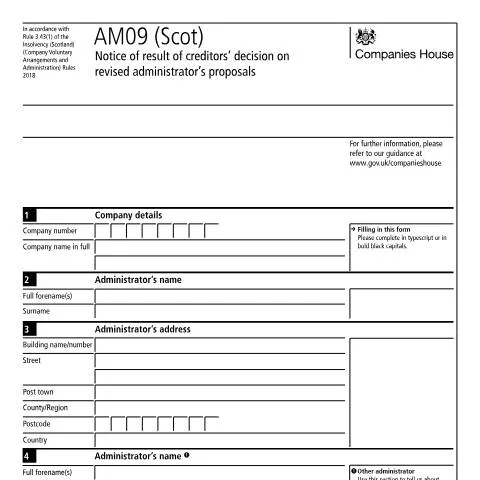
Understanding the Official Notice of Creditor’s Decision for Scottish Companies
This guide provides a comprehensive overview of the official document issued by Companies House concerning the outcome of a creditor’s decision on revised administrator’s proposals for a Scottish company. It aims to clarify the purpose, scope, and key elements of this notice, helping company directors, creditors, and legal professionals understand their responsibilities and the implications of such notices within the UK corporate insolvency framework.
Purpose and Legal Framework of the Notice
The notice titled "Give notice of result of a creditor's decision for a Scottish company" is issued in accordance with Rule 3.43(1) of the Insolvency (Scotland) (Company Voluntary Arrangements and Administration) Rules 2018. Its primary function is to formally communicate the outcome of a creditors’ meeting or decision process regarding the revised proposals put forward by an administrator overseeing a company's insolvency proceedings.
This process is part of the statutory procedures designed to facilitate transparency and accountability during administration or restructuring efforts. It ensures that all relevant parties are informed of the creditors’ approval or rejection of proposed measures, which may include modifications to the original administrator’s plan or other significant decisions affecting the company’s future.
Scope and Application
This notice specifically applies to Scottish companies undergoing administration, where creditors have been consulted on revised proposals presented by the appointed administrator. It is a mandatory step in the statutory process, ensuring that the outcome of the creditors’ decision is officially recorded and publicly accessible through Companies House.
The document is used when creditors have either approved or rejected the revised proposals, and it captures essential details such as the date of the decision, the method of meeting or decision procedure, and any modifications to the original proposals. It serves as a formal record that can influence subsequent legal or administrative actions.
Key Components of the Notice
Company and Administrator Details
- Company Name and Number: Identifies the company involved, ensuring the notice is correctly attributed.
- Administrator’s Name and Address: Details of the individual or firm managing the insolvency process, including full name and address.
- Additional Administrators: If applicable, details of other administrators involved in the process.
Procedural Details
- Date of Revised Proposals: The specific date when the administrator submitted the revised proposals.
- Purpose and Method of Meeting: Clarifies whether the decision was made during a physical or virtual meeting, or through another decision procedure such as email or videolink.
- Meeting Location or Platform: Provides the physical address or digital platform used for the decision-making process.
- Quorum and Decision Outcome: Confirms whether the required quorum was met and details the decisions or resolutions passed by creditors.
Signatures and Record-Keeping
The notice must be signed and dated by the administrator, providing a formal validation of the recorded decision. This signature ensures the document’s authenticity and compliance with legal requirements.
Implications for Stakeholders
For creditors, the notice confirms whether their votes or decisions have been accepted or rejected, which can impact the direction of the insolvency process. For the company and its administrators, it provides an official record that may influence subsequent legal steps, such as the approval of restructuring plans or winding-up procedures.
Furthermore, as this notice is publicly filed with Companies House, it contributes to the transparency of insolvency proceedings, allowing interested parties and the public to track the progress and decisions made during the administration process.
Submission and Accessibility
The completed notice can be sent to any address of Companies House, with a recommended submission to the Edinburgh office for expediency. The form must be signed and include all relevant details, ensuring accuracy to avoid delays or rejection. Additional guidance and alternative formats are available on the official government website.
In conclusion, this official notice plays a crucial role in the statutory process of Scottish insolvency proceedings, providing a clear, legally compliant record of creditor decisions during administration. Understanding its components and implications helps ensure transparency and proper legal compliance for all parties involved.