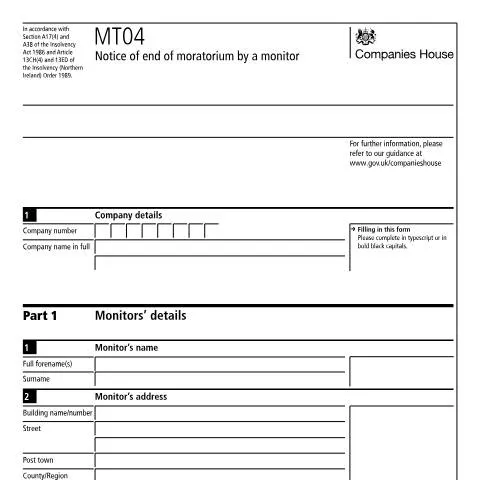
Understanding the End of Moratorium by a Monitor (MT04)
The MT04 form plays a vital role in the insolvency framework in the UK, specifically concerning the cessation of a moratorium that protects a company undergoing financial difficulties. This document is primarily used when a monitor—typically a licensed insolvency practitioner—declares the end of a moratorium period. Understanding the intricacies of the MT04 is essential for monitors, company directors, and stakeholders alike.
The Lifecycle of a Moratorium: Key Dates and Events
To navigate the complexities of the MT04, one must first grasp the timeline involved in a moratorium. The moratorium is a crucial period where a company is protected from creditors while it explores options for rescue.
Starting the Moratorium
- The moratorium begins on the date it is granted by the court.
- Typically, the duration can last up to 40 days but may be extended under certain conditions.
Ending the Moratorium
The monitor must submit the MT04 form promptly at the end of the moratorium, which is the date specified in the form. Reasons for ending the moratorium include:
- The moratorium did not lead to the company being rescued.
- The rescue objective was achieved successfully.
- Directors failed to assist the monitor effectively.
- The company cannot pay outstanding debts, whether incurred during or before the moratorium.
Once the MT04 is filed, the monitor must also provide a copy of the court notice to document the end of the moratorium officially.
Filling Out the MT04: A Step-by-Step Guide
Completing the MT04 accurately is crucial for compliance with legal standards. Each section of the form requires specific information that must be presented clearly.
Section Breakdown
- Company Details: Enter the full company name and registration number as registered with Companies House.
- Monitor’s Information: Provide the full name, address, and contact details of the monitor overseeing the moratorium.
- Moratorium Details: Specify the end date of the moratorium and tick the appropriate box to indicate the reason for its termination.
- Signature: The monitor must sign and date the form, confirming the accuracy of the information provided.
- Attachments: Include a copy of the court notice as evidence of the moratorium’s conclusion.
Submission Channels for the MT04
The method of submitting the MT04 form varies based on where the company is registered. Each submission method has its advantages and considerations.
Online vs. Paper Submission
| Method | Description | Pros | Cons |
|---|---|---|---|
| Online Submission | Filing via the Companies House online services. | Speed, immediate confirmation of receipt. | Requires registration and may not support all types of filings. |
| Paper Submission | Mailing the completed form to the appropriate Companies House office. | Accessible for all; physical evidence of submission. | Slower processing time, risk of postal delays. |
Regardless of the chosen method, it’s critical for the monitor to ensure that the MT04 is sent to the correct address based on the company’s registration:
- England and Wales: The Registrar of Companies, Companies House, Crown Way, Cardiff, Wales, CF14 3UZ.
- Scotland: The Registrar of Companies, Companies House, Fourth floor, Edinburgh Quay 2, 139 Fountainbridge, Edinburgh, Scotland, EH3 9FF.
- Northern Ireland: The Registrar of Companies, Companies House, Second Floor, The Linenhall, 32-38 Linenhall Street, Belfast, Northern Ireland, BT2 8BG.
Who is Involved? A Closer Look at Monitors and Companies
Understanding who is responsible for submitting the MT04 is fundamental. The form is primarily completed by the monitor, an individual appointed to oversee the moratorium process.
Roles and Responsibilities of the Monitor
The monitor is responsible for:
- Assessing the financial situation of the company.
- Communicating with creditors and stakeholders.
- Preparing the MT04 when it’s time to conclude the moratorium.
It is essential to note that in certain circumstances, a company’s directors may also have a role to play in ensuring the monitor has the necessary information to complete the form accurately.
Potential Exceptions and Variations
Some companies may have unique situations, such as:
- Companies with multiple monitors, where each must provide their details on the MT04.
- Companies undergoing corporate restructuring, which may affect the moratorium timeline.
Distinguishing the MT04 from Similar Forms
The MT04 is often confused with other forms related to insolvency, such as the notice of intention to appoint an administrator. However, the purposes and implications of these forms differ significantly.
Key Differences
| Form | Purpose | Outcome |
|---|---|---|
| MT04 | To declare the end of a moratorium. | Potential transition to liquidation or restructuring. |
| Form for Appointment of Administrator | To formally appoint an administrator to manage the company's affairs. | Initiates a different process aimed at rescuing the company. |
Implications of Filing the MT04
Filing the MT04 is not merely a procedural step; it has significant ramifications for the company’s future and its stakeholders.
Post-Filing Consequences
Once the MT04 is submitted and processed, the following outcomes may occur:
- If the moratorium was unsuccessful, creditors may resume action against the company for outstanding debts.
- Successful company rescues can lead to renewed business operations under tighter regulations.
- For companies unable to pay debts, the filing could trigger insolvency proceedings.
Therefore, it is imperative that monitors carefully consider the timing and reasons surrounding the end of the moratorium in relation to the overall financial strategy of the company.
Navigating the Wider Context of Company Insolvency
The MT04 form is a piece of a larger puzzle in the UK's corporate insolvency framework, influencing various stakeholders, including creditors, employees, and management. Its accurate completion and timely submission are crucial for the effective management of a company experiencing financial distress.
Interconnections with Other Legal Processes
The end of a moratorium often leads to interactions with other insolvency processes, such as voluntary arrangements, administration, or liquidation. Thus, monitors must be well-versed not only in the MT04 but also in how it fits into the broader insolvency landscape.
It’s advisable for professionals involved in the process to stay informed about legal updates and procedural changes ensuring compliance and the best possible outcomes for the companies they represent.
Understanding the Role of a Monitor in an End of Moratorium Scenario
The end of a moratorium, particularly in the context of a monitor’s role, can have significant implications for businesses undergoing restructuring under the new insolvency laws. A monitor, usually a licensed insolvency practitioner, plays a crucial role in facilitating the moratorium process and ensuring that the interests of all stakeholders are protected. Upon the termination of the moratorium, the monitor is responsible for preparing a final report that outlines the status of the company, any outstanding debts, and the feasibility of continuing the business operations or moving towards formal insolvency proceedings.
One of the first steps a monitor will take upon the end of a moratorium is to assess the effectiveness of the moratorium period. This assessment could involve reviewing financial statements, evaluating any proposals made during the moratorium, and consulting with creditors to gauge their perspectives on the company's future. Understanding the business's cash flow position and operational viability is essential for determining the next steps. The monitor's report must be submitted to the company, its creditors, and relevant authorities, ensuring transparency and accountability throughout the process.
In many cases, the monitor may recommend a Company Voluntary Arrangement (CVA) as a potential path forward if the business demonstrates viability. This arrangement allows the company to negotiate a settlement with creditors while maintaining control over its operations. However, if the monitor concludes that the financial position is untenable, they may advise moving toward administration or liquidation, which would involve further implications for stakeholders and possibly the loss of jobs. Thus, the monitor's role at this juncture is pivotal in shaping the company's future direction.
Key Considerations for Stakeholders After the Moratorium Ends
When a moratorium ends, it’s essential for stakeholders—including creditors, employees, and management—to understand the implications of this event comprehensively. For creditors, the termination of the moratorium signals that the protections against the enforcement of debts are lifted. They must consider their next steps, which may include initiating claims for outstanding debts or participating in any proposed arrangements following the monitor's recommendations.
For employees, the termination of a moratorium can lead to uncertainty regarding job security. Management should communicate transparently with staff about the company's financial health and any plans moving forward. Employee morale and retention can be significantly impacted during this period, making it critical for management to take a proactive approach in addressing concerns and providing updates.
Moreover, it’s essential for senior management to revisit and potentially recalibrate their business strategies following the moratorium. The company's financial situation may have changed, and the management team should be prepared to implement measures that ensure sustainability. This may involve cost-cutting measures, renegotiating supplier contracts, or even exploring new markets to enhance revenue. Having a clear communication strategy with all stakeholders, particularly in the aftermath of a moratorium, can help mitigate fears and foster an environment conducive to recovery.
Legal and Regulatory Framework Surrounding a Monitor’s Actions
The legal framework governing the actions of a monitor during and after a moratorium is primarily encapsulated within the Insolvency Act 1986 and the Insolvency (England and Wales) Rules 2016. While the monitor operates under the authority granted by these laws, they must also adhere to the ethical guidelines set forth by the Insolvency Practitioners Association (IPA) and other regulatory bodies. This compliance ensures that the monitor acts judiciously and in the best interests of all parties involved.
During the moratorium, the monitor must continually assess the company’s financial condition and may have to report any significant changes in the company's situation to the court. Upon the conclusion of the moratorium, detailed documentation is essential to provide a record of events and decisions made during that period. The monitor's adherence to the legal requirements and timelines is critical, as any failings in this regard could jeopardize future proceedings and the potential recovery of the company.
Stakeholders should also be aware of their rights within this framework. Creditors, for instance, have the right to challenge the monitor's decisions, particularly if they feel that their interests have not been adequately represented. This could manifest in various ways, such as formally objecting to the monitor's report or seeking legal redress through the courts. Understanding these rights and the legal recourse available is essential for stakeholders to navigate the complexities following the end of a moratorium effectively.