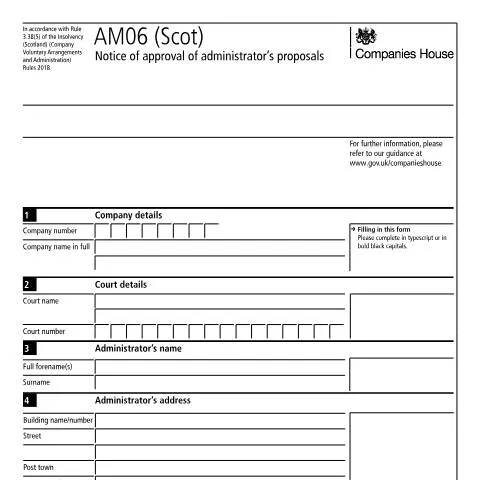
The Importance of the AM06 (Scot) in Scottish Company Administration
In the world of corporate governance in Scotland, the AM06 (Scot) document plays a crucial role. This notice serves to inform the relevant parties of the approval of an administrator's proposals for companies undergoing administration. It signifies a pivotal step in the administration process, especially in situations where a company's financial health is in jeopardy. Understanding the AM06 is essential for directors, administrators, and creditors alike, as it lays out the framework for how a company can navigate through financial distress.
Who Should Use the AM06 (Scot)?
The AM06 (Scot) is primarily directed towards administrators appointed to manage a company in administration within Scotland. However, it also has implications for various stakeholders:
- Administrators: Responsible for submitting the notice after receiving approval from creditors.
- Company Directors: Need to be aware of the implications of these proposals on their company’s future.
- Creditors: Must understand the context and implications of the administrator’s proposals and their approval.
- Legal Advisors: Those advising companies in distress should understand the process and its significance.
Understanding the Approval Process
The process surrounding the AM06 (Scot) begins with the administration of a company, which is often initiated by the company itself or by creditors. Key steps in this process include:
- Appointment of the Administrator: A licensed insolvency practitioner is appointed to take control of the company.
- Proposal Development: The administrator develops a statement of proposals outlining how the company can be rescued.
- Creditor Approval: The proposals are presented to creditors, who will vote on them. Approval is typically sought via a meeting where creditors can discuss and vote.
- Filing the AM06 (Scot): Once approved, the administrator must file the AM06 notice with Companies House to officially document the decisions taken.
Key Components of the AM06 (Scot)
To effectively navigate this process, those involved must understand what the AM06 (Scot) contains. The document includes:
| Section | Description |
|---|---|
| Administrator's Name | Full name of the appointed administrator responsible for the proposal. |
| Company Details | Legal name and registered number of the company in administration. |
| Court Details | Name of the court where the administration was filed, including the court number. |
| Key Dates | Important dates such as the appointment date, date proposals were delivered, and date of approval. |
| Signature | Signature of the administrator to validate the notice. |
Each component serves a fundamental purpose in ensuring that the process remains transparent and legally sound.
Common Misinterpretations of the AM06 (Scot)
Despite its importance, some common pitfalls can occur when dealing with the AM06 (Scot). Here are a few clarifications to consider:
- Assuming Automatic Approval: Just because the AM06 is filed does not guarantee creditor approval. This document only confirms the approval that has been previously granted.
- Misunderstanding the Role of the Administrator: The administrator is not the same as the directors; they take control of the company's operations, which can sometimes lead to confusion regarding authority.
- Neglecting to File Timely: There is a legal requirement to submit the AM06 within specific timeframes post-approval. Failure to do so can result in complications.
Connecting the AM06 (Scot) with Other Key Documents
In the broader context of the insolvency process, the AM06 (Scot) interacts with several other critical documents:
- Statement of Proposals: The document outlining the administrator's plan for dealing with the company's debts must precede the filing of the AM06.
- Insolvency Practitioner's Report: This report often accompanies the proposals and provides insight into the company’s situation.
- Meeting Minutes: Documentation of the creditor meeting where the proposals were discussed and voted on is essential for validation.
Steps for Filing the AM06 (Scot) Effectively
For administrators, the successful filing of the AM06 (Scot) involves several practical steps:
- Gather Information: Ensure all details—company name, number, administrator’s information—are accurate and consistent with the public register.
- Document Key Dates: Note the dates of the administrator’s appointment, when proposals were delivered, and when approval was granted.
- Signature Validation: The administrator must sign and date the form, affirming the accuracy of the information contained.
- Choose Filing Method: Send the completed AM06 to Companies House via post or electronically if permitted.
Limitations and Considerations Surrounding the AM06 (Scot)
While the AM06 (Scot) is a vital document in the administration process, it does have limitations:
- Scope of Impact: The AM06 solely documents approval. It does not contain details on the operational changes or financial restructuring that may occur post-approval.
- Not a Guarantee of Success: Filing this notice does not assure that the administration will result in the successful turnaround of the company.
- Public Record: As the information is filed with Companies House, it becomes part of the public record, which may impact stakeholders' perceptions.
Conclusion: Navigating the AM06 (Scot) with Confidence
Understanding the nuances of the AM06 (Scot) is invaluable for those involved in the administration of Scottish companies. From knowing the approval process to recognizing the significance of accurate information, stakeholders can navigate the complexities of corporate recovery more effectively. By adhering to the guidelines set forth in this notice and understanding its implications within the broader framework of insolvency, administrators, directors, and creditors can work toward a more stable financial future.
Understanding the Approval Process for Administrator's Proposals
When a Scottish company enters administration, the appointed administrator is tasked with managing the company's affairs while seeking to rescue the business or ensure a better return for creditors. One critical function of the administrator is to propose a plan for the company's future. This plan, known as the administrator's proposals, must be approved by the creditors or the court, depending on the circumstances. Understanding this approval process is vital for all stakeholders involved.
The administrator's proposals must be detailed and transparent, outlining how the company intends to address its financial situation. These proposals are typically distributed to creditors within 14 days of the administrator's appointment. Creditors are then given a specific period, usually within 28 days, to consider and vote on the proposals. It's crucial to note that the proposals can only be approved if the majority in value of the creditors present at the meeting vote in favour.
Should the proposals be accepted, the administrator will implement them as outlined. If they are rejected, the administrator may need to seek an alternative route, such as seeking a court's approval for a different strategy. This highlights the importance of thorough preparation and clear communication during the proposals' formulation phase.
Key Considerations for Creditors During the Approval Process
For creditors, reviewing the administrator's proposals is an essential part of safeguarding their interests. It is important to understand how the proposed plan impacts their recovery prospects and any potential options for recourse. Here are some key considerations for creditors when evaluating the proposals:
- Recovery Rate: Creditors should assess the proposed recovery rate outlined in the administrator’s plan. This will typically detail how much of their owed amount they can expect to recover and over what timeframe.
- Transparency of Information: It is imperative that the proposals are clear and provide sufficient detail on how decisions affecting the creditors will be made. A lack of transparency can lead to mistrust and opposition to the proposals.
- Future Viability of the Company: Creditors need to consider whether the proposals suggest a sustainable path forward for the company. A plan that fails to address underlying issues may result in further financial distress down the line.
- Consultation Rights: Creditors must be aware of their rights regarding consultation and whether they have the opportunity to voice their opinions in a meeting. This is particularly important as it allows creditors to seek clarification and negotiate terms if necessary.
Post-Approval Actions: What Comes Next for Administrators and Creditors
Once the administrator's proposals have been approved, the next steps are crucial for ensuring the plan's successful implementation. For administrators, this means closely monitoring the company's progress according to the agreed-upon terms and maintaining open lines of communication with creditors.
Administrators should establish a timeline for implementing key components of the proposals and regularly update creditors on the company's performance. This not only fosters goodwill but also helps manage expectations among creditors, keeping them informed of any changes or challenges that arise during the implementation phase.
Creditors also have a role to play after the proposals are approved. They should remain engaged and continue to monitor the company’s financial health. It may also be beneficial to maintain communication with the administrator, ensuring that any concerns or issues are addressed promptly. Furthermore, creditors may want to organize themselves into committees to facilitate collective discussions and decisions regarding the ongoing management of the company under administration.
This collaborative approach can enhance the effectiveness of the administrator's efforts, ultimately leading to a more successful outcome for all parties involved.