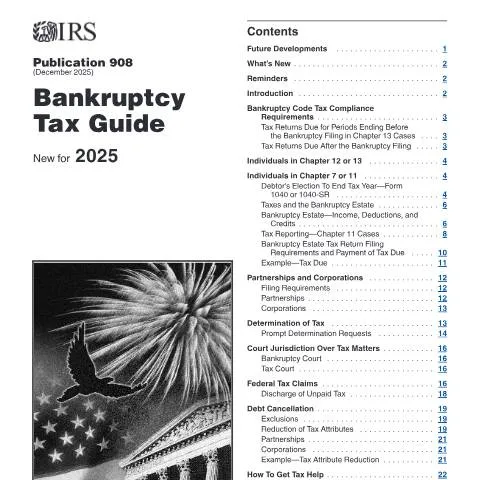
Navigating IRS Publication 908: The Essential Tax Guide for Bankruptcy
When facing bankruptcy, understanding the associated tax implications is crucial for individuals and businesses alike. IRS Publication 908 is a comprehensive guide tailored for debtors navigating this complex legal terrain. This publication provides essential insights into the tax compliance requirements under various chapters of the Bankruptcy Code, ensuring that you are well-informed about your obligations and rights as a taxpayer in bankruptcy.
Understanding the Timeline: Key Dates and Deadlines
Filing Before and After Bankruptcy
The timeline surrounding bankruptcy and tax obligations can be daunting. It’s vital to grasp when various returns are due to avoid complications in your case. In general, tax returns for periods ending before the bankruptcy filing must be submitted timely to avoid penalties. Here are the critical dates to keep in mind:
- Before Filing: All tax returns due prior to filing for bankruptcy must be settled.
- Within Four Years: In Chapter 13 cases, tax returns for periods ending within four years of your bankruptcy filing must be completed.
- After Filing: Tax returns due for post-bankruptcy periods must also be filed as required.
The IRS has specified deadlines, typically aligning with the annual tax return due date of April 15 for most individuals. However, should you file for bankruptcy, understanding that additional returns or extensions may apply is vital for compliance.
Detailing the Requirements: What You Need to Prepare
Gathering Essential Documents
Preparation is key to ensuring a smooth filing process. To complete IRS Publication 908 effectively, you’ll need to gather specific documentation based on your Chapter filing. Here are the main documents to consider:
- Prior Tax Returns: Having copies of your federal and state tax returns from the previous years is essential.
- Income Documentation: Collect your W-2s, 1099s, and any other income-related documents to reflect your earnings accurately.
- Bankruptcy Filings: Ensure you have copies of your bankruptcy petition and any schedules filed with the court.
Beyond these documents, you might also need bank statements, records of debts, and any relevant financial documentation that could impact your tax situation during bankruptcy proceedings.
Breaking Down the Content: Key Sections of Publication 908
Analyzing Tax Compliance Requirements
Publication 908 meticulously outlines various tax compliance requirements for those in bankruptcy. Here’s a closer look at some particularly important sections:
| Chapter | Filing Requirements | Key Notes |
|---|---|---|
| Chapter 7 | Must file all tax returns due after filing | Failure to comply may lead to conversion of case |
| Chapter 11 | Must file returns as they come due | Specific procedures exist for corporations |
| Chapter 13 | Must file returns for periods ending within 4 years of filing | Non-compliance can impact discharge eligibility |
Understanding the nuances of these sections is crucial for any debtor. In Chapter 13, for example, the timeline for filing tax returns is more rigorous, and missing deadlines can have severe consequences, including the conversion of your case.
Identifying Common Misconceptions and Confusions
Distinguishing Between Related Forms
Debtors often find themselves confused about various IRS forms and publications used during bankruptcy. It's essential to differentiate Publication 908 from other IRS documents:
- Form 1040: This is the standard individual tax return form that every taxpayer must file annually, irrespective of bankruptcy.
- Form 1041: Used for filing income tax returns for estates and trusts, relevant for bankruptcy estates.
- Form 982: This form is used for discharging indebtedness in bankruptcy, a critical aspect often overlooked by individuals.
These forms serve different purposes but are interlinked in the context of bankruptcy. Understanding the distinctions can help prevent unnecessary complications in your bankruptcy proceedings.
The Implications of Non-Compliance: Rights and Responsibilities
Understanding Consequences
Failing to comply with IRS guidelines during bankruptcy can result in significant repercussions. Here’s what you need to be aware of:
- Case Conversion: If you fail to file tax returns as required, your bankruptcy case might be converted to another chapter, which could lead to more stringent obligations.
- Dismissal of Case: Non-compliance could result in your bankruptcy case being dismissed altogether, leaving you to face creditors without protection.
- Impact on Discharge: Many individuals do not realize that consistent failure to meet tax obligations can directly affect their ability to discharge debts.
Each of these outcomes has profound implications on your financial recovery and should be taken seriously. Adequate preparation and adherence to the guidelines in Publication 908 can help mitigate these risks.
Filing Channels: Options for Submission
Exploring Submission Methods
Once you have completed the necessary forms and gathered documentation, understanding how to submit your forms can affect your overall experience. Here are the available avenues:
- Online Submission: Many taxpayers find e-filing to be the fastest and most efficient method. The IRS provides resources to assist with online submissions.
- Paper Filing: If you prefer traditional methods, mailing paper forms is always an option. Be mindful of postal delays that could affect your filing deadlines.
- In-Person Filing: While less common, some may choose to file directly at local IRS offices. This can be beneficial for those seeking immediate assistance.
Conclusion: Preparing for the Road Ahead
IRS Publication 908 serves as a critical resource for anyone involved in bankruptcy proceedings. By understanding the timeline, preparing necessary documentation, and adhering to filing requirements, debtors can navigate the tax implications of bankruptcy more effectively. Always remember that seeking professional tax assistance can further ensure compliance and protect your financial future.
Understanding the Implications of IRS Publication 908 for Small Business Owners
IRS Publication 908 is a vital resource for small business owners seeking to understand what qualifies as a deductible loss. This publication guides taxpayers on how to report and deduct certain losses related to business activities, ensuring they remain compliant with federal tax laws while maximizing their potential tax benefits.
Small businesses often face unique challenges, such as fluctuations in revenue, unexpected expenses, and the risk of economic downturns. Publication 908 details the necessary criteria for qualifying losses, emphasizing that not all losses may be deductible. Specifically, it covers losses from business operations, casualty losses, and theft losses.
For example, a small business owner must demonstrate that the loss was incurred in a trade or business and was not personal in nature. The publication outlines how to differentiate between personal and business losses using relevant examples, helping owners navigate the nuances of deductible losses. Additionally, the publication emphasizes the importance of maintaining accurate records to substantiate any claims made on tax returns.
It is crucial for business owners to be aware of the timelines associated with reporting losses. Typically, losses must be reported on the tax return for the year in which they occurred. This aspect is especially important for businesses that may not realize a loss until after the close of the fiscal year. Understanding the implications of these reporting requirements can help minimize the risk of audits and potential penalties.
Furthermore, Publication 908 provides guidance on the limits to loss deductions, particularly for those classified as passive activity losses, and how this can affect the overall tax situation of a small business owner. A clear understanding of passive activity loss rules allows business owners to strategize their investments and financial decisions more effectively.
How IRS Publication 908 Impacts Estate Planning and Inheritance
IRS Publication 908 extends beyond the immediate concerns of loss deductions, as it also plays a critical role in estate planning and inheritance. For individuals and families who are planning the transfer of wealth, understanding the implications of various losses can be essential for maximizing the tax efficiency of an estate.
One of the key aspects of estate planning that Publication 908 touches upon is the treatment of losses realized upon the transfer of assets. When an individual inherits property, the tax implications can be significant, and knowing how to navigate these can save heirs considerable amounts in taxes. The publication clarifies that inherited property generally receives a "step-up" in basis, meaning the heirs could potentially avoid capital gains taxes on appreciation that occurred during the decedent's lifetime.
However, if the inherited property has declined in value, understanding the treatment of losses becomes crucial. Publication 908 outlines the process by which heirs may report these losses on their tax returns, helping them determine whether the loss can mitigate any taxable income. This specific guidance is particularly important for properties that may not realize their expected value upon the owner's passing, such as real estate in declining markets.
Moreover, the publication addresses the complexities surrounding the sale of inherited assets and how losses are recognized for tax purposes. Heirs must be well-informed about the deadlines and reporting requirements to ensure they comply with federal regulations while taking advantage of any potential deductions.
Critical Updates and Amendments in IRS Publication 908: What You Need to Know
Every year, IRS publications, including Publication 908, are subject to updates and revisions that reflect changes in tax laws and regulations. Staying informed about these updates is crucial for taxpayers, as they can significantly impact deductions and taxpayer obligations.
For instance, recent amendments to tax laws may introduce new provisions regarding what constitutes a deductible loss, affecting how individuals and businesses plan their finances. It is essential to review the latest version of Publication 908 to understand these changes fully. Each revision typically includes clearer examples, updated thresholds, and specific guidance that taxpayers must follow to ensure compliance.
In recent years, the IRS has also adapted its approach to digital records and electronic filing, which has implications for how losses are documented and reported. Publication 908 includes guidance on maintaining digital records, emphasizing the importance of having reliable, organized documentation available for IRS review. This shift reflects broader trends toward increased digitization in tax administration, making it vital for taxpayers to adapt their record-keeping practices accordingly.
Taxpayers should also be aware of any transitional provisions that may apply to losses incurred under new tax regulations. For example, changes to the way casualty and theft losses are calculated can affect both individuals and businesses. Staying up-to-date on these amendments can help taxpayers understand their rights and obligations under current laws.
In summary, IRS Publication 908 is a dynamic document that serves as a critical resource for understanding losses from business activities. Whether you are a small business owner, an heir to an estate, or simply looking to stay informed about tax law updates, being well-versed in the contents of this publication is essential to making informed financial decisions and ensuring compliance with federal tax regulations.