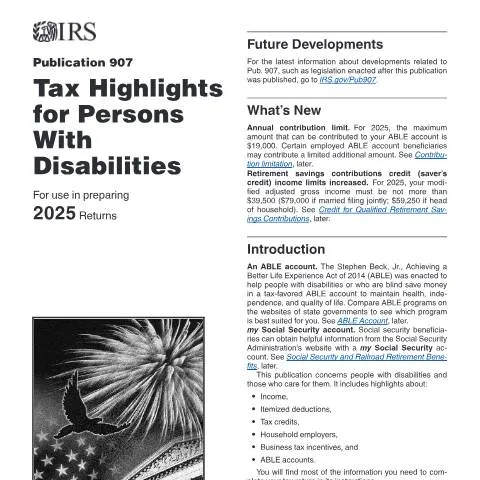
Navigating the Intricacies of IRS Publication 907
For individuals with disabilities, IRS Publication 907 serves as a vital resource that outlines significant tax highlights relevant to their unique situations. This document not only provides information about income, deductions, and credits but also draws attention to crucial aspects concerning the management of finances specifically allocated for individuals with disabilities. Understanding how to effectively utilize this publication can significantly impact one’s financial standing and tax obligations.
The Importance of Understanding Publication 907
IRS Publication 907 is specifically designed for individuals with disabilities, detailing how to prepare their tax returns while maximizing available benefits. Unlike other IRS forms or publications that may apply broadly to all taxpayers, this document focuses exclusively on the nuances related to disabilities and caregiving. As tax laws can be quite complex, especially for those navigating unique circumstances, Publication 907 serves as a tailored guide to help individuals understand their rights and responsibilities.
Key Topics Covered in Publication 907
- Income: A breakdown of taxable versus nontaxable income, with examples relevant to those with disabilities.
- Itemized Deductions: Specific deductions available for those with disabilities.
- Tax Credits: Information on tax credits that can help reduce tax liability.
- Household Employers: Guidance for those employing caregivers or support staff.
- Business Tax Incentives: Opportunities for self-employed individuals with disabilities.
- ABLE Accounts: Details regarding contributions, withdrawals, and overall management.
Understanding ABLE Accounts Through Publication 907
One of the key aspects of Publication 907 is its detailed explanation of ABLE (Achieving a Better Life Experience) accounts. Established under the ABLE Act of 2014, these accounts enable individuals with disabilities to save money without affecting their eligibility for federal benefits. For 2025, the maximum contribution limit to an ABLE account is set at $19,000, with additional contributions allowed for employed beneficiaries.
How ABLE Accounts Work
ABLE accounts allow individuals to save and invest money for disability-related expenses without the worry of losing vital benefits like Supplemental Security Income (SSI). Here’s a breakdown of how these accounts function:
| Feature | Description |
|---|---|
| Eligibility | Individuals with disabilities who were diagnosed before age 26. |
| Contribution Limits | Maximum of $19,000 annually. |
| Qualified Expenses | Expenses related to health, education, housing, and more. |
| Impact on Benefits | Funds in an ABLE account do not count against SSI asset limits. |
What to Do If You Encounter Issues
Tax matters can be tricky, especially when it comes to filing claims or understanding eligibility. Individuals who face refusals, errors, or requests for additional documentation must act promptly to resolve these issues.
Steps to Address Potential Refusals
- Review IRS Correspondence: Carefully read any letters or notices from the IRS. This documentation will usually explain the reason for the denial or request for more information.
- Gather Supporting Documents: Collect any relevant documentation that can support your claim or address the issues highlighted by the IRS.
- Respond Timely: Ensure your response is sent within the deadlines specified in IRS communications to avoid further complications.
- Consult a Tax Professional: If the situation is complex or unclear, consider seeking advice from a certified tax preparer or attorney familiar with tax matters related to disabilities.
Preparing to Fill Out Your Tax Return
Completing your tax return accurately is crucial, and having all necessary documentation is key. IRS Publication 907 provides insights on what to prepare before filing.
Necessary Documentation
- Income Statements: Collect all forms of income, including W-2s, 1099s, and any other statements reflecting earnings.
- Expense Receipts: Gather receipts for any medical expenses, care services, or other deductible costs.
- Social Security Documentation: Include statements or letters regarding Social Security benefits, particularly if you receive them due to a disability.
Monitoring Your Tax Filing Status
Once your tax return has been filed, staying updated on its status is advisable. The IRS provides various methods to check your filing's progress.
How to Track Your Tax Return
- Online Tools: Utilize the “Where’s My Refund?” tool on the IRS website to track the status of your return.
- IRS Phone Services: Call the IRS helpline for updates, though be prepared for potential wait times.
- Maintain Records: Keep copies of all tax forms and correspondence for your personal records.
Support Resources Available for Individuals with Disabilities
In addition to IRS Publication 907, there are numerous resources available to assist individuals with disabilities in understanding their tax obligations and rights.
Community Resources and Guidance
- Local Nonprofits: Organizations focused on disability advocacy often provide tax assistance and education.
- Tax Clinics: Volunteer Income Tax Assistance (VITA) and Tax Counseling for the Elderly (TCE) offer free tax help for those who qualify.
- Online Information: Websites like IRS.gov offer extensive resources specific to filing taxes with disabilities.
Reflecting on Changes Each Tax Year
Tax law is not static; it changes frequently which can impact individuals with disabilities significantly. Each new edition of IRS Publication 907 typically includes updates regarding income limits, contribution amounts, and eligibility criteria.
Keeping Up-to-Date
To ensure compliance and maximize benefits, it is essential to review the latest version of Publication 907 annually. This can help you take advantage of any newly available deductions or credits.
Final Thoughts on Publication 907
IRS Publication 907 is a crucial document for individuals with disabilities navigating the complexities of tax filing. By understanding its contents, closely following guidelines, and utilizing available resources, individuals can optimize their financial situations while ensuring compliance with federal regulations.
Understanding the Context of IRS Publication 907
IRS Publication 907 provides essential guidelines regarding the taxation of disaster relief payments and their implications on both federal and state levels. It’s crucial for taxpayers who may receive such payments to be aware of their taxability status. The publication is especially pertinent following catastrophic events like hurricanes, floods, and wildfires, where various forms of relief, including grants and loans, may be distributed to aid affected individuals.
Taxpayers must navigate the intricacies of how these payments interact with their overall tax obligations. For instance, some relief payments may be non-taxable, while others could count as income, influencing tax brackets and overall tax liability. To effectively utilize Publication 907, individuals need to familiarize themselves with the types of assistance available, such as those from the Federal Emergency Management Agency (FEMA) or other local government aid programs. Understanding how these aid programs categorize their disbursements can alleviate confusion during tax season.
Moreover, publication guidelines may vary year by year, reflecting changes in legal stipulations or updates in disaster assistance programs. Taxpayers should always refer to the most current version of the publication from the official IRS website to ensure compliance and optimize their tax strategies.
Case Studies: Practical Implications of IRS Publication 907
To illustrate the practical applications of IRS Publication 907, consider the following scenarios:
- Scenario 1: Receiving FEMA Assistance - A homeowner affected by a natural disaster receives $5,000 from FEMA for home repairs. According to IRS guidelines, this amount is generally not taxable. However, if the individual had previously deducted these repair costs, the tax implications might change. Publication 907 outlines the necessary considerations in such cases, emphasizing the need for tax preparation accuracy.
- Scenario 2: State-Level Disaster Relief Payments - An individual in a disaster-stricken area receives a $2,000 state-managed disaster relief payment to cover immediate living expenses. This payment is considered taxable income by the IRS. Publication 907 advises taxpayers to report this income on their annual Form 1040, ensuring that they include any additional state tax implications as well.
These examples underscore the importance of understanding how different forms of disaster relief are treated for tax purposes. Each situation may present unique factors that affect taxability, requiring individuals to closely consult IRS Publication 907 and possibly seek advice from tax professionals to navigate their specific circumstances accurately.
How to Access IRS Publication 907 and Additional Resources
Accessing IRS Publication 907 is straightforward, as it is available online through the official IRS website. Taxpayers can view or download the publication in PDF format, ensuring they have the most current information at their fingertips. Here’s how to access the publication:
- Visit the IRS official website at www.irs.gov.
- Use the search bar to enter “Publication 907” or navigate to the “Forms and Instructions” section.
- Download the publication in PDF format for a comprehensive read, ensuring to check the revision date to confirm you are referencing the latest edition.
Besides Publication 907, taxpayers may benefit from additional resources offered by the IRS, such as:
- IRS Taxpayer Assistance Centers (TACs) - These centers offer in-person help for tax-related queries, including navigating disaster relief payments.
- IRS Live Chat and Phone Support - Taxpayers can utilize live chat features or call the IRS helpline for immediate assistance.
- Local Community Resources - Many non-profit organizations and state agencies provide guidance and workshops on tax obligations related to disaster relief.
Leveraging these resources can significantly facilitate understanding and compliance with tax obligations stemming from disaster relief payments, ensuring taxpayers are well-informed and prepared for the tax season.