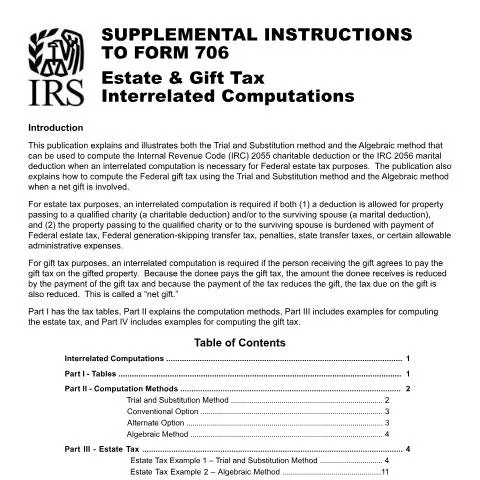
Navigating IRS Publication 904: A Comprehensive Insight
Understanding IRS Publication 904 is essential for various stakeholders involved in estate and gift taxes. This publication serves as a guide for calculating the Internal Revenue Code (IRC) 2055 charitable deduction and the IRC 2056 marital deduction. It provides the methods for interrelated computations which can become complex but are crucial for accurate tax reporting.
Who Needs to Engage with Publication 904?
Publication 904 is primarily designed for executors, administrators, and individuals involved in estate planning or the gifting process. It caters to:
- Executors of estates: Those responsible for settling a deceased individual's financial obligations.
- Individuals making gifts: Anyone planning to transfer wealth or assets that may incur gift taxes.
- Tax professionals: Advisers who assist clients with estate and gift tax calculations.
By providing a clear framework for deductions and tax computations, Publication 904 is vital for ensuring compliance and optimizing tax liabilities.
Understanding Interrelated Computations
One of the central themes of IRS Publication 904 is the concept of interrelated computations, which can be necessary in specific situations, particularly concerning deductions involving charitable contributions and marital transfers. Here’s a deeper look:
- Charitable Deductions: If property passed to a qualified charity, a deduction might be allowed if it is also burdened by federal estate taxes.
- Marital Deductions: Transfers to a surviving spouse may also require interrelated calculations when federal estate tax obligations exist.
The purpose of these computations is to ensure that tax liabilities accurately reflect the value of the estate or gift after accounting for any deductions that apply. The complexities involved mean that proper understanding and application of these computations are critical.
Detailed Breakdown of Calculation Methods
Publication 904 outlines two primary methods for calculating necessary deductions:
- The Trial and Substitution Method: This approach allows for a comparison of the tax liabilities and adjustments through hypothetical substitutions of values to determine total tax responsibilities.
- The Algebraic Method: A more formulaic approach that utilizes algebraic expressions to derive the net tax implications based on set values and deductions.
Each method has its advantages, and the choice may depend on the complexity of the estate or gift scenario being evaluated.
Preparation: Gathering Necessary Documentation
Preparing to fill out the computations as outlined in Publication 904 requires a thorough understanding of your estate or gift's financial landscape. Here's how to get started:
- Property Valuation: Ensure all property, including real estate, financial assets, and personal belongings, are accurately valued.
- Debt Documentation: Gather records of all debts or liens that may affect the estate's net value.
- Tax Records: Compile previous tax returns, particularly those related to estate and gift filings.
- Official Valuation Letters: If applicable, obtain letters from appraisers for any business or high-value assets.
This documentation forms the basis for any calculations you will perform and is critical for justifying deductions claimed on your tax return.
Filing Procedures: Submission Channels Explained
Once the computations are complete, the next step involves submission to the IRS. Here’s how to proceed:
- Online Submission: The IRS provides options for electronic submission via their official platform, which can expedite processing times.
- Paper Filing: For those preferring traditional methods, printed forms can be mailed to the appropriate IRS address. Ensure that all documentation is included to avoid delays.
- In-Person Filing: Certain regional IRS offices may accept submissions directly. Check ahead for appointment requirements and recommended documentation.
Choosing the right submission channel can make a significant difference in how quickly your filings are processed. Be sure to track your submission if you utilize a paper filing method.
Timelines and Deadlines: Key Dates You Should Know
Timely submission of relevant documents is crucial to avoid penalties and interest. Here are the critical timelines associated with estate and gift tax filings:
| Action | Deadline |
|---|---|
| File Form 706 (Estate Tax Return) | 9 months from the date of the decedent's death |
| File Form 709 (Gift Tax Return) | April 15 of the year following the gift |
| Pay any taxes due | At the time of filing |
Understanding these timelines is essential for compliance and avoiding unwanted penalties. Filing late can lead to significant interest and additional complications with the IRS.
Potential Complications: Unique Situations Requiring Special Attention
Various scenarios may complicate the estate or gift tax process, representing nuances that IRS Publication 904 addresses:
- Net Gifts: When the recipient of a gift agrees to pay the associated gift tax, it requires a unique calculation method, leading to possible variations in the tax owed.
- Non-U.S. Citizens: Estate and gift tax rules can differ significantly for non-citizen spouses and beneficiaries; specific treaties may apply.
- Complex Estates: Estates with numerous properties, international assets, or multiple beneficiaries may require professional assistance to navigate IRS requirements accurately.
Being aware of these complexities can help individuals and tax professionals prepare adequately and ensure compliance with IRS regulations.
Post-Filing: What Happens Next?
After submission, taxpayers must monitor their filings for any potential issues. Here’s how to effectively manage your submission:
- Tracking Your Submission: If filed electronically, use the IRS tracking system to confirm receipt and processing status.
- Responding to IRS Inquiries: Be prepared to provide additional documentation or clarification if the IRS requests further information.
- Understanding Appeals: If the IRS disputes your deductions or assessments, understand the appeals process outlined in IRS guidelines.
Staying proactive about your filing status will enable you to address issues promptly and protect against potential penalties.
Conclusion: Empowering Your Tax Strategy with IRS Publication 904
IRS Publication 904 is not just a technical document; it is a tool that, when understood correctly, empowers executors, individuals, and tax professionals to navigate the complex landscape of estate and gift taxes. By following the guidelines laid out in this publication, individuals can ensure compliance while maximizing their tax benefits.
Understanding IRS Publication 904: Key Concepts and Definitions
IRS Publication 904, titled "Sales Tax Deduction," serves as a crucial resource for taxpayers seeking to navigate the complexities surrounding state and local sales tax deductions. It primarily addresses who can qualify for the deduction, the methodology for determining the allowable sales tax amount, and the necessary forms to file. To maximize your understanding of this publication, it is essential to dissect certain key terms used throughout the document.
Sales tax, as defined by the IRS, is the tax imposed by state and local governments on retail sales of goods and services. Unlike income tax, which is based on earnings, sales tax is a consumption tax that varies significantly across different states and municipalities. The publication provides clarity on what constitutes 'qualified sales tax' – essentially, this includes taxes paid on tangible personal property but excludes federal taxes, excise taxes, and certain other specific transactions.
Understanding the "optional sales tax tables" is vital. The IRS provides taxpayers with two methods to calculate their sales tax deduction: the actual expense method, where you keep track of your sales tax paid throughout the year, and the optional sales tax tables method, which provides a standard deduction based on income and family size. The tables offer convenience but may not always yield the maximum deduction possible. Taxpayers who routinely make large purchases may find it more beneficial to track their actual sales tax paid rather than relying on the tables.
Eligibility Criteria and Special Considerations
Before claiming the sales tax deduction outlined in IRS Publication 904, it's crucial to determine if you meet the eligibility requirements. Generally, taxpayers who itemize their deductions on Form 1040 can claim this deduction. However, several specific criteria must be met regarding residency, income, and the nature of the purchases made. For instance, if you're a resident of a state that does not impose a sales tax, you would not be eligible for this deduction.
Unique circumstances can complicate eligibility. For example, if you live in a state that has a mix of state and local sales taxes, you may need to carefully calculate which taxes apply to your purchases. Furthermore, tax laws may vary significantly if you live in an area with special sales tax exemptions or holidays, such as those often applied to clothing or school supplies. These exemptions must be understood and considered when claiming deductions. For taxpayers who have relocated within the year, additional complexities arise as they must account for different state tax rates and regulations.
Moreover, certain purchases may not qualify for the deduction. Understanding what items are exempt is crucial to avoid potential audits or discrepancies. Therefore, reviewing the publication thoroughly, especially the sections detailing qualified and non-qualified purchases, is essential for accurate tax reporting.
Filing Requirements and Important Deadlines
Filing for the sales tax deduction as outlined in IRS Publication 904 requires careful attention to detail, particularly when it comes to deadlines and documentation. The standard deadline for filing your federal income tax return, where you would claim the deduction, is typically April 15. However, this date can shift slightly depending on weekends and holidays. For instance, if the 15th falls on a Saturday, Sunday, or legal holiday, the return is due the next business day.
When preparing to file, it’s crucial to gather all necessary documentation supporting your claim. This will include receipts showing sales tax paid, records of major purchases, and any other relevant financial records that can substantiate your deduction. If you choose to utilize the optional sales tax tables, you will still need to keep a copy of the publication for your records to ensure the accuracy of your claimed deduction. Additionally, when itemizing deductions for the first time, you may want to consider consulting with a tax professional to confirm that you are abiding by all IRS guidelines.
For taxpayers who cannot meet the April 15 deadline, the IRS provides options for filing an extension. Furthermore, it’s essential to note that while an extension allows for additional time to file, any taxes owed must still be paid by the original deadline to avoid penalties and interest charges. Filing Form 4868 for an automatic six-month extension can provide relief, but taxpayers must remain diligent in making timely estimated tax payments.