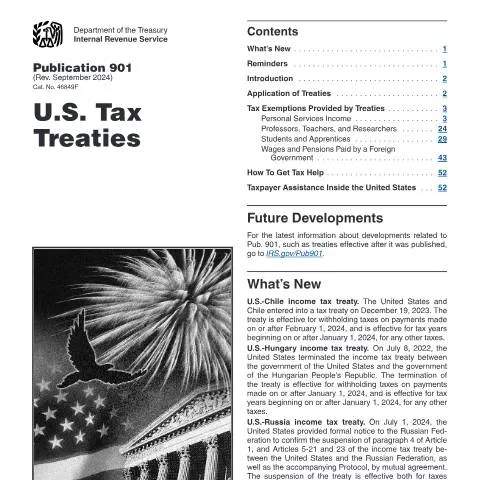
Navigating the Complexities of IRS Publication 901
When delving into the realm of international taxation, the IRS Publication 901 emerges as an invaluable resource. This publication provides crucial guidance on U.S. tax treaties, which assist qualifying foreign residents in navigating income tax obligations. For individuals who reside or earn income from countries that have a tax treaty with the United States, understanding this document is essential for optimizing tax responsibilities and ensuring compliance.
Understanding the Context: Why Does IRS Publication 901 Matter?
Tax treaties aim to prevent double taxation and foster financial cooperation between countries. Publication 901 outlines the specifics of these treaties, providing clarity on how they affect U.S. income tax for non-residents. The publication is especially relevant for:
- Foreign students and scholars working in the U.S.
- Professionals offering services internationally
- U.S. residents receiving income from foreign sources
Understanding these treaties can lead to significant financial advantages, including reduced tax rates or exemptions for certain types of income. Hence, knowing what Publication 901 entails can directly impact your financial well-being and compliance status.
Diving into Tax Treaty Provisions
The body of IRS Publication 901 comprises detailed sections regarding how various income types are treated under tax treaties. Each section can lead to different outcomes based on individual circumstances. Here are some of the key components:
- Personal Services Income: This section addresses how income earned from providing services, whether as an employee or independent contractor, is taxed based on the country of residence.
- Professors, Teachers, and Researchers: Specific exemptions are available for educators and researchers, designed to encourage knowledge exchange across borders.
- Students and Apprentices: There are provisions for reduced taxes on income earned by students or apprentices in the U.S.
Each treaty has its unique specifications, which can often be nuanced. Therefore, reviewing the publication is imperative to understanding what benefits may apply in your situation.
Common Income Types and Their Tax Treatment
It is crucial to identify the type of income you receive. The publication divides income into categories, each eligible for different treatments:
| Income Type | Possible Tax Treatment | Example |
|---|---|---|
| Salary | Reduced rate or exemption based on treaty | Foreign national working in the U.S. |
| Dividends | Lower withholding rates | Investments from abroad |
| Royalties | Potential exemption | Income from intellectual property |
Preparing to Complete Publication 901
Filing with IRS Publication 901 involves crucial preparatory steps. The first step is to gather necessary documentation regarding your income sources and the applicable tax treaties. Typically, you'll need:
- Your Social Security Number (SSN) or Individual Taxpayer Identification Number (ITIN).
- Evidence of your income (e.g., W-2 forms, 1099s).
- Documentation of residency status from your home country.
- Specific tax treaty provisions that apply to your situation.
Once you have gathered the necessary information, you can begin the application process outlined in the publication.
The Role of Form 8833 and Publication 901
Publication 901 may guide you through the tax treaty benefits, but filling out Form 8833 (Treaty-Based Disclosure Return) is how you disclose your treaty-based position on your tax return. This form informs the IRS of your intent to use a tax treaty position. Failing to file this form could result in the IRS disregarding your treaty claims. Here's how they work together:
- Publication 901 provides the framework and guidelines for understanding which treaties apply to your income.
- Form 8833 serves as the official declaration of your treaty-based income tax position.
Being aware of this connection is vital for taxpayers who might be utilizing treaty benefits.
Filing Procedures and Channels for Submission
Taxpayers have multiple avenues for filing their disclosures and claims, each with its unique advantages and potential drawbacks:
- Online Submission: Using IRS e-file options allows for faster processing and confirmation of receipt. Ensure you have all necessary documents and follow the instructions carefully.
- Mailing Hard Copies: For individuals who prefer traditional filing, paper forms can be mailed to the IRS. Keep in mind that processing times are typically slower.
- In-Person Filing: For those requiring immediate assistance or clarification, visiting an IRS office can be beneficial. Check and schedule appointments beforehand.
Regardless of the method, ensure that you send your documentation well in advance of the tax deadline, which typically falls on April 15 each year.
Understanding Consequences of Non-Compliance
Failing to adhere to IRS regulations and not utilizing the provisions of Publication 901 effectively can lead to financial repercussions. Here are some possible outcomes:
- Double Taxation: Without treaty benefits, you may end up paying taxes in both your home country and the U.S.
- Penalties and Interest: Late filing can incur penalties and interest on unpaid taxes.
- Loss of Benefits: If you do not disclose your treaty-based position on time, you might lose any applicable tax exemptions or reduced rates.
Understanding these implications highlights the importance of timely and accurate filing.
Seeking Assistance: Where to Turn for Help
Tax matters can be complex, and many individuals may benefit from additional guidance. The IRS provides several resources to aid taxpayers:
- IRS Taxpayer Assistance Centers: These centers offer personal assistance for tax-related inquiries.
- IRS.gov: The official IRS website features extensive resources, including details on treaties, updates, and downloadable forms.
- Tax Professionals: Consulting with tax experts specializing in international tax law can provide tailored insights and strategies.
Utilize these resources to ensure you're fully compliant and informed regarding your tax treaty benefits.
Staying Updated: The Evolution of IRS Publication 901
The landscape of international taxation is continually evolving. Amendments and new treaties are regularly adopted, making it crucial to stay informed about changes that may affect your tax obligations. Subscribe to IRS newsletters, follow updates on their website, or engage with tax professionals to remain current on developments. For instance, the recent inclusion of treaties with countries like Chile and changes regarding Hungary and Russia illustrate the dynamic nature of tax agreements.
Being proactive in understanding these updates ensures that you leverage any potential benefits effectively.
The Takeaway: Maximizing Your Knowledge of IRS Publication 901
IRS Publication 901 is not merely a document; it is a vital resource for anyone involved in international transactions. By thoroughly understanding its provisions, preparing adequately, and maintaining compliance, taxpayers can navigate the complexities of U.S. tax treaties effectively. Whether you're a foreign student in the U.S. or a U.S. citizen earning income abroad, the insights provided in this publication are pivotal in maximizing tax benefits while ensuring adherence to legal obligations.
Understanding IRS Publication 901: Who Needs It and Why?
IRS Publication 901, titled "U.S. Tax Treaties," serves a crucial role for U.S. citizens and residents engaging in international financial activities. This publication outlines the provisions of various tax treaties that the United States has entered into with other countries, providing guidance on how these treaties affect U.S. taxpayers. It's essential for those who earn income overseas, have foreign investments, or are involved in cross-border transactions.
Who Should Refer to Publication 901? Anyone who is a U.S. citizen or resident alien and has income from a foreign source should familiarize themselves with this publication. It is particularly relevant for:
- U.S. Expats: Americans living abroad will often find that their foreign income is subject to different rules and may benefit from the provisions outlined in tax treaties.
- Foreign Investors: Non-residents who earn income in the U.S. need to understand withholding rates and potential exemptions provided by treaties.
- Business Owners: U.S. businesses operating internationally or engaging with foreign entities can avoid double taxation by understanding how treaties apply to them.
Notably, taxpayers should reference the specific treaty protocols and include the necessary forms (such as Form 8833, the Treaty-Based Return Position Disclosure) when filing, ensuring compliance with IRS regulations.
Navigating the Tax Treaty Benefits and Limitations
Tax treaties are designed to prevent double taxation and fiscal evasion, providing clear benefits to U.S. taxpayers. However, understanding these treaties requires an in-depth look at both the advantages and potential limitations they impose.
Benefits: Tax treaties generally allow for reduced tax rates on various types of income, including dividends, interest, and royalties. For instance, if a taxpayer lives in a treaty country, they may be eligible for a lower withholding rate on dividend payments from U.S. corporations. Furthermore, certain treaties provide exemptions for specific types of income, such as pensions or social security benefits.
Limitations: It's important to note that not all income types are treated equally under these treaties. Some income may still be fully taxable, depending on the specific treaty's language. Additionally, taxpayers must provide adequate proof of residency in the treaty country to claim benefits, which can include submitting a residency certificate from their foreign government.
Taxpayers must stay vigilant about the expiration of treaties or changes in tax policy that could affect their obligations. Regular consultation of the IRS website and Publication 901 is critical to remain compliant and informed.
Common Misconceptions and FAQs About IRS Publication 901
Many individuals have misconceptions about IRS Publication 901 and its application. Addressing these can demystify the process and clarify what it means for taxpayers.
Misconception 1: All foreign income is tax-exempt under tax treaties. This is false; while treaties can provide reductions or exemptions for specific income types, many forms of income, such as wages or salaries, are still fully taxable.
Misconception 2: Tax treaties are universally applicable without regard to residency. In reality, the benefits of tax treaties typically apply only to residents of the treaty countries, necessitating proof of residency.
FAQs:
- Q: How do I know if a tax treaty applies to me?A: Review the list of countries with which the U.S. has tax treaties on the IRS website and see if your income type is covered.
- Q: Do I always need to file Form 8833 to claim treaty benefits?A: Not always, but if your treaty position is different from the standard IRS treatment, you must disclose it on Form 8833.
- Q: How do I handle discrepancies between U.S. and foreign tax laws?A: Consult a tax professional with expertise in international tax law to navigate these complexities effectively.
Understanding these facets of IRS Publication 901 can significantly enhance a taxpayer's ability to navigate their international income tax responsibilities efficiently.