Understanding the Official Form 201A: Attachment to Voluntary Petition for Non-Individuals Filing for Bankruptcy under Chapter 11
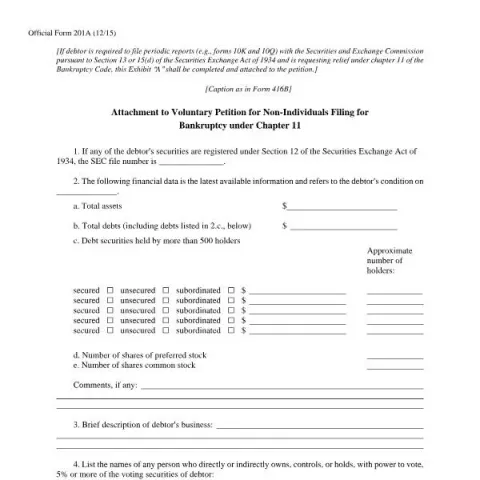
The Official Form 201A serves as a critical document for non-individual debtors seeking bankruptcy protection under Chapter 11 of the United States Bankruptcy Code. Filed with the United States Courts, this form provides essential financial and organizational information that complements the voluntary bankruptcy petition, ensuring transparency and compliance with federal bankruptcy procedures.
Purpose and Scope of Form 201A
Form 201A is specifically designed for corporate entities, partnerships, or other non-individual entities that are initiating a Chapter 11 bankruptcy case voluntarily. Its primary purpose is to furnish the court, creditors, and other interested parties with a snapshot of the debtor’s financial condition at the time of filing. This includes details about assets, liabilities, securities, and ownership structures.
Additionally, when a debtor is required to file periodic reports with the Securities and Exchange Commission (SEC), such as Forms 10-K or 10-Q, and is seeking relief under Chapter 11, they must complete and attach Form 201A as an exhibit to their bankruptcy petition. This ensures that the court has access to the latest publicly available financial data of the debtor.
Key Sections and Information Required
1. Securities Registration Details
If any of the debtor’s securities are registered under Section 12 of the Securities Exchange Act of 1934, the form requires the debtor to specify the SEC file number. This information helps identify the securities involved and their regulatory status.
2. Financial Data as of a Specific Date
The form mandates the debtor to provide the most recent financial information, including:
- Total assets: The overall value of the debtor’s property and resources.
- Total debts: The sum of liabilities owed by the debtor, including specific debts listed separately.
- Debt securities held by more than 500 holders: Details about the distribution of debt securities among a large number of holders, including the approximate number of holders and whether these are secured, unsecured, or subordinated debts.
- Shares of preferred and common stock: The number of shares outstanding for each class of stock.
3. Business Description
This section requires a brief overview of the debtor’s business operations, providing context for the financial data and helping the court and creditors understand the nature of the debtor’s enterprise.
4. Ownership and Control
The form asks for the names of any persons or entities that directly or indirectly own, control, or have voting power over 5% or more of the debtor’s securities. This information is vital for assessing control and potential influence over the debtor’s decision-making processes during bankruptcy proceedings.
Filling Out Form 201A: Procedural Tips
Completing Form 201A requires careful attention to detail and accuracy. Debtors should gather the latest financial statements, SEC filings, and ownership records to ensure the information is current and comprehensive. It is advisable to consult with legal counsel or bankruptcy professionals to verify that all required data is correctly reported and that the form aligns with the overall bankruptcy filing strategy.
Fill in your form directly online
No printing: type your details into the boxes of the official form, tick, then download the PDF ready to send.
- 1Type into the form boxes
- 2Tick in one click
- 3Save and download the PDF
Once completed, the form must be attached to the voluntary petition filed with the bankruptcy court. The filing must adhere to the court’s deadlines—generally, the petition and all attachments should be submitted simultaneously to ensure a smooth process.
Post-Filing Considerations
After submitting the bankruptcy petition and Form 201A, the debtor must continue to comply with ongoing reporting obligations, including periodic filings with the SEC if applicable. The bankruptcy court may also request additional disclosures or updates on the debtor’s financial condition as proceedings progress.
Overall, Form 201A plays a vital role in providing transparency during the Chapter 11 process, helping courts and creditors understand the debtor’s financial landscape and ownership structure at the outset of bankruptcy proceedings.