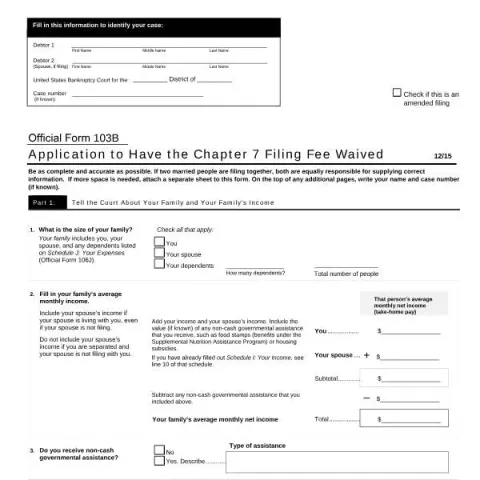
Understanding the Official Form 103B: Application to Have the Chapter 7 Filing Fee Waived
The Official Form 103B is a crucial document for individuals seeking relief from paying the Chapter 7 bankruptcy filing fee in the United States. Managed by the United States Bankruptcy Court, this form allows eligible debtors to request a waiver of the filing fee based on their financial circumstances. This article provides a comprehensive overview of the form’s purpose, how to prepare it, and the process involved in submitting a fee waiver request.
Purpose of Form 103B
The primary objective of Form 103B is to assist debtors who cannot afford the Chapter 7 filing fee. Bankruptcy courts use this form to evaluate whether an individual’s financial situation qualifies them for a fee waiver. If approved, the debtor is exempted from paying the filing fee upfront, which can significantly ease the burden of initiating bankruptcy proceedings.
This form is particularly relevant for low-income individuals or families experiencing financial hardship. It ensures that access to bankruptcy relief is not hindered by an inability to pay court fees, aligning with the broader goal of providing a fresh start for those in economic distress.
Preparing Your Application
Gathering Necessary Financial Information
Before completing Form 103B, applicants should collect detailed information about their income and expenses. This includes:
- Family size and dependents
- Average monthly income (including spouse’s income, if applicable)
- Non-cash governmental assistance received, such as food stamps or housing subsidies
- Estimated monthly expenses, including housing, utilities, food, transportation, and other necessary costs
- Assets, such as cash, bank accounts, real estate, and vehicles
Accurate and complete data ensures that the court can make an informed decision regarding the applicant’s financial hardship.
Completing the Form
Form 103B is divided into several sections, each requiring specific information:
- Part 1: Family and Income Details — Includes family size, income sources, and governmental assistance.
- Part 2: Expenses — Details monthly expenses and whether they cover additional individuals or are paid by others.
- Part 3: Property and Assets — Lists cash, bank accounts, real estate, and vehicles owned.
Applicants should answer all questions accurately, attach relevant schedules or supporting documents if necessary, and ensure that the information reflects their current financial situation.
Submitting and Follow-Up Process
How to File the Application
The completed Form 103B can be filed electronically via the court’s electronic filing system or physically submitted to the bankruptcy court handling the case. It is essential to review the court’s local procedures for filing fee waiver requests, as these may vary by jurisdiction.
Review and Decision
Once submitted, the bankruptcy judge reviews the application to determine eligibility. The court considers whether the applicant’s income and expenses demonstrate an inability to pay the filing fee. If approved, the fee is waived, allowing the debtor to proceed with the bankruptcy case without paying the initial fee upfront.
Fill in your form directly online
No printing: type your details into the boxes of the official form, tick, then download the PDF ready to send.
- 1Type into the form boxes
- 2Tick in one click
- 3Save and download the PDF
Applicants will receive notice of the court’s decision. If denied, they may need to pay the fee or explore alternative options, such as payment plans or requesting a different form of relief.
Additional Considerations and Resources
It is advisable for applicants to consult with a bankruptcy attorney or a legal aid organization if they need assistance filling out the form or understanding the process. Many courts also provide guidance materials and instructions on their official websites.
For more information, individuals can visit the official website of the United States Courts or the specific bankruptcy court handling their case. Ensuring the accuracy of the application enhances the likelihood of a successful fee waiver, facilitating access to bankruptcy protections for those in need.