Understanding the Official Form 201: Voluntary Petition for Non-Individuals Filing for Bankruptcy
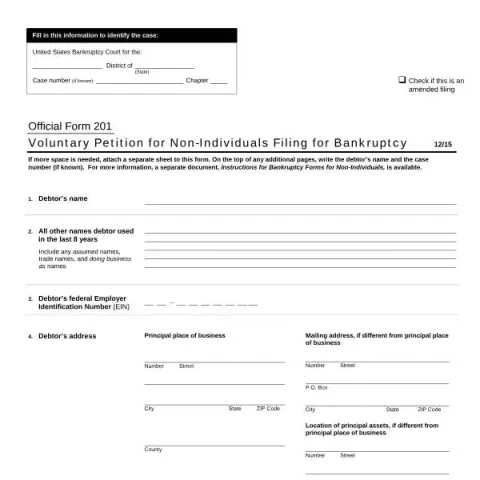
The Official Form 201 is a crucial legal document used by non-individual entities—such as corporations, partnerships, or other business entities—when voluntarily initiating bankruptcy proceedings in the United States. Managed by the United States Bankruptcy Court, this form serves as the formal petition to begin the bankruptcy case and provides essential information about the debtor’s identity, business structure, and financial situation.
Purpose and Significance of the Form
The primary objective of Form 201 is to present a comprehensive overview of the debtor’s legal and financial status to the bankruptcy court. Filing this form is a legal requirement for non-individual entities seeking relief under chapters 7, 9, 11, or 12 of the Bankruptcy Code. It ensures the court and creditors have accurate, detailed information about the debtor, facilitating a transparent and efficient bankruptcy process.
Preparing and Completing the Form
Gathering Necessary Information
- Legal Name: The official name of the debtor as registered in legal documents.
- Alternate Names: Any trade, assumed, or doing business as names used in the past 8 years.
- Employer Identification Number (EIN): The federal tax identification number assigned to the business.
- Business Address: The principal place of business, mailing address (if different), and location of main assets.
- Website URL: The official online presence, if applicable.
- Business Type and Classification: Whether the debtor is a corporation, partnership, or other entity, including relevant NAICS codes.
Filling Out the Case Details
The form requires specific case-related information:
- Bankruptcy Chapter: The chapter under which the debtor files, such as Chapter 7, 9, 11, or 12.
- Case Number: If known, the court-assigned number; otherwise, it will be assigned upon filing.
- Prior Filings: Details of any previous bankruptcy cases filed by the debtor or related entities within the last 8 years.
- Related Cases: Information about ongoing or pending cases involving affiliates or business partners.
Filing Procedures and Submission
The completed Form 201 can be filed either electronically through the PACER system or physically at the appropriate United States Bankruptcy Court district office. When filing electronically, ensure that all required attachments and supporting documents—such as recent financial statements or balance sheets—are included as per the court’s guidelines.
It is important to review the instructions specific to the debtor’s jurisdiction, as procedures may vary slightly between districts. The form must be signed and verified under penalty of perjury, confirming the accuracy of the information provided.
Post-Filing Considerations
After filing, the court assigns a case number and begins the formal process of reviewing the petition. Creditors and interested parties are notified, and the debtor must comply with ongoing reporting obligations, including submitting periodic financial disclosures and updates. The court may also schedule meetings of creditors and hearings to evaluate the debtor’s financial affairs and plan.
Fill in your form directly online
No printing: type your details into the boxes of the official form, tick, then download the PDF ready to send.
- 1Type into the form boxes
- 2Tick in one click
- 3Save and download the PDF
Additional Resources and Support
For detailed guidance, debtors can consult the Instructions for Bankruptcy Forms for Non-Individuals, available on the United States Courts official website. Legal counsel experienced in bankruptcy law can also assist in preparing and submitting the form to ensure compliance with all legal requirements and to facilitate a smooth bankruptcy process.
In summary, Official Form 201 is a foundational document for non-individual entities seeking bankruptcy relief. Proper completion and timely filing are essential steps in navigating the complex legal landscape of bankruptcy proceedings in the United States.