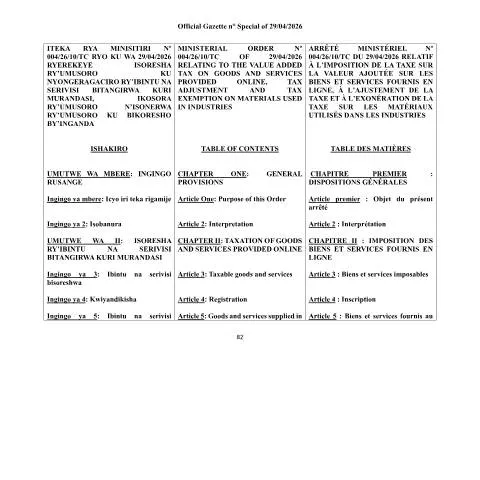
Navigating the Ministerial Order VAT on Online Services: A Comprehensive Guide
In an increasingly digital economy, the implementation of tax regulations specific to online services has become paramount. The Ministerial Order VAT on Online Services April 2026 is a pivotal document that aims to streamline the Value Added Tax (VAT) processes related to goods and services provided online in Rwanda. Understanding this order is crucial for businesses and individuals engaging in online transactions, as it lays out the legal framework, registration requirements, and obligations for taxation.
The Actors: Who Needs to Engage with This Order?
This order directly impacts a variety of stakeholders, including:
- Online Service Providers: Businesses that offer goods or services through digital platforms are required to comply with VAT regulations.
- Freelancers and Entrepreneurs: Individuals providing digital services or selling products online must register and adhere to these tax obligations.
- Consumers: End-users may notice changes in pricing structures as VAT is applied to online purchases.
Each of these groups has distinct responsibilities under the order:
Online Service Providers
Providers must ensure they are registered for VAT and adhere to the tax rates set forth in the order. Registration is a prerequisite for compliance.
Freelancers and Small Business Owners
Individuals offering their services online, whether as freelancers or small enterprises, must also register for VAT and maintain accurate records of their transactions.
Consumers
While consumers may not have direct responsibilities, they should be aware of how VAT affects the pricing of online goods and services.
Breaking Down the Order: Key Components
Taxable Goods and Services
Article 3 of the order details which goods and services are subject to VAT. This includes:
- Digital products such as e-books and software.
- Online services including streaming, subscription services, and digital marketing.
Registration Process
Article 4 outlines the registration process, which is pivotal for compliance. Businesses or individuals must submit their registration through the Irembo platform using their National Identification Number (NIN). Here’s a streamlined process:
- Access the Irembo platform.
- Select the VAT Registration option.
- Fill in the required fields such as business name, NIN, and contact information.
- Submit the application for assessment.
Financial Implications of VAT Compliance
Engaging with the Ministerial Order VAT on Online Services has notable financial implications for both providers and consumers. Understanding these can help in strategic planning.
Obligations and Benefits
Providers are responsible for charging VAT on taxable goods and services. This influences pricing models, and failure to comply could result in fines or penalties from the Rwanda Revenue Authority (RRA).
Conversely, compliance opens avenues for refunds on VAT paid for business inputs related to online services. This can positively impact cash flow.
Consequences of Non-Compliance
Missing registration deadlines or failing to charge VAT appropriately can lead to severe financial repercussions. The RRA has the authority to audit businesses and impose penalties, which could escalate into legal issues. Therefore, adherence to deadlines and accurate invoicing is critical.
Form Structure: What to Expect
Understanding the format and sections of the VAT registration form is imperative for accurate completion. Each section has specific requirements that must be met:
A Closer Look at the Registration Form
The registration form typically comprises the following key sections:
| Section | Description |
|---|---|
| Personal Details | Input your full name, NIN, and contact information. |
| Business Information | Provide details about the nature of your online services or goods. |
| Tax Preferences | Select the appropriate tax category applicable to your goods/services. |
Each section must be filled out meticulously to avoid delays in the registration process.
In case of Errors: What are the Remedies?
Submitting the registration form does not preclude the possibility of errors. Article 10 through Article 14 detailed in the order address invoice adjustments and error correction processes.
Remedial Actions for Common Errors
- Incorrect Information: If an error is identified, applicants must submit an adjustment request via the Irembo platform.
- Missing Documentation: Ensure all requested documents are submitted; if any are missing, the application will be deemed incomplete.
- Denials: If the application is rejected, a detailed explanation will be provided, allowing for resubmission or appeal.
Integration into Wider Taxation Framework
This Ministerial Order is not an isolated regulation but rather a critical component of Rwanda's broader taxation and revenue framework. It aligns with the objectives of the RRA to enhance tax compliance and digital economy growth.
How This Order Fits Into National Strategies
The introduction of VAT on online services supports the government's digital transformation initiatives and encourages fair competition among local and international businesses. The order promotes transparency and efficiency within the tax system.
Comparative Analysis with Other Tax Regulations
Understanding how this order differs from previous tax regulations is essential for both businesses and consumers:
| Aspect | Ministerial Order VAT on Online Services | Traditional Tax Regulations |
|---|---|---|
| Scope | Focuses on online transactions | Broader coverage including physical goods |
| Registration Process | Digitized via Irembo platform | More manual processes |
| Compliance Monitoring | Digital tracking of transactions | Less immediate monitoring |
Conclusion: Moving Forward with Compliance
Engaging with the Ministerial Order VAT on Online Services requires businesses and individuals alike to adapt to new tax obligations in a digital economy. Continuous monitoring of compliance requirements is essential as legislation evolves. Utilizing resources available through the RRA and Irembo will aid in navigating these responsibilities effectively.
As Rwanda progresses in enhancing its digital economy, understanding these frameworks will empower stakeholders to make informed decisions and contribute to the nation’s revenue goals.
Understanding the Ministerial Order on VAT for Online Services
The Ministerial Order regarding Value Added Tax (VAT) on online services, set to take effect in April 2026, marks a significant shift in the taxation landscape of Rwanda. The order, which is aligned with trends observed globally, aims to ensure that digital service providers contribute fairly to the nation’s revenue, thus promoting economic growth and infrastructure development. This section delves into the intricacies of the order, its implications for both foreign and local businesses, and the broader economic context in which it operates.
Historically, Rwanda has been proactive in embracing digital transformation, particularly in governance and service delivery through platforms such as Irembo. The introduction of VAT on online services not only aims to streamline revenue collection but also positions Rwanda as a competitive player in regional markets. As such, both local and foreign entities need to be cognizant of their tax obligations to avoid penalties and ensure compliance.
Who is Affected by the Order?
The Ministerial Order on VAT will affect a wide array of digital service providers including but not limited to streaming services, e-commerce platforms, and software as a service (SaaS) providers. It applies to any entity providing services to consumers within Rwanda, irrespective of their geographical location. This is crucial for businesses based overseas that might not have previously considered their tax obligations in Rwanda. They will now need to register for VAT with the Rwanda Revenue Authority (RRA) and comply with local regulations.
Registration and Compliance Requirements
Entities subject to this VAT must register with the RRA, obtaining a Tax Identification Number (TIN) and adhere to the filing requirements stipulated in the Law No. 22/2018. This includes keeping accurate records of all transactions and ensuring that VAT is charged on taxable services provided. The order specifies that the applicable VAT rate will be consistent with existing tax legislation, which currently stands at 18% in Rwanda.
Implications for Consumers and Local Businesses
The enactment of VAT on online services will have direct consequences for consumers and local businesses in Rwanda. The added tax could lead to increased costs for consumers, as service providers may pass on the VAT charge to end-users. Understanding this end-to-end effect is essential for consumers and businesses alike.
Price Sensitivity and Consumer Behavior
For local businesses utilizing online services, the price sensitivity of consumers becomes a pivotal factor in pricing strategies. Companies will need to assess the competitive landscape in light of the new VAT to ensure they do not alienate their customer base. This may involve re-evaluating their pricing structures or enhancing the value of services offered to justify price increases.
Impact on E-Commerce Growth
While the introduction of VAT may pose challenges, it could also spur growth within the Rwandan e-commerce sector. As businesses become compliant and enhance their digital offerings, it presents an opportunity for innovation and new market entrants. Furthermore, the government’s commitment to supporting small and medium-sized enterprises (SMEs) could facilitate this transition, with initiatives aimed at digital training and resources for entrepreneurs. The synergy between government support and VAT compliance can lead to a more robust e-commerce ecosystem.
Navigating the Transition: Strategies for Compliance
As the implementation date approaches, businesses must develop comprehensive strategies to navigate the transition to compliance with the Ministerial Order on VAT. This involves not only registering for VAT but also adapting business operations to ensure that they effectively manage tax obligations.
Integrating Tax Processes into Business Systems
Businesses should invest in upgrading their accounting systems to incorporate VAT compliance functionalities. This can include automated invoicing that includes VAT, tracking sales and purchases accurately, and generating reports required by the RRA. By aligning their financial systems with the new tax requirements, businesses can minimize errors and streamline their operations.
Engagement and Training for Staff
To ensure successful implementation, training staff on the new VAT regulations and their implications is essential. This can encompass everything from understanding how to issue VAT-inclusive invoices to knowledge of how to handle VAT returns. Investing in staff training not only aids compliance but also builds a culture of accountability within the organization.
Consultation and Support Services
For many businesses, especially SMEs, navigating tax compliance can be daunting. Engaging with consultants or legal advisors who specialize in Rwandan tax law can provide valuable insights and support. This expert guidance can assist in understanding specific obligations related to the VAT on online services and in preparing for any potential audits by the RRA.