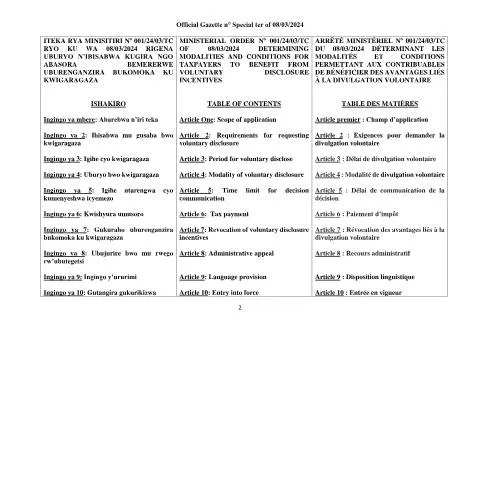
Understanding the Ministerial Order about Voluntary Disclosure
The Ministerial Order about Voluntary Disclosure serves a pivotal role in the Rwandan administrative landscape, particularly concerning tax compliance and revenue enhancement. This document is essential for individuals and entities who aim to rectify inaccuracies in their tax declarations or disclose previously unreported income or assets. The underlying principle is to foster transparency and encourage compliance among taxpayers in Rwanda.
Who is Responsible for Submitting the Form?
This official document is primarily submitted by taxpayers who wish to voluntarily disclose information that may have been omitted in their previous tax returns. This includes both individual and corporate taxpayers. The reasons for disclosure can vary widely, from the unintentional oversight of income to the intentional hiding of assets due to fear of penalties.
- Individual Taxpayers: Rwandans who earn income from various sources, including salaries, investments, or business profits.
- Corporate Taxpayers: Companies that have not fully disclosed their revenue or have underreported their tax obligations.
In addition, legal representatives or authorized agents may also submit the form on behalf of the taxpayer, ensuring that all relevant information is disclosed accurately.
Steps to Complete the Form Effectively
Completing the Ministerial Order about Voluntary Disclosure requires precision and attention to detail. Here’s a structured approach to ensure that all necessary fields are correctly filled:
- Personal and Business Information: Begin by entering your National Identification Number (NIN) and any relevant business registration details. This establishes your identity as a taxpayer.
- Details of Disclosure: Clearly outline the nature of the undisclosed income or assets. Include specific amounts and descriptions to enhance clarity.
- Timeframe of Non-Disclosure: State the period during which the income or assets were unreported. This information is crucial for determining any applicable penalties or interest.
- Supporting Documentation: Attach necessary documents that support your disclosure, such as bank statements or financial records, where applicable.
- Declaration: Finally, ensure that you sign the form, confirming the accuracy of the information provided.
Submission Channels: A Comparative Overview
Once the form is completed, it must be submitted to the relevant tax authority. Rwanda provides multiple channels for submission, each with distinct characteristics:
| Channel | Description | Benefits |
|---|---|---|
| Online Submission | Utilizing the Irembo platform for a digital filing process. | Convenience and speed, allowing for immediate processing. |
| Paper Submission | Filling out a hard copy of the form and submitting it at the local tax office. | Preferred by those who are less familiar with digital systems. |
| In-Person Submission | Directly handing in the form at designated government offices. | Ensures personal interaction, which can help clarify any questions. |
Specific Cases and Considerations
Certain situations may require additional attention when submitting the Ministerial Order about Voluntary Disclosure. These include:
- Foreign Nationals: If you are a foreign resident in Rwanda, additional documentation may be necessary to clarify your tax residency and obligations.
- Minors: For minors, the form should be submitted by a parent or legal guardian, ensuring all income generated is duly reported.
- Complex Situations: Taxpayers with complex financial portfolios may benefit from consulting a tax advisor to ensure all aspects of their disclosure are accurate.
- Urgent Cases: If there are imminent tax liabilities or potential audits, it is advisable to expedite the submission process to mitigate potential penalties.
Timeline and Follow-Up Actions
Once the Ministerial Order about Voluntary Disclosure is submitted, the taxpayer should monitor the status of their submission. Typically, the timeline for processing can vary, but crucial actions include:
- Initial Processing: Expect a communication from the relevant tax authority within a stipulated timeframe to confirm receipt of your submission.
- Follow-Up: If there is no acknowledgment after a reasonable period, it is prudent to contact the tax office for status updates.
- Assessment and Resolution: Following the review, the tax authority will communicate any required actions, including potential penalties, if any discrepancies are found.
Distinction from Similar Documents
It is essential to distinguish the Ministerial Order about Voluntary Disclosure from other forms, such as standard tax returns or error correction forms. The critical differences include:
- Intent: The voluntary disclosure form is proactive, aimed at correcting past omissions, whereas standard returns are routine submissions of current earnings.
- Potential for Penalties: Voluntary disclosures may mitigate penalties if reported before the tax authority identifies discrepancies.
- Documentation Requirements: The voluntary disclosure form often requires more comprehensive documentation to substantiate claims of previously undisclosed income.
Final Thoughts and Recommendations
Engaging with the Ministerial Order about Voluntary Disclosure is a critical step for taxpayers wishing to align their financial affairs with Rwandan tax law. Staying informed about the submission process, deadlines, and the implications of disclosures is vital for ensuring compliance and avoiding future complications. Taxpayers are encouraged to leverage available resources, including consulting with tax professionals or contacting the relevant authorities for assistance.
Understanding the Ministerial Order on Voluntary Disclosure
The Ministerial Order No. 003/2020, which governs voluntary disclosure in Rwanda, plays a crucial role in the tax landscape, encouraging taxpayers to come forward with unreported income without facing severe penalties. This initiative is particularly beneficial for those who may have fallen behind in their tax obligations. The order outlines specific guidelines and conditions under which voluntary disclosure is treated, emphasizing transparency and compliance.
One of the key aspects of this order is the emphasis on the National Identification Number (NIN) as a prerequisite for engaging in the voluntary disclosure process. Taxpayers must ensure that they have their NIN readily available when submitting their disclosures through the appropriate channels, primarily via the Rwanda Revenue Authority (RRA) platforms. This procedure is designed to streamline the process and ensure accountability.
Moreover, under this order, taxpayers are encouraged to voluntarily declare previously unreported income from various sources, including but not limited to, informal employment, irregular business income, and international remittances. By availing themselves of this opportunity, taxpayers can mitigate potential penalties and enjoy a more favorable standing with the tax authorities.
It is essential to note that the disclosure must be made within a specified timeframe. Adhering to this timeline not only ensures compliance but also allows individuals to benefit from reduced penalties and interest on any taxes owed. The Ministerial Order sets clear deadlines, which are integral to fostering a culture of compliance among Rwandan citizens.
The Implications of Voluntary Disclosure for Tax Compliance in Rwanda
The implications of the Ministerial Order on Voluntary Disclosure extend beyond individual taxpayers. It significantly impacts the overall tax compliance landscape in Rwanda. As individuals take advantage of the opportunity to disclose previously unreported incomes, the broader economy benefits from increased tax revenue. This, in turn, enables the government to enhance public services and infrastructure, thereby improving overall quality of life for citizens.
Furthermore, the voluntary disclosure mechanism contributes to building a culture of compliance among taxpayers. By allowing individuals to come forward without the fear of harsh penalties, the government fosters a more cooperative relationship between tax authorities and citizens. This initiative encourages ongoing dialogue and transparency, which are vital for effective governance.
Additionally, businesses operating in Rwanda stand to gain from the voluntary disclosure framework. Companies that may have underreported income or overlooked their tax obligations can utilize this opportunity to correct their records. By doing so, they enhance their credibility and reduce the risk of audits or legal ramifications in the future. This proactive approach not only benefits the companies but also strengthens the nation’s tax base.
Frequently Asked Questions about the Ministerial Order on Voluntary Disclosure
As with many government initiatives, there are several common questions that arise regarding the Ministerial Order on Voluntary Disclosure. Understanding these queries can help taxpayers navigate the process more effectively.
1. Who is eligible to participate in the voluntary disclosure program?
Any taxpayer who has previously unreported income, whether an individual or a business entity, can participate in the program. However, the eligibility may hinge on specific conditions set forth in the order, such as the timeframe for disclosure and compliance with the NIN requirement.
2. What are the penalties for failing to disclose income before the initiative?
While the voluntary disclosure program offers amnesty from penalties for those who come forward, failure to do so could result in significant fines and legal repercussions. The Ministerial Order outlines the potential penalties for non-compliance, which underscores the importance of timely disclosure.
3. Can taxpayers disclose income from previous years under this program?
Yes, the Ministerial Order allows individuals to disclose income from prior years. This provision is particularly crucial for taxpayers who have neglected their tax responsibilities in the past and seek to rectify their standing with the RRA.
4. How does the RRA verify the disclosed income?
Once a voluntary disclosure is submitted, the RRA may conduct checks to verify the accuracy of the reported income. This may include cross-referencing with available data and conducting audits if necessary. Taxpayers are encouraged to provide as much documentation as possible to support their disclosures.
In summary, the Ministerial Order on Voluntary Disclosure is a vital tool for enhancing tax compliance in Rwanda. By understanding its guidelines and implications, taxpayers can better navigate their obligations and contribute positively to the nation’s economic landscape.