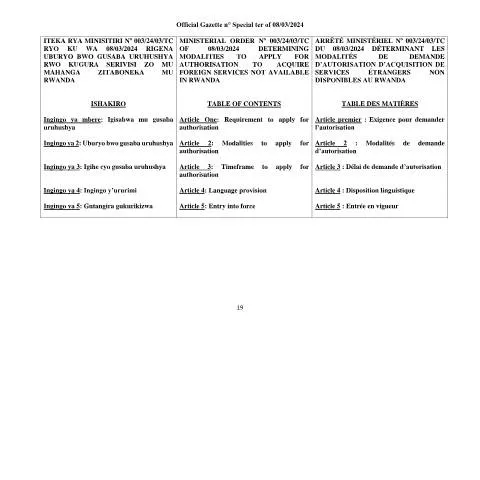
Understanding the Importance of the Ministerial Order on Foreign Services
The Ministerial Order about Foreign Services, specifically Ministerial Order Nº 003/24/03/TC, issued on March 8, 2024, serves a crucial role in regulating the acquisition of foreign services that are not readily available in Rwanda. This order is paramount for businesses and individuals seeking specialized services that local providers cannot offer. By mandating an authorization process, it ensures that requests are evaluated for necessity and compliance with local regulations, thereby promoting efficiency in service provision.
Who Initiates the Application Process?
The responsibility of submitting an application for authorization lies squarely with taxpayers who are registered for Value Added Tax (VAT). This stipulation is key; only those operating within the tax framework of Rwanda can request foreign services. This requirement plays a dual role—it not only ensures accountability in tax matters but also maintains an organized approach to service acquisition.
Specific Profiles of Applicants
While any VAT-registered taxpayer can apply, there are nuances based on the type of service needed:
- Businesses: Companies looking to engage foreign expertise in fields such as technology, consulting, or specialized manufacturing.
- Individuals: Private citizens may seek authorization for personal services like legal consultations or education from foreign institutions.
- Government Entities: Public institutions may require external services for critical development projects or specialized studies.
Step-by-Step Guide to Completing the Application
Completing the application for the authorization to acquire foreign services involves several steps. The applicant must be meticulous in gathering the necessary documentation, as outlined in the order.
Essential Documentation
The following documents are required:
- Application Letter: A formal request addressed to the Minister in charge of taxes, outlining the nature of the service required.
- Supporting Evidence:
- Proof of tender submissions indicating no successful bidders were found within Rwanda.
- A recommendation letter from a relevant regulatory authority confirming the absence of local service providers or inadequate service quality of existing ones.
It is critical to ensure that all documents are accurate and complete to avoid delays or potential rejection.
The Application Submission Channels
Once the application is prepared, it can be submitted through various channels. Each method comes with its own set of implications:
| Submission Method | Details | Advantages | Disadvantages |
|---|---|---|---|
| Online Portal (Irembo) | Submission via the digital services platform for increased efficiency. | Convenience, tracking capability, faster processing. | Requires internet access and digital literacy. |
| In-Person at MINALOC | Direct submission at the Ministry of Local Government. | Personal assistance available, direct communication. | Time-consuming, may involve waiting periods. |
| Postal Service | Sending documents through mail. | Access for those in remote areas. | Risk of loss or delays in mail processing. |
Timeframes: When to Apply and What to Expect
The timeline for submitting an application is an essential consideration. According to Article 3 of the Ministerial Order, there are specific timeframes when applications should be made:
Application Period
Applications can be submitted any time during the fiscal year, which runs from July to June. However, it is advisable to plan accordingly, considering the processing times and potential need for additional documentation.
After Submission: What Happens Next?
Once submitted, the application goes through a review process by the relevant authorities. The applicant will receive feedback, which can either be:
- Approval: Authorization is granted, allowing the acquisition of the specified foreign service.
- Request for More Information: Additional documentation or clarification may be required, which the applicant must promptly address.
- Denial: In case of denial, a detailed explanation will be provided, and the applicant may appeal or reapply with the necessary changes.
Addressing Challenges: What to Do in Case of Issues
Despite careful preparation, issues may arise during the application process. Understanding how to navigate these challenges is crucial.
Refusals and Appeals
In the event that authorization is denied, applicants have the right to appeal the decision. The appeal must be formally submitted to the Ministry of Finance and Economic Planning, outlining reasons for reconsideration.
Missing Documents or Errors
If the application is returned due to missing documents or errors, the applicant should:
- Carefully review the feedback provided.
- Ensure that all documentation is complete and accurate upon resubmission.
- Consider seeking assistance from professionals or regulatory authorities to avoid recurring issues.
Unique Situations: Navigating Complex Circumstances
There are specific scenarios that may complicate the application process. Understanding how to handle these cases can smoothen the journey.
Minor Applicants
For minors seeking services that require authorization (e.g., educational programs), applications must be submitted by a legal guardian or parent. Documentation proving guardianship is necessary to validate the request.
Urgent Applications
In cases where services are required urgently, applicants may indicate this in their application. However, appropriate justification is crucial to avoid delays. Examples include:
- Medical emergencies requiring foreign medical expertise.
- Time-sensitive projects where local capabilities are insufficient.
Variability Based on Service Type
The type of foreign service requested can significantly influence the application process. Certain services may have distinct requirements or exemptions:
Specialized Services
Some services recognized as unique by regulatory bodies may not require proof of local tender processes. This includes:
- Innovative technology solutions unavailable locally.
- Highly specialized scientific research not feasible within Rwanda.
Understanding these exceptions can save time and facilitate smoother access to necessary foreign services.
Final Thoughts on the Ministerial Order Compliance
Complying with the Ministerial Order about Foreign Services is essential for those looking to enhance their operations with foreign assistance. By adhering to the outlined procedures, providing thorough documentation, and understanding the timelines, applicants can effectively navigate the complexities of acquiring foreign services in Rwanda.
Understanding the Framework of the Ministerial Order on Foreign Services in Rwanda
The Ministerial Order regarding foreign services in Rwanda establishes a structured approach to the engagement of foreign entities and citizens looking to access various services within the country. This Order aims to streamline processes, enhance service delivery, and ensure compliance with Rwandan laws. It provides key guidelines that both citizens and foreign nationals must adhere to when seeking services related to residency, business operations, and other administrative matters.
The Order outlines specific procedures for applications, the necessary documentation required, and the timelines for processing various requests. For instance, foreign citizens wishing to obtain a Work Permit or a residence visa must submit an application through the Irembo platform, along with supporting documents such as proof of employment, valid identification, and background checks. The guidelines also stipulate the obligations of government bodies in processing these applications efficiently.
Impact on Foreign Investors and Businesses
One of the significant impacts of the Ministerial Order on Foreign Services is its direct influence on foreign investment and business operations in Rwanda. By providing a clear and concise framework, it encourages foreign investors to engage with the Rwandan market with confidence, knowing that there are systematic processes in place for obtaining necessary permits and licenses.
Moreover, the Order introduces digital solutions that facilitate the tracking of applications and transparency in decision-making. This is particularly beneficial for foreign businesses that require timely approvals to commence operations. The emphasis on e-services through the Irembo platform ensures that stakeholders can interact with government services online, reducing bureaucratic delays and enhancing overall operational efficiency.
In addition, the Ministerial Order mandates that local authorities, such as MINALOC, work in tandem with other ministries to create a conducive environment for foreign businesses. This includes initiatives like workshops and training programs aimed at informing foreign investors about Rwandan business practices, regulatory requirements, and market opportunities.
Challenges and Considerations for Implementation
While the Ministerial Order on Foreign Services offers numerous advantages, its implementation also faces several challenges that need careful consideration. One of the primary challenges is the capacity building within local administrative structures to handle the increased volume of applications from foreign nationals. Local government officials must be adequately trained to navigate both the technological aspects of the Irembo platform and the complex legal frameworks guiding foreign services.
Another challenge is ensuring that the communication between different governmental bodies remains seamless. The Order envisions a collaborative approach among various ministries, including MINALOC, RRA, and RISA, but establishing effective inter-agency communication can be difficult. There could be instances of miscommunication or delays when documents need to be shared or additional information is requested.
Finally, while the digital platform aims to enhance convenience, there remains a digital divide that could hinder access for certain demographics, particularly those in rural areas where internet connectivity may be limited. It is imperative for the government to consider these disparities and possibly implement supplementary measures to ensure that all citizens and foreign nationals can access services equally.