Navigating the Intricacies of the IR9 Form for Clubs and Societies
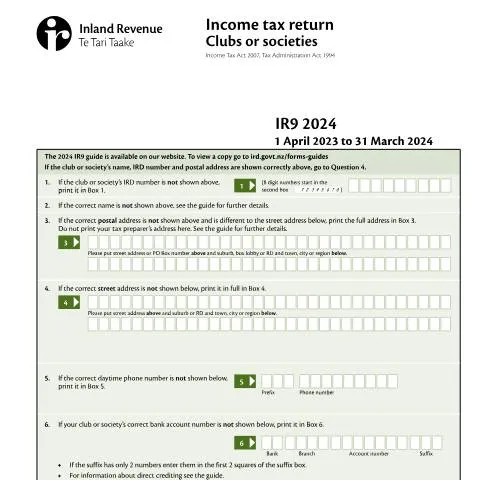
For those managing clubs or societies in New Zealand, the IR9 Income Tax Return is an essential document that should not be overlooked. This official form serves as a crucial medium through which these organizations report their income, especially for the financial year running from 1 April 2023 to 31 March 2024. Understanding the IR9 is not just about filling in blanks; it's about grasping the nuances that distinguish it from other forms and ensuring compliance with the Income Tax Act 2007 and Tax Administration Act 1994.
Understanding the Unique Role of the IR9 Form
The IR9 form is specifically designed for clubs and societies, which often operate under different tax obligations compared to standard businesses. One of the primary reasons for utilizing this form lies in its tailored questions that cater to the unique financial structures of non-profit entities, including the treatment of various income streams and potential deductions.
It's imperative to recognize that the IR9 form is distinct from other common tax forms such as the IR3 (individual tax return) or IR4 (corporate tax return). The IR9 focuses on income generated by non-profit clubs and societies, which often includes membership fees, donations, and fundraising activities. Misunderstanding this distinction could lead to inaccurate filings, potentially inviting scrutiny from the Inland Revenue Department (IRD).
Key Sections of the IR9 Form: A Detailed Examination
The IR9 is divided into several sections, each containing specific questions aimed at capturing the financial standing of the organization. Below is a detailed breakdown of the major sections of the form, including the types of information required, common challenges faced while completing each section, and practical tips to avoid pitfalls.
1. Organization Details: Getting the Basics Right
The first part of the form is dedicated to capturing essential organizational details.
- Box 1: This is where clubs or societies must ensure their IRD number is accurately entered. Remember, only the 8-digit numbers starting in the second box are valid. If you do not see your IRD number pre-filled, take the time to enter it correctly to avoid delays.
- Box 3: The postal address must match the official records. If there are discrepancies, be sure to provide the full and accurate address as required. This is crucial as it determines where any correspondence from the IRD will be sent.
- Box 4: The street address also must be filled out correctly. Misplacement here could lead to future issues or complications during audits.
2. Contact Information: Ensuring Accessibility
It's essential to provide accurate contact information so the IRD can reach you if there are any questions regarding your submission.
- Box 5: This box is for your daytime phone number. Missing or incorrect information here may prevent the IRD from contacting you to clarify any issues with your tax return.
- Box 6: Inputting the correct bank account number is critical for any potential rebates. The IRD may directly credit any refunds to this account, so accuracy cannot be overstated.
3. Income Reporting: Unpacking Various Streams
Accurate reporting of income is the heart of the IR9 form and includes various components, primarily focusing on residential property income if applicable.
- Questions 10 and 11: Here, clubs or societies must report any income or expenses related to residential properties. This section can trip up organizations unfamiliar with distinguishing between gross income and net income, as well as the specifics regarding bright-line assessments.
- Question 12: Income from taxable property sales must be reported, even if it's not already included in other sections. Many may not realize that all property disposals should be accounted for.
- Question 13: Identifying whether the organization is a friendly society is pivotal. Friendly societies have separate rules and should submit the Financial Statements Summary - IR10 if applicable.
4. Deductions: Maximizing Financial Efficiency
Clubs and societies can claim various deductions that may significantly affect their taxable income. Understanding what can be claimed is crucial for effective financial management.
- Residential rental deductions: Organizations must correctly identify and report any residential rental deductions claimed during the year. Ensure to keep all relevant documentation in order, as this may be scrutinized in the event of a tax audit.
- Interest expenses: Question 11 asks if the organization incurred any interest from residential property, which can be claimed as a deduction. Understanding the implications of the New Build Exemption and other criteria is essential to maximize claims.
Who Should Consider the IR9 Form?
The IR9 isn’t merely for any organization with a community focus; it’s specifically for clubs and societies operating under a non-profit model. This includes, but is not limited to, sporting clubs, cultural organizations, and community groups.
Understanding the profile of such entities provides clarity on who should engage with this tax return:
- Clubs and societies that primarily generate income through membership fees and donations.
- Organizations that are tax-exempt in certain circumstances yet still are required to report financial activities.
- Groups that engage in property management or rental activities.
Exceptions may apply to organizations not generating significant income or those whose annual turnover falls below certain thresholds. Consulting with a tax professional or the IRD is advisable for specific circumstances.
Preparing Supporting Documentation: A Checklist for Compliance
Completing the IR9 requires an organized approach to documentation. Gathering the necessary paperwork well in advance can save considerable stress come filing time.
- Financial Statements: Ensure accurate preparation of financial statements, including income statements and balance sheets reflecting the organization's financial position.
- Bank Statements: Keep bank statements handy to reconcile income and ensure reported figures align with actual deposits.
- Receipts and Invoices: Maintain all receipts for expenses, particularly those related to claimed deductions, such as rental property expenses.
- Membership Records: These records can be instrumental in establishing income streams from membership fees.
Submitting the IR9: Channels and Their Specifics
Filing the IR9 can be done through various channels, and each has its benefits and considerations:
- Online Submission: Using the IRD’s online platform via your RealMe digital ID is the most efficient method. You'll receive immediate confirmation that your return has been submitted, which is vital for tracking purposes.
- Paper Submission: If you prefer traditional methods, you can mail your completed form to the IRD. However, postal delays may add to filing times, and you may not receive confirmation until the form is processed.
- In-Person Submission: If you have questions or need assistance, you can visit an IRD office. However, be prepared for potential wait times and ensure all documentation is ready for review.
Anticipating Outcomes: What Happens After Submission?
Once your IR9 form is submitted, understanding the subsequent steps is critical for effective compliance management.
- Review Process: The IRD will review your submission. If discrepancies arise or further information is required, they will reach out to you using the contact details provided.
- Tax Assessment: Following review, you will receive a notice of assessment detailing your tax obligations or refunds.
- Record Keeping: Retain copies of your return and all supporting documents for a minimum of seven years, as this is the period for which the IRD may request audits or clarifications.
Final Thoughts on Mastering the IR9 Form
Completing the IR9 Income Tax Return is not merely a bureaucratic exercise; it’s an opportunity for clubs and societies to reflect on their financial health and ensure compliance with New Zealand’s tax regulations. By understanding the nuances of this form, preparing systematically, and submitting accurately, organizations can navigate the complexities of income tax with confidence.
As you embark on the journey of tax completion, remember that diligence in documentation, clarity in financial reporting, and proactive communication with the IRD are paramount in fostering a successful outcome. Taking these steps not only ensures compliance but also strengthens the foundation of the organization, ultimately contributing to its longevity and effectiveness in serving its community.
Understanding Tax Obligations for Not-for-Profit Clubs and Societies
Clubs and societies in New Zealand often operate as not-for-profit entities, focused on community engagement or shared interests rather than generating profit. Despite their non-commercial nature, these organizations have specific tax obligations that must be understood to ensure compliance with the Inland Revenue Department (IRD) regulations. Generally, clubs and societies can be classified as taxable entities unless they qualify for certain exemptions based on the nature of their activities and income.
Most clubs and societies registered under the Charities Act 2005 may be eligible for tax exemptions. However, it’s crucial to note that not all activities of a club may be exempt; thus, organizations must keep accurate records of their income streams and expenditures. For instance, any profit-generating activities that compete with taxable entities might necessitate that the club file an income tax return and declare this income.
To navigate this complex landscape, clubs should consider maintaining thorough documentation of their financial transactions. This includes receipts, invoices, and financial statements, which are crucial for substantiating the income and expenditure reported to the IRD. In case of audits or inquiries, having organized records will help demonstrate compliance and justify the tax status claimed.
Filing Procedures for Clubs and Societies: Step-by-Step Guide
Filing an income tax return for a club or society can seem daunting, but understanding the steps involved can simplify the process. Here’s a detailed guide to help clubs and societies navigate through the filing requirements.
- Determine the Tax Status: Before filing, assess whether your club qualifies for tax exemptions or if it needs to register as a taxable entity with the IRD. Refer to the IRD's guidelines on income tax obligations for not-for-profit organizations.
- Prepare Financial Statements: Compile financial statements that reflect the club's activities over the fiscal year, which runs from 1 July to 30 June. Ensure all income and expenditures are accurately recorded, categorized, and reconciled. It's advisable to enlist the help of an accountant who specializes in non-profit accounting.
- Complete the IRD Income Tax Return Form: Depending on your club's tax status, fill out the appropriate income tax return form. Clubs may use the IR3 tax return (for individuals) or the IR4 return (for companies), depending on the structure. Ensure that all sections are filled in accurately, including income from subscriptions, fundraising, and any other sources.
- Review and Submit: Before submitting your return, review all entries for accuracy. Ensure that financial figures match your records. Once confirmed, you can submit the return online through myIR, which is the IRD's online service platform.
- Keep Copies: Retain copies of the submitted return and all supporting documents for at least seven years, as required by the IRD. This will protect the club in case of audits or queries from the tax authorities.
Common Pitfalls for Clubs and Societies in Tax Returns
When filing income tax returns, clubs and societies often encounter pitfalls that can lead to tax non-compliance or unexpected liabilities. Awareness of these common issues can help organizations avoid unnecessary complications.
- Misclassification of Income: Clubs and societies sometimes misclassify income, leading to incorrect tax calculations. It is vital to distinguish between tax-exempt income (such as donations) and taxable income from operational activities. Regular training or workshops on tax obligations can help clarify these distinctions.
- Failure to Update Records: In a dynamic environment where clubs may host different events or change their structure, failure to update financial records can lead to inaccuracies in reporting. Establishing a routine for updating records and conducting financial reviews can mitigate this issue.
- Ignoring Reporting Deadlines: The IRD mandates strict filing deadlines. Missing these deadlines can incur penalties and interest. Organizing a calendar of important dates related to financial reporting, including tax return deadlines, can significantly reduce stress and ensure compliance.
- Lack of Awareness about Deductions: Clubs and societies may miss out on potential deductions by not being aware of allowable expenses. Regular consultations with a tax advisor can help identify eligible deductions and optimize the financial position of the club.