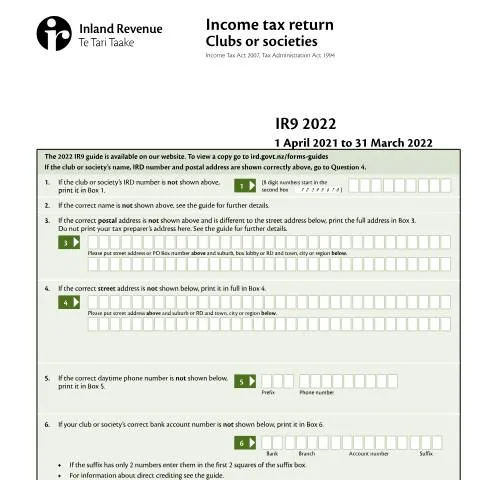
Navigating the IR9: A Comprehensive Guide for Clubs and Societies
Understanding the intricacies of income tax returns can be daunting for clubs and societies in New Zealand. Amid numerous forms and guidelines, the IR9 stands out as a pivotal document in the tax landscape. This guide dives deep into the nuances of the IR9 form, illuminating its purpose, the nuances of completion, and the broader context in which it operates within the tax system.
Understanding the IR9 Form's Role in Tax Filing
For clubs and societies, the IR9 form is essential for reporting income, expenses, and ensuring compliance with the Income Tax Act 2007 and the Tax Administration Act 1994. Unlike typical individual tax returns, the IR9 is tailored specifically for organizations, addressing unique income sources and varying tax obligations.
Clubs and societies must file this return annually, covering the fiscal year from 1 April to 31 March. It's crucial for organizational transparency, allowing the Inland Revenue Department (IRD) to assess tax liabilities accurately. Moreover, it helps in maintaining compliance with New Zealand’s tax regulations, which can vary significantly based on an entity's operational structure and income type.
Who Needs to File the IR9?
A diverse range of organizations may find themselves needing to complete the IR9. This includes:
- Amateur sports clubs
- Charitable societies
- Community clubs and groups
- Friendly societies
- Clubs that generate income from specific activities, such as fundraising
It's important to assess whether your club or society qualifies for exemptions, which can significantly impact the income tax rate applicable. For entities involved in business activities, completing the IR9 is mandatory to maintain compliance with local tax laws.
Diving into the Sections of the IR9
The IR9 consists of several key sections that require detailed attention. Each box serves a distinct purpose, and errors in any section can lead to complications down the line. Here’s a breakdown of crucial components:
Basic Information: Ensuring Accuracy
The initial part of the IR9 is dedicated to capturing basic information about the club or society. This includes:
- Confirming the IRD number is accurate
- Providing the correct name as registered with IRD
- Listing the postal address—this must be distinct from the physical street address when applicable
- Including the contact telephone number for inquiries
Errors in this section may delay processing, so ensure that all details are thoroughly verified. If there are any discrepancies, consult the IR9 guide for corrective measures.
Income Reporting: The Heart of the IR9
Boxes 10 through 15 focus on income reporting, which can be particularly intricate. For example:
- Box 10 pertains to residential property income. Organizations must disclose whether they received income or incurred expenditures from such assets, selecting an appropriate reporting method.
- Box 12 details income from taxable property sales, important for clubs involved in property transactions.
- Boxes 14 and 15 cater to various income types, including dividends and interest, requiring diligent reporting to avoid penalties.
Each income type has specific guidelines attached, so be sure to read the relevant sections of the IR9 guide carefully. Misreporting here can lead to fines or increased scrutiny from the IRD.
Special Considerations for Exemptions
Clubs and societies may be eligible for various tax exemptions, particularly if they fall under categories like amateur sports or charitable organizations. When responding to questions about exemptions, it is critical to be aware of:
- The definition of taxable income as per New Zealand laws
- The specific criteria outlined in the IR9 guide related to exempt organizations
- Additional documentation that may be required if claiming an exemption
Claims for exemption must be well-documented to ensure that they are accepted upon review. This safeguards the organization against potential audits that could arise due to misclassification.
Completing the IR9: A Step-by-Step Approach
Completing the IR9 does not have to be an overwhelming task if approached systematically. Below is a streamlined process:
- Gather all relevant financial records, including income statements, expenditure receipts, and bank statements.
- Begin with the basic information section—double-check each entry for accuracy.
- Proceed to report income, ensuring clarity on the type of income being reported and referencing the IR9 instructions for nuanced cases.
- Answer any exemption-related questions with attention to detail, citing specific sections of the guide as needed.
- Review the completed IR9 thoroughly before submission, ensuring that all calculations are correct.
- Submit the IR9 through the desired channel (digital or postal) before the due date.
Taking methodical steps can help prevent mistakes and make the process smoother for all involved.
Submission Channels: Digital vs. Paper
In New Zealand, the IRD offers multiple channels for submitting the IR9, each with its own merits:
| Submission Method | Advantages | Considerations |
|---|---|---|
| Online Submission |
|
|
| Paper Submission |
|
|
Choosing the right submission method depends on the organization's capacity and familiarity with digital tools. Many organizations opt for online submission to expedite processing, but paper submission remains a viable option for those who prefer traditional methods.
What to Do If Issues Arise After Submission
If any discrepancies or issues arise post-submission, it's crucial to act promptly. Common scenarios may include:
- Receiving a notice from the IRD requesting clarification or additional documentation
- Finding errors in the submitted IR9 which require correction
- Being informed of an audit or review
In these cases, organizations should:
- Respond to the IRD promptly, providing any requested information efficiently.
- If errors are found in the original submission, file an amended return as soon as possible, detailing the corrections made.
- Stay organized and keep all correspondence with the IRD documented for future reference.
Proactive communication is key to resolving issues effectively and minimizing potential penalties or fines.
Staying Informed: Resources for Clubs and Societies
The IRD provides a variety of resources to assist clubs and societies in completing the IR9 accurately. The official IRD guide for the IR9 form should be your primary tool, available on the IRD website. Additionally, consider the following resources:
- Workshops and Seminars: Many community centers and local government offices offer sessions on tax compliance.
- Online Forums: Engaging with other clubs and societies can bring insights into common challenges and solutions.
- Professional Advisors: Consulting with a tax professional, particularly one familiar with non-profit tax regulations, can provide tailored guidance.
Staying informed and utilizing available resources can significantly ease the complexities of the IR9 form and tax compliance, ensuring clubs and societies can focus more on their mission and activities.
Understanding Tax Obligations for Clubs and Societies
In New Zealand, clubs and societies often operate under specific tax obligations that differ from those of individual taxpayers or businesses. It’s crucial for these organizations to understand whether they qualify as a tax-exempt entity or if they need to comply with income tax regulations. Clubs and societies typically engage in activities that might be recreational, cultural, or philanthropic and could range from sports clubs to charitable organizations.
To determine tax obligations, the IRD provides guidance on the classifications of clubs and societies. Key factors include:
- Purpose and Activities: The primary purpose of the club or society should be to promote social, recreational, or cultural activities. However, if the activities generate significant profit, this could affect tax status.
- Membership: Generally, a club that is run for the benefit of its members might have different obligations compared to a society that operates for charitable purposes. Understanding the nature of membership and how it impacts finances is essential.
- Annual Revenue: Clubs with annual gross income exceeding $1,000 may need to file an income tax return. The IRD defines this threshold clearly, and it’s advisable for organizations to maintain accurate financial records to assess their tax obligations.
By classifying their activities correctly and understanding financial thresholds, clubs and societies can effectively navigate the complexities of tax compliance. It's recommended that organizations seek professional advice tailored to their specific circumstances, especially if they are unsure about their tax status. This proactive approach can prevent future complications and ensure adherence to the requirements set by the IRD.
Tax Deductions and Credits for Clubs and Societies
Clubs and societies in New Zealand may be eligible for various tax deductions and credits, depending on their operational nature and specific expenditures. Understanding these can significantly aid in managing finances and maximizing funding for members’ activities. Here are some of the primary areas where tax deductions can be applied:
- Operating Expenses: Clubs can deduct expenses directly related to running their activities. This includes utility bills, rental payments for event spaces, and costs associated with hosting competitions or events.
- Capital Expenditures: Investment in infrastructure, such as sports facilities or community centers, may be depreciable over time, providing tax benefits. This requires careful bookkeeping to ensure that depreciation standards set by the IRD are met.
- Volunteer and Staff Wages: While many clubs rely on volunteers, any paid staff may lead to deductions for wages and related expenses. This includes taxes withheld at source, which need to be properly reported to the IRD.
- Donations: If a club is registered as a charity, it may receive tax credits for donations made to it. Conversely, donations made by the club to other charities can also be deducted, subject to specific conditions outlined by the IRD.
Additionally, keeping meticulous records of all expenditures will assist in substantiating claims made on tax returns. Using accounting software or consulting with an accountant familiar with non-profit organizational accounting can provide clarity and ensure compliance with New Zealand tax law.
Moreover, it is essential for clubs and societies to remain informed about updates to tax legislation that may introduce new deductions or alter existing ones. Engaging in ongoing education around tax responsibilities can enhance organizational sustainability and foster transparency amongst members.
The Process of Filing an Income Tax Return for Clubs
Filing an income tax return as a club or society in New Zealand involves several structured steps. Understanding the timeline and requirements is integral to ensuring compliance with the IRD's regulations. Here’s how to navigate the process effectively:
- Determine Your Tax Year: The financial year in New Zealand runs from 1 July to 30 June. Clubs and societies should align their financial reporting with this timeline to simplify the tax return process.
- Prepare Financial Statements: Accurate financial statements must be prepared, reflecting all income and expenses incurred during the tax year. This includes all revenue from membership fees, donations, and fundraising events.
- Complete the Appropriate Tax Return Form: Depending on the organization's classification, different IRD forms may apply. Clubs that earn over $1,000 in gross income generally need to use the “IR 3” form for individuals or, in some cases, the “IR 4” for companies.
- Filing the Return: Tax returns can be filed online using the IRD’s myIR service or via post. The deadline for filing is typically 7 July following the end of the financial year. However, it’s advisable to check the IRD website for any updates or specific deadlines relevant to clubs.
- Pay Any Tax Owed: If the club is liable to pay tax, it must do so by the due date. Regular checks and balances throughout the fiscal year can help clubs prepare for any potential tax liabilities.
Additionally, clubs should familiarize themselves with the consequences of late filing or non-compliance, which may include penalties or interest on unpaid taxes. To mitigate risks, it is beneficial for clubs to implement a tax calendar that highlights key dates, such as the start of the financial year, deadlines for financial reporting, and due dates for tax payments.
Moreover, engaging a professional accountant who understands the unique needs of clubs and societies can provide valuable insights and help in navigating tax complexities effectively. They can ensure compliance, maximize deductions, and ultimately contribute to the club's growth and sustainability.