Navigating the IR9 Form: A Comprehensive Guide for Clubs and Societies
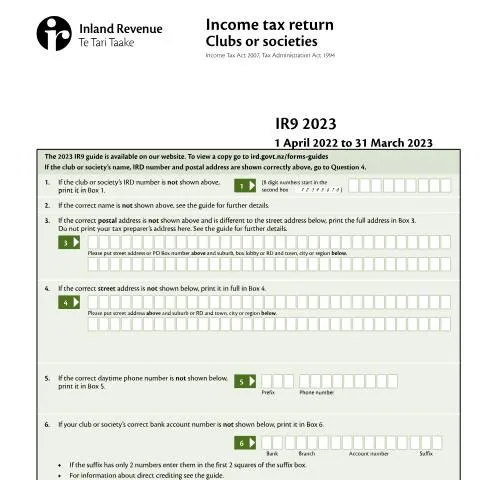
The IR9 form, specifically designed for clubs and societies in New Zealand, presents a unique challenge and opportunity for organizations to fulfill their tax obligations. This form serves as a crucial document in the realm of income tax, particularly under the Income Tax Act 2007 and the Tax Administration Act 1994. Understanding the ins and outs of the IR9 can significantly impact financial transparency and regulatory compliance for these groups.
Understanding the IR9: Context and Importance
Clubs and societies play a vital role in the community, often engaging in various activities ranging from social gatherings to sporting events. As tax-exempt entities, they must ensure compliance with New Zealand's tax laws, which includes accurately completing the IR9 form. The filing period for this form typically aligns with the fiscal year, which runs from 1 July to 30 June, so clubs and societies should be keenly aware of their reporting timelines.
The IR9 form specifically focuses on income tax returns for clubs and societies, considering their unique operational models. However, accurately completing the IR9 is essential not only for legal compliance but also for the ongoing health of the organization, as missteps can lead to penalties or loss of tax-exempt status.
Who Needs to File the IR9?
Not every organization qualifies to file the IR9. Generally, any club or society that has an IRD number and meets specific revenue thresholds must complete this form. This requirement applies to:
- Incorporated societies
- Non-incorporated societies
- Friendly societies registered under the Friendly Societies and Credit Unions Act 1982
Clubs and societies that have ceased operations or have not produced income must also take care to address these circumstances correctly in their IR9 filing. If a club or society is uncertain about its filing requirements, consulting an accountant or tax advisor is advisable to navigate the nuances of New Zealand tax law.
Step-by-Step Breakdown of the IR9 Form
Completing the IR9 form may appear daunting at first glance, but by breaking it down into manageable sections, the task becomes less intimidating. Each section demands specific information that, when accurately reported, presents a clear financial picture of the organization.
Basic Information
The initial part of the IR9 requires essential details about the club or society:
- Name: Ensure that the correct name appears as registered with the IRD.
- IRD Number: If an IRD number is not pre-filled, it must be provided in Box 1.
- Postal Address: If the postal address is incorrect, it should be updated in Box 3.
- Street Address: Update in Box 4 if not displayed correctly.
Contact Information
Providing accurate contact information is crucial for any follow-up communication from the IRD. Boxes 5 and 6 are designated for phone numbers and bank account details, respectively. Make sure:
- The daytime phone number in Box 5 is accurate.
- The correct bank account number is provided in Box 6 for direct debits or credits.
Operational Status
Question 7 addresses whether this is the club or society's first return. If it is, the establishment date must be noted in Box 7. Following this, Question 8 inquires about the incorporation status:
- If the organization is not incorporated, different tax rates apply, making it essential to answer accurately.
Income Reporting
The heart of the IR9 lies in its income section. Questions 10 to 13 require comprehensive reporting of revenues and expenses. Here’s how to approach it:
- Residential Property Income: Indicate whether the organization received any income or incurred expenses from residential property in Question 10. If so, specify the method of accounting (Portfolio, Individual, or Combination).
- Interest from Residential Property: Question 11 asks about any interest incurred; if applicable, be clear about the reasons for claiming these expenses in Box 11C.
- Property Sales: Question 12 focuses on taxable property sales; ensure that any profits or losses are clearly detailed.
- Friendly Societies: If applicable, further reporting on friendly society activities must be provided in Question 13.
Common Pitfalls in IR9 Submission
While filling out the IR9 may seem straightforward, several common pitfalls could derail an otherwise accurate submission. Awareness is key to avoiding these issues:
- Incorrect IRD Number: Double-check that the IRD number is correct and matches the registered information.
- Not Reporting All Income: It’s vital to report every source of income, including minor amounts from fundraising or events.
- Failing to Update Information: If there are changes to the postal or street address, ensure these are updated before submission.
Inaccuracies or omissions can result in delays, additional penalties, or even audits by the IRD. Investing time to review each part of the form increases the chances of a smooth process.
Filing Process: From Submission to Assessment
Once the form is filled out, the next step involves filing it with the IRD. The submission process has evolved to accommodate online transactions, making it easier for clubs and societies:
- Ensure all information is accurate and complete before submission.
- Use the online portal to submit the IR9 form, as this method provides immediate confirmation of receipt.
- Keep a copy of the submitted form for your records, along with any supporting documentation.
What Happens Next?
After submission, the IRD conducts an assessment of the provided information. They may reach out for clarification or additional details if necessary. It’s advisable to keep an eye on the organization’s mailbox and email for any correspondence from the IRD.
Understanding Compliance and Regulations
Filing the IR9 is not just a bureaucratic necessity; it falls under the broader compliance framework set by New Zealand’s tax laws. Organizations must familiarize themselves with related regulations:
- Income Tax Act 2007: This act governs how income is treated for tax purposes, particularly for non-profits.
- Tax Administration Act 1994: This act outlines the policies around tax filing and compliance, including penalties for non-compliance.
Being informed about these acts can help organizations understand their rights and responsibilities better, allowing for strategic decision-making regarding financial management.
Unique Situations: Special Considerations for Clubs and Societies
Every club or society has its own set of circumstances, which can affect how the IR9 form is completed. Several scenarios warrant special attention:
- International Entities: If a club has activities or memberships that cross international borders, financial reporting may differ, requiring careful consideration of tax treaties.
- Youth and Minor Engagement: Clubs that involve youth must ensure they meet specific regulations concerning minor participants, particularly in terms of financial contributions and reporting.
- Cessation of Activities: If a club is no longer active, filing the IR9 correctly is still critical. Organizations must indicate the cessation clearly to avoid penalties.
Conclusion: Maintaining Transparency and Accountability
The IR9 form is more than just a tax return; it’s an integral part of ensuring accountability and transparency for clubs and societies in New Zealand. By understanding the nuances of completing this form, clubs can not only stay compliant but also promote trust and integrity within their operations. Given the complexity of financial regulations, seeking professional assistance is often a worthwhile investment to navigate these waters effectively.
For those looking for further clarity or assistance, it is highly recommended to consult the IRD website for additional resources, guides, and updates related to the IR9 and its requirements. With the right approach, clubs and societies can fulfill their obligations while continuing to enrich the communities they serve.