Skip to content
Taxes

Essential Guide to the IR9 Income Tax Return for Clubs

Official documentTaxes
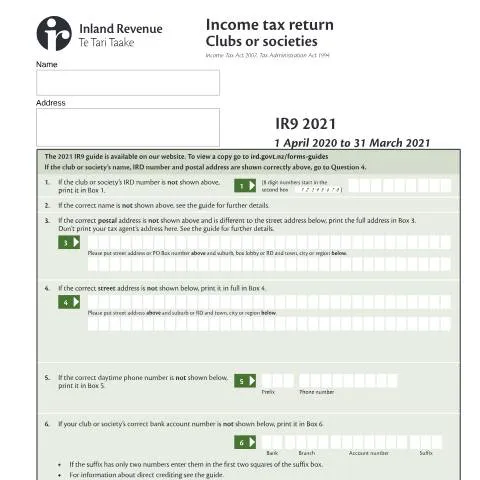
PreviewDocument preview: Essential Guide to the IR9 Income Tax Return for Clubs — Taxes (CERFA n°IR9)
Official document

What would you like to do?

Complete the fields, sign, then download.

Understanding the IR9 Form: A Comprehensive Guide for Clubs and Societies

Filing taxes can often seem like navigating a labyrinth, especially for clubs and societies in New Zealand. The IR9 form, officially known as "Income Tax Return: Clubs or Societies," is a crucial document that facilitates the reporting of income and expenditure for these entities. Understanding its role is vital for compliance and to enjoy the benefits that come from operating as a registered club or society.

Who Needs to Complete the IR9 Form?

Any incorporated club or society receiving income needs to accurately complete and submit the IR9 form. Common examples include sports clubs, charitable organizations, and social societies. It’s essential to note that the obligations tied to this form change depending on several factors:

  • Incorporation Status: If the club or society is incorporated, it must file an IR9 form. Unincorporated societies may have different requirements.
  • Income Type: Depending on the income sources, including residential property revenue and charitable donations, the reporting requirements may vary.
  • Previous Filings: New clubs or societies must indicate that this is their first return, which alters how their filings are processed.

The Regulatory Framework Behind the IR9

The IR9 form operates within a broader regulatory landscape established by the New Zealand Income Tax Act 2007 and the Tax Administration Act 1994. These laws set out the obligations for income reporting, tax rates applicable to clubs and societies, and the administrative processes for compliance. The intent is to ensure transparency and accountability within non-profits and community organizations, reflecting their unique economic role.

A Step-by-Step Approach to Completing the IR9 Form

Completing the IR9 form involves a series of strategic steps. Here’s a clear pathway to guide clubs and societies through the process:

  1. Verify Organization Information: Confirm that the club or society's name, IRD number, and postal address are correctly displayed on the form. This includes verifying:
    • Box 1: IRD Number
    • Box 3: Postal Address
    • Box 4: Street Address
    • Box 5: Daytime Phone Number
  2. Decide on Income Reporting Methods: Determine if the organization will report using the portfolio, individual, or combination methods for residential property income. This impacts the calculation of total income.
  3. Declare All Income Sources: Carefully document any income received from various activities, including:
    • Residential properties (Boxes 10A to 10F)
    • Taxable property sales (Box 11)
    • Friendly society income (Box 12)
    • Various other income streams (Boxes 13 and 14)
  4. Calculate Net Income: This involves subtotaling income across different sources and applying any deductions eligible for non-profit entities.
  5. Deduct Donations: If applicable, calculate and deduct any donations made by the organization in Box 16, to arrive at the final net income figure in Box 17.

Submission Channels: Online, Paper, or In-Person?

Clubs and societies have options for how they choose to submit their IR9 forms, each with its own set of advantages:

Submission Method Pros Cons
Online Fast processing, instant confirmation, eco-friendly. Requires RealMe digital ID for submission.
Paper No need for digital access, traditional method. Longer processing times, potential for delays.
In-Person Direct assistance available, clarification on complex issues. Limited availability, possible waiting time.

Preparing Supporting Documentation

While the IR9 form itself is crucial, accompanying documentation strengthens the submission. Preparatory steps may include:

  • Financial Statements: For clubs and societies, attaching completed financial statements or the Financial Statements Summary (IR10) is often necessary.
  • Bank Statements: These may be required to verify income and expenditures, especially for residential properties.
  • Other Relevant Records: Any additional records that support the claimed income types or deductions should be organized and available.

The Lifecycle of Your IR9 Submission: From Filing to Outcome

Once the IR9 form has been submitted, it enters a processing phase that includes:

  1. Acknowledgment of Receipt: Organizations will receive a confirmation from the IRD once their submission is processed.
  2. Assessment: The IRD will review the submitted information, cross-checking against their records and any supporting documents.
  3. Outcome Notification: Depending on the assessment’s outcome, the IRD will communicate whether the submission was accepted, and any tax obligations or refunds will be issued accordingly.

Maintaining open communication with the IRD can be beneficial if there are any concerns or questions regarding the submission’s progress.

Particular circumstances may require additional attention when completing the IR9 form. Here are some examples:

  • Non-Residents: Clubs or societies with non-resident members may face specific tax implications that need careful reporting.
  • Minors: If a club is primarily made up of minors, parental involvement in submitting the form may be necessary.
  • Complex Structures: Organizations with intricate financial arrangements or multiple income streams should consider consulting a tax professional for assistance.
  • Urgent Filings: If filing deadlines are approaching, employing electronic submissions may expedite processing times.

Final Thoughts: Ensuring Compliance and Maximizing Benefits

Completing the IR9 form is not merely a bureaucratic obligation; it is an essential part of maintaining the integrity and financial health of clubs and societies in New Zealand. By ensuring compliance with the Income Tax Act and understanding the implications of their activities, clubs and societies can not only fulfill their obligations but also unlock potential benefits through strategic financial management. Being proactive and informed about the process can pave the way for thriving communities and organizations in the long run.

Understanding Tax Obligations for Clubs and Societies

When it comes to tax obligations, clubs and societies in New Zealand have specific requirements that differ from those of individual taxpayers or commercial entities. It is crucial for these organizations to understand their responsibilities under New Zealand’s tax legislation, particularly in relation to the Income Tax Act 2007. Clubs and societies typically fall under the category of non-profit organizations, and their income tax obligations can vary based on their income sources and the activities they engage in. One of the primary considerations for clubs and societies is whether they are classified as a non-profit entity. According to the IRD, an organization may qualify as non-profit if its main purpose is not to make a profit, and any surplus is reinvested into the organization’s activities. This classification can significantly affect the tax treatment of income earned. For example, clubs or societies that are registered as charities might be exempt from income tax on most of their income, provided they are compliant with the Charities Act 2005. Clubs and societies must also be cognizant of any income thresholds that may trigger tax obligations. For instance, if a club earns more than NZD 1,000 in a tax year, it is generally required to file an income tax return, known as the IR3 form. The IRD stipulates that the income must be reported even if it is derived from fundraising activities, memberships, or other sources. Failure to file these returns can lead to penalties and interest charges, underscoring the importance of maintaining accurate financial records throughout the year.

Filing Process and Documentation Requirements

Filing an income tax return as a club or society requires comprehensive documentation and a clear understanding of the financial activities for the tax year, which runs from 1 July to 30 June. The first step in the filing process is to gather financial statements, which should ideally reflect income sources, expenses, and any other financial transactions that occurred during the fiscal year. This may include bank statements, receipts, and invoices. The IR3 form must be completed accurately, and it’s important to delineate between various income streams. For instance, if the club conducts fundraising events, any profits generated must be reported as income. Moreover, clubs should track expenses incurred in relation to these activities, as they may be deductible. Expenses like venue hire, promotional materials, and equipment purchases should be documented appropriately to ensure that they can be claimed against income. Moreover, clubs or societies must maintain a clear breakdown of membership fees and other income. It’s advisable to establish an internal accounting system to categorize income and expenses appropriately, which could involve simple spreadsheets or more complex accounting software, depending on the size and complexity of the organization. Adhering to the IRD guidelines for record-keeping is paramount. Clubs are recommended to keep records for at least seven years, which aligns with the IRD’s requirement for retention of financial records. Proper documentation not only supports income tax return filings but also ensures compliance should the IRD conduct an audit.

Potential Tax Benefits and Exemptions for Clubs

Clubs and societies can access several tax benefits and exemptions, which can significantly reduce their overall tax burden. One notable advantage is the ability for registered charities to be exempt from income tax on most of their income. This means that clubs that apply for and achieve charitable status can reinvest surplus funds back into their activities without incurring tax liabilities, which can immensely benefit their operational capabilities and community engagement efforts. Additionally, many clubs and societies may qualify for a 33% tax rate on their income. However, this is contingent upon their structure and the nature of their income. For example, if the income is derived from a taxable activity, such as running a café or selling goods, then it must be reported appropriately, and tax obligations must be met. Understanding the nuances of taxable versus non-taxable income is crucial for these organizations. Moreover, clubs may benefit from various government grants and funding opportunities aimed at supporting community organizations. These grants, typically offered by local councils or non-profit organizations, often come with specific eligibility criteria, and understanding these conditions is essential for successful applications. Clubs that successfully obtain funding can use these resources for community projects, events, or improving facilities, which can further enhance their operational capacity without the burden of additional tax. It’s important for clubs to stay informed about changes in tax laws or funding opportunities, which can influence their operations. Engaging with professional advisors or attending workshops held by the IRD or local community organizations can provide valuable insights and updates on tax matters relevant to clubs and societies.

Frequently asked questions

What is the IR9 form?

The IR9 form is the Income Tax Return for clubs and societies in New Zealand, used to report income and expenditure.

Who needs to file the IR9 form?

Any incorporated club or society in New Zealand that receives income must complete the IR9 form.

What information is required on the IR9 form?

The IR9 form requires details of the club's or society's income, expenditures, and any relevant financial statements.

What are the benefits of filing the IR9 form?

Filing the IR9 form ensures compliance with tax regulations and allows clubs and societies to maintain their registered status.

Similar documents