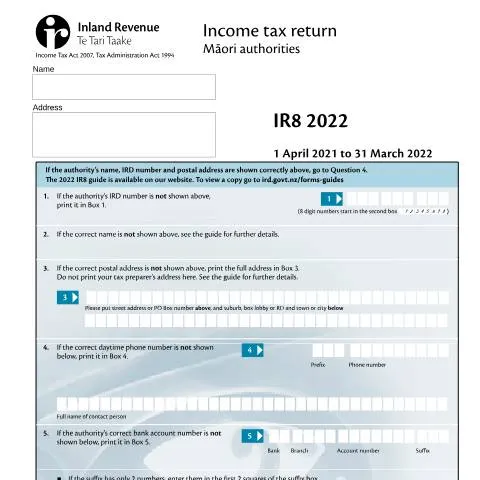
Navigating the Income Tax Return for Māori Authorities: The IR8 Form Explained
The IR8 form stands as a crucial document in the landscape of New Zealand's tax system, specifically designed for Māori authorities. As a tax return, it holds significance for entities that operate within the Māori community, ensuring compliance with the Income Tax Act 2007 and the Tax Administration Act 1994. The process of filling out this form can feel daunting, especially for first-time filers or those unfamiliar with its specifics. This article seeks to demystify the IR8 Income Tax Return for Māori Authorities, breaking down its components, filing procedures, and the significant role it plays in the overall tax framework.
The Purpose of the IR8 Form in Māori Taxation
Understanding the IR8 form encompasses grasping its purpose within the broader context of Māori taxation. This form is designed to capture essential financial information about Māori authorities, enabling them to declare their income and expenditure accurately. By doing so, these authorities can fulfill their tax obligations while also ensuring that they benefit from the specific provisions available to Māori entities under New Zealand law. The IR8 form is not merely a bureaucratic requirement; it reflects the unique legal and cultural standing of Māori authorities in the tax ecosystem.
Who Needs to File the IR8 Form?
- All registered Māori authorities that derive income from taxable activities.
- Entities involved in the management of Māori assets, such as trusts or other collective groupings.
- Authorities that qualify for Māori authority credits and other specific tax benefits.
When is the IR8 Form Due?
The fiscal year for tax purposes in New Zealand runs from 1 July to 30 June. Therefore, the IR8 form should be submitted within four months after the end of the fiscal year, typically by 31 October of the relevant year. This deadline allows authorities to compile their financial statements and fulfill their tax obligations promptly.
Deciphering the IR8 Form: A Section-by-Section Breakdown
The IR8 form is divided into various sections, each requiring specific information. Understanding these sections is essential for accurate completion and to avoid common pitfalls. Below, we will dissect each part of the form, highlighting key elements and potential errors to watch for.
Section 1: Authority Details
This section requires basic information about the Māori authority, including:
- IRD Number: This unique identifier for the authority must be accurate. If the number is not pre-filled, it should be added to Box 1.
- Name and Address: Ensure the authority’s name and postal address are correct. Any discrepancies should be corrected in the provided boxes (Boxes 2 and 3).
- Contact Information: The form requires the correct daytime phone number and contact person’s name in Box 4.
- Bank Account Details: Properly fill the bank account number in Box 5 for direct debits or credits. Ensure that the account suffix is entered correctly.
Section 2: Income from Residential Property
In this segment, authorities must declare any income generated from residential properties. Here are the key components:
- Residential Income: Authorities need to report total residential income, as well as any deductions for rental expenses. Be precise in differentiating between rental income and other forms of income.
- Type of Method Used: Authorities can select their reporting method (Portfolio, Individual, or Combination). This choice can impact tax calculations, so choose wisely.
Section 3: Interest and Other Income
This section covers various types of income that may not fall under the residential category:
- Interest from Residential Property: If applicable, details regarding interest earned on property should be stated clearly.
- Property Sales: Any profit or loss from property sales should be accurately reported. Distinguish between taxable and non-taxable transactions.
It’s essential to consult the IR8 guide for comprehensive instructions on each income type, as misreporting can lead to significant tax liabilities.
Section 4: Tax Calculation
Calculating the tax owed is a pivotal part of the IR8 form. Here, authorities will determine their taxable income, which requires careful arithmetic:
- Taxable Income: Derived from the total income after deductions. This is calculated by following the prescribed formula outlined in the guide.
- Tax Rate: The applicable tax rate is currently set at 17.5%. Multiply your taxable income by this rate to find the total tax payable.
Gathering Supporting Documentation: A Practical Guide
When filing the IR8 form, accurate documentation is paramount. Authorities must prepare and retain relevant financial records to substantiate the information provided in the return. Here’s what to consider:
Documents to Compile
- Financial Statements: Include a completed Financial Statement Summary (IR10) or full financial accounts.
- Rental Agreements: If income is reported from rental properties, maintain copies of all leasing documents.
- Tax Credits: Any Māori authority credits should be documented appropriately to ensure correct claims.
- Bank Statements: These can support income and expenditure claims particularly for properties.
Organizing these documents ahead of time can streamline the filing process significantly, reducing potential delays or errors.
Filing the IR8 Form: Channels and Their Nuances
Digital Submission: The Preferred Method
New Zealand's tax authorities strongly encourage digital submissions via the IRD online services. This method is efficient, secure, and allows for tracking the submission status. To file online, you will require a RealMe account for validation.
Paper Submission: A Traditional Route
For those preferring to use paper, the IR8 form can be printed and sent via post. However, this method can lead to longer processing times, so it's advisable to consider online filing if possible.
In-Person Filings
While predominantly digital, some authorities may choose to deposit the form directly at IRD offices. This option may be suitable for those requiring assistance or clarification directly from the staff.
Handling Challenges: What to Do in Case of Errors or Missing Information
Completing the IR8 form accurately is crucial, but what if mistakes are discovered after submission? Here’s how to navigate potential issues:
Identifying Errors
If during the review of your filed IR8 form you discover an error, it is important to address it promptly. Common mistakes include:
- Inaccurate IRD numbers or contact information.
- Misreported income or deductions.
- Omissions of essential financial documents.
Rectifying Mistakes
To amend an error, you may need to submit an amended return. This process generally involves:
- Identifying the specific error(s).
- Filling out a new version of the IR8 form with corrections.
- Indicating it as an amended return clearly.
- Submitting it through the same channel as the original return.
Dealing with Missing Information
If any required documentation is missing at the time of filing, it is crucial to gather and submit this information as soon as possible. The absence of documentation can delay processing and result in compliance issues.
Conclusion: Ensuring Compliance and Maximizing Benefits
Completing the IR8 form accurately is not merely a matter of fulfilling a bureaucratic obligation; it is vital for the effective functioning of Māori authorities within New Zealand's tax framework. By understanding the details of the form, preparing the necessary documentation, and utilizing the right submission methods, authorities can not only remain compliant but also potentially benefit from various tax reliefs and credits designed specifically for Māori entities. Familiarity with the IR8 process can ultimately empower Māori authorities to manage their financial responsibilities efficiently while contributing to the economic vitality of their communities.
Understanding the Tax Obligations of Māori Authorities
Māori authorities, often set up to manage assets for the benefit of their members, have unique tax obligations under New Zealand law. These entities can take various forms, including Māori trusts and incorporations. Understanding these obligations requires a grasp of both the tax status and the specific regulations that apply to Māori authorities.
The Income Tax Act 2007, particularly sections concerning Māori authorities, outlines how these entities are taxed. Generally, Māori authorities are treated differently than standard companies. For instance, they can claim specific deductions and exemptions that are relevant to their cultural and operational context.
One critical aspect is the requirement for Māori authorities to file an income tax return. Specifically, they need to complete IR6 returns, which have their own set of rules and deadlines. These returns must reflect the income derived from various sources, including rental income, dividends from investments, and any other business activities undertaken by the authority. It's essential for Māori authorities to maintain accurate records and financial statements to ensure compliance and to maximize available deductions.
Māori Authorities and Their Investment Activities
Investment is a significant aspect of how Māori authorities operate, with many entities investing in various sectors—ranging from agriculture and forestry to real estate and tourism. The tax implications of these investment activities can be complex, requiring a strong understanding of both investment income and expenditure.
For instance, when a Māori authority earns income from investments, such as dividends or rental income, this income is subject to taxation. However, there are avenues available for Māori authorities to minimize their tax liabilities legally. These include reinvestment strategies where profits generated are put back into the development of Māori land or community projects, potentially qualifying for tax exemptions under specific conditions.
Additionally, Māori authorities should engage in proactive tax planning to ensure that their investment strategies align with their long-term goals while staying compliant with tax regulations. This involves not only understanding the immediate tax obligations but also considering the broader implications of investment decisions on the community and the authority's overall financial health.
The Role of Tax Advisors in Supporting Māori Authorities
Given the complexities surrounding tax obligations for Māori authorities, engaging with professional tax advisors who specialize in Māori tax law can be incredibly beneficial. Tax advisors can assist in navigating the nuances of the tax system, ensuring that Māori authorities fulfill their legal obligations while optimizing their tax positions.
These professionals can provide a wealth of knowledge on the available deductions, exemptions, and filing requirements specific to Māori authorities. They can also help in conducting financial audits, preparing financial statements, and completing necessary tax returns, such as the IR6 returns mentioned earlier. By utilizing the expertise of tax advisors, Māori authorities can enhance their operational efficiency and ensure compliance with the latest tax regulations.
Moreover, tax advisors can offer strategic advice on investments, helping authorities to structure their financial activities in a way that supports their community objectives and adheres to tax laws. This collaboration can empower Māori authorities to make informed decisions that align with their cultural values and financial goals.