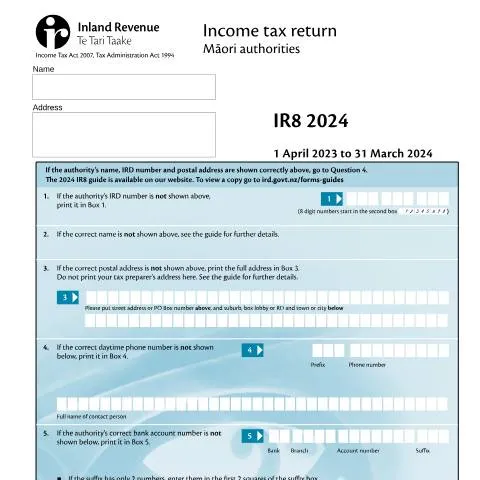
Navigating the IR8: Your Guide to the Income Tax Return for Māori Authorities
Filing taxes can often feel like a daunting task, especially for Māori authorities managing diverse income streams. The IR8 Income Tax Return: Māori Authorities is a critical document in this process, serving as the official form that these entities must complete to report their income and calculate their tax obligations. This guide delves deep into the nuances of the IR8, illuminating its importance and the steps necessary for successful submission.
Understanding the Timeline: Key Dates for the IR8 Submission
The fiscal year for Māori authorities runs from 1 April to 31 March. The primary deadline for submitting the IR8 is typically within a few months following the end of this fiscal period, allowing for adequate preparation of financial statements and tax computations. This timeline is crucial, as late submissions may result in penalties.
- 1 April 2023: Start of the fiscal year.
- 31 March 2024: End of the fiscal year.
- Due date for IR8 submission: Generally by 7 July 2024, assuming no extensions are applied.
Following submission, you can expect a processing period where the Inland Revenue Department (IRD) reviews the returned documents. Be prepared for a wait of several weeks, during which the IRD may contact you for additional information or clarification.
The Role of the IR8 within the Broader Tax System
The IR8 functions as a specific tax return form for Māori authorities, distinct from the general tax return forms used by individuals or standard businesses. This distinction exists because Māori authorities might have unique financial structures and income sources, including but not limited to:
- Income from property management
- Investments in various sectors
- Distributions from Māori trusts
Māori authorities benefit from certain tax exemptions and special considerations under the Income Tax Act 2007, which acknowledges their unique roles in the community and economy. Thus, correctly completing the IR8 is essential to ensure compliance while maximizing available benefits.
Distinction from Other Tax Forms
It's important to differentiate the IR8 from conventional tax returns, such as the IR3 for individuals. The IR8 specifically addresses the needs of Māori authorities and their unique revenue streams. Key differences include:
| Feature | IR8 (Māori Authorities) | IR3 (Individuals) |
|---|---|---|
| Target User | Māori authorities | Individual taxpayers |
| Income Types | Diverse, including property and trust income | Employment, business, investments |
| Exemptions | Specific Māori-related exemptions | Standard deductions and credits |
Preparing for Your IR8 Submission: Documenting Income and Expenses
Before diving into the actual filing, it's essential to gather all relevant financial documentation. You will need to report different categories of income, including:
- Residential property income
- Taxable property sales
- Interest and dividends
- Other income sources pertinent to the authority
Documenting expenses is equally important. The form allows for expenses related to property, which can significantly affect the overall taxable income. Ensure you have detailed records of your:
- Rental expenses
- Interest payments
- Operational costs
Step-by-Step Guide to Filling Out the IR8
Filling out the IR8 requires careful attention to detail. Begin with verifying that your authority's name, IRD number, and postal address are accurately documented in the designated boxes. If any discrepancies arise, correct them immediately to avoid processing delays.
- Confirm your IRD number is in Box 1.
- Check that the authority's name is correct. If not, refer to the IR8 guide.
- Input the complete postal address in Box 3.
- Provide a valid contact phone number in Box 4.
- Document your bank account information in Box 5 for direct crediting.
Tip: An accurate entry in Box 5 ensures that any tax refunds are expedited directly to your account.
Choosing the Right Submission Channel: Online Versus Paper
As of 2024, the IRD encourages the use of digital platforms for tax submissions. Completing the IR8 online through the IRD's secure portal not only streamlines the process but also facilitates quicker processing times. However, some authorities may prefer paper submissions for various reasons.
| Submission Method | Advantages | Considerations |
|---|---|---|
| Online | Faster processing, real-time confirmation, easier data entry | Requires a stable internet connection |
| Paper | Familiarity and tangible records | Longer processing times, risks of postal delays |
What Happens After Submission? Understanding Processing and Follow-ups
Once your IR8 is submitted, the IRD will initiate a review of your submitted information. This process can take several weeks, and during this time, you may receive requests for additional documentation or clarification. Here’s what you should consider:
- Keep copies of all submitted documents.
- Be responsive to any inquiries from the IRD; timely responses can expedite your processing.
- Monitor your IRD account online for updates regarding your submission status.
In some cases, you may encounter situations where the IRD makes corrections or adjustments to your return. If you disagree with these adjustments, you have the right to appeal the decision. The IRD’s website provides resources for understanding the appeals process.
Handling Common Challenges: Errors, Missing Information, and Rejections
Errors in the IR8 can lead to processing delays or rejections. If you discover an error after submission, the first step is to contact the IRD immediately. They can guide you on the appropriate steps to rectify the mistake.
Common issues include:
- Incorrect IRD number or authority name
- Missing financial statements
- Misreported income or expenses
In instances where documentation is missing at the time of filing, provide the available information and submit the necessary documents as soon as possible. Keeping a close eye on your email and IRD account is critical as they will communicate any issues through these channels.
Who Should File the IR8? Understanding the Profile of Māori Authorities
The IR8 is designed for Māori authorities, which can include various entities such as trusts, incorporations, and companies established to manage Māori assets. Each of these types may have unique considerations when it comes to filing taxes.
- Māori Trusts: Often manage land and financial assets on behalf of iwi or hapū. They must report all income generated from these assets.
- Māori Incorporations: Typically involved in business operations and must accurately account for revenue and expenses.
- Exempt Companies: Some entities may qualify for exemptions under specific conditions outlined in the Income Tax Act.
Considerations for Unique Situations
Certain circumstances may alter how a Māori authority approaches their IR8 filing. For example:
- If your authority has ceased operations during the fiscal year, unique reporting requirements will apply.
- Authorities involved in extensive property transactions may need to provide comprehensive documentation for each transaction.
Final Thoughts: Ensuring Compliance and Maximizing Benefits
Completing the IR8 is not just a bureaucratic requirement; it’s an opportunity for Māori authorities to ensure compliance with tax laws while maximizing available benefits. Understanding the intricacies of this form, the importance of precise documentation, and the nuances of the associated processes can significantly impact your authority's financial health.
By being proactive, staying organized, and utilizing the resources provided by the IRD, Māori authorities can navigate the complexities of tax filing with confidence. Stay informed, keep abreast of any changes to tax legislation, and don’t hesitate to reach out for assistance when needed. Your commitment to accurate and timely filing will pave the way for continued growth and sustainability within your community.
Understanding Tax Obligations for Māori Authorities
Māori authorities in New Zealand have specific tax obligations that differ from those of standard private entities. These obligations arise from the unique governance structures and cultural aspects inherent in Māori organizations. Under the Income Tax Act 2007, Māori authorities are defined as entities that are controlled by Māori and operate for the benefit of their members. Understanding these obligations is of paramount importance for ensuring compliance and optimizing tax liabilities.
When it comes to income tax returns, Māori authorities must file an income tax return (specifically the IR6 form) annually. This return must reflect all income generated from various activities such as agriculture, forestry, fisheries, and property. Furthermore, any distributions made to members must also be reported; these distributions can sometimes be treated differently for tax purposes. It's crucial to ensure that these returns are submitted by the due date, which is typically 7 April each year, to avoid interest and penalties.
Moreover, Māori authorities can benefit from certain tax exemptions and deductions. For instance, profits derived from Māori land may be exempt from tax under specific conditions. Understanding these provisions can significantly influence the financial health of the authority and its members. Therefore, it is advisable for leaders and administrators of Māori authorities to engage with tax professionals who have expertise in Māori tax legislation.
Utilizing Māori Tax Credits and Incentives
New Zealand's tax framework offers various credits and incentives that can be particularly beneficial for Māori authorities. One of the most significant is the Māori Tax Credit, which aims to encourage the economic development of Māori entities. This credit provides a financial incentive to invest in projects that benefit Māori communities and culture. To qualify, Māori authorities must ensure that they align their projects with the relevant criteria set out by the Inland Revenue Department (IRD).
In addition to the Māori Tax Credit, there are several other tax incentives available for Māori businesses that focus on sustainable development and environmental conservation. For example, businesses that invest in clean energy or eco-friendly practices may qualify for additional deductions or credits. It’s essential for Māori authorities to stay informed about these incentives, as they can provide significant financial benefits and encourage sustainable practices that resonate with the values of many Māori communities.
Moreover, leveraging these credits often requires comprehensive documentation and a clear understanding of eligibility criteria. Therefore, consistent communication with the IRD is crucial, as it ensures that Māori authorities maximize their potential returns while remaining compliant with taxation laws.
The Role of Governance in Tax Compliance for Māori Authorities
Effective governance is fundamental to ensuring that Māori authorities comply with their tax obligations. Leadership within these entities must be informed about the complexities of tax laws and the potential implications of non-compliance. Employment of skilled trustees and advisors who understand both Māori values and the intricacies of tax regulation is key to navigating these waters successfully.
Additionally, governance structures should incorporate regular audits and reviews of financial practices to ensure transparency and accountability. This not only helps in maintaining compliance but also builds trust among members and the wider community. Understanding the principles of good governance, including ethical financial management and strategic planning, can lead to better outcomes for Māori authorities, especially in tax-related matters.
It’s also worth noting that Māori authorities must comply with local and national laws, which can vary based on region and specific tribal affiliations. Therefore, a nuanced understanding of these regulations, accompanied by a strong governance framework, will empower Māori authorities to thrive in a complex tax landscape.