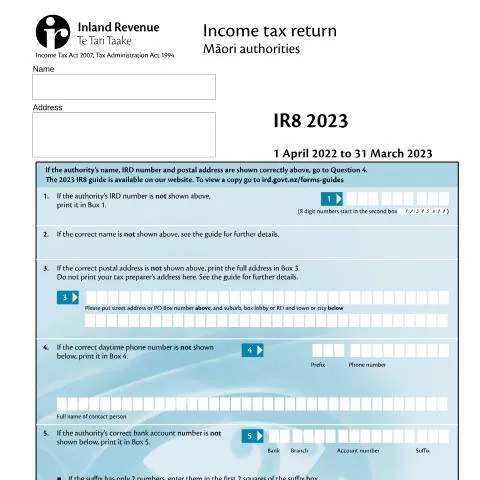
Navigating the IR8: The Income Tax Return for Māori Authorities
Understanding the intricacies of the IR8 form is essential for Māori authorities aiming to comply with tax obligations while maximizing their entitlements. This form, officially titled "Income Tax Return: Māori Authorities," is pivotal in documenting financial affairs specifically tailored to the unique context of Māori entities.
The completion of the IR8 form entails a series of steps that require careful attention to detail. Therefore, let's delve into the essential components of this document, the responsibilities it entails, and the repercussions of missteps.
Who Should File the IR8?
The IR8 form is specifically designed for Māori authorities, including trusts and tribal organizations recognized under the Income Tax Act 2007. Not all entities fall under this category, so understanding whether your organization qualifies is crucial.
Key Characteristics of a Māori Authority
- Ownership: Must be owned by Māori, with a majority of beneficiaries being Māori.
- Purpose: Aimed at managing resources and assets for the benefit of Māori.
- Registration: Must be registered as a Māori authority with the New Zealand Inland Revenue Department (IRD).
If your organization meets these criteria, it's imperative to file the IR8 form annually for the fiscal year running from 1 April to 31 March.
Differentiating the IR8 from Other Tax Returns
The IR8 form may be frequently confused with general income tax returns. However, the distinctions are significant.
Comparison with Other Forms
| Form | Used By | Primary Focus |
|---|---|---|
| IR8 | Māori Authorities | Income and expenses specific to Māori organizations |
| IR3 | Individuals | Individual income tax returns |
| IR4 | Businesses | Company income tax returns |
As illustrated, the IR8 is tailored to the unique financial circumstances of Māori authorities, making it essential for compliance with Māori-related taxation regulations.
Completing the IR8: Step-by-Step Guide
Filling out the IR8 form involves several sections that must be approached methodically. Here's a structured walkthrough:
Initial Information Section
Authority Details:
Ensure the authority's name, IRD number, and postal address are accurate. If these particulars are incorrect, print the correct details in the designated boxes.Contact Information:
Provide the daytime phone number and the name of a contact person in the authority.Bank Account Information:
Include the bank account number where the entity receives its payments. Ensure that the suffix is entered correctly, particularly for accounts with two-digit suffixes.
Income Reporting
Income reporting is a core part of the IR8 form, broken down into various income streams:
Residential Property Income:
If the authority has earned income from residential property or incurred related expenses, these must be accurately reported. Be mindful of the different methods of calculation (Portfolio, Individual, Combination) and ensure accurate totals are declared.Additional Income Streams:
Other income types need to be outlined clearly, including profits or losses from property sales. Any losses must be marked with a minus sign.
Tax Calculation Section
The tax liability is a crucial component that requires precise calculations. For taxable income, the formula is straightforward: multiply the taxable income by the applicable tax rate—0.175 in this case.
Submission Channels: Where and How to File
There are multiple avenues to submit the IR8 form:
Online Submission
The most efficient method for submitting your IR8 is through the IRD's online services. This method offers several advantages:
- Immediate Confirmation: Receive instant acknowledgment of your submission.
- Easier Tracking: Online submissions allow for easier monitoring of your tax affairs.
Postal Submission
If you prefer traditional methods, you can mail your completed form to the IRD. Ensure that you use the correct postal address as indicated on the form. Be cautious with timing, as postal delays can impact your submission dates.
Implications of Filing Errors
Filing the IR8 form isn't just a bureaucratic obligation; it holds significant financial implications.
Consequences of Non-Compliance
Failure to file correctly can lead to several repercussions:
- Penalties: The IRD may impose fines for late submissions or inaccuracies.
- Interest Charges: Any outstanding tax obligations may accrue interest, increasing the overall liability.
Repercussions of Filing Incorrect Information
Errors in reporting income, miscalculating tax liabilities, or incorrectly claiming deductions can lead to audits by the IRD. Such situations can be daunting and often require additional documentation to rectify.
Justifying Your Figures: Required Documentation
Documentation is a pivotal aspect of the IR8 submission process.
Preparing Supportive Documents
Before submitting the IR8, ensure you have gathered the following:
- Financial Statements: A completed Financial Statement Summary (IR10) is mandatory if applicable. This document outlines the financial health of the authority.
- Receipts and Invoices: Maintain all receipts and invoices related to the income and expenses reported on the form.
- Other Financial Records: Any relevant documentation supporting the figures entered in the IR8 should be readily available.
Tracking Your Submission: Follow-Up Procedures
Once the IR8 has been submitted, the next step is ensuring it has been processed correctly.
Post-Submission Monitoring
- Check IRD Notifications: Use your RealMe account to monitor any notifications from the IRD regarding your submission.
- Address Queries Promptly: If the IRD queries any aspect of your submission, respond as soon as possible with the requested information to avoid delays.
What to Do If You Miss the Deadline
If you find yourself unable to meet the filing deadline, it's important to take swift action. Notify the IRD of your situation and inquire about potential options to minimize penalties.
Māori Authorities' Rights and Responsibilities
Filing the IR8 form is not merely about compliance; it’s also about understanding the rights and responsibilities that come with it.
Rights of Māori Authorities
Māori authorities possess specific rights under New Zealand tax law, including:
- Eligibility for Tax Credits: Authorities can access specific tax credits that are unique to Māori entities.
- Appeal Processes: Should disputes arise regarding tax assessments, there are established processes for appealing decisions made by the IRD.
Responsibilities to Maintain Compliance
It is essential for Māori authorities to maintain accurate records and comply with reporting requirements. This includes:
- Timely Filing: Submitting the IR8 by the deadline.
- Accurate Reporting: Ensuring all income and expenses are accurately reported to maintain integrity and compliance.
The IR8 form serves as a critical tool for Māori authorities, ensuring they meet their tax obligations while capitalizing on available entitlements. By approaching the completion and submission of the IR8 with diligence and awareness, Māori authorities can maintain compliance and contribute to their overall financial well-being.
Understanding the Role of Māori Authorities in Income Tax Returns
Māori authorities play a vital role in the management of income tax returns for Māori entities in New Zealand. These authorities are typically established to manage and administer lands and assets for the benefit of their members, often involving trusts or incorporations. Understanding how these authorities operate in the context of income tax is crucial for Māori taxpayers.
Māori authorities are governed by specific provisions in the Income Tax Act 2007, which outlines their obligations and entitlements concerning taxation. Generally, Māori authorities are taxed at a flat rate of 17.5%, which is advantageous compared to the higher rates applicable to individuals and companies. However, the tax obligations can vary significantly depending on the structure of the authority and the nature of its income.
It is crucial for Māori authorities to maintain accurate records of their financial transactions, as this directly impacts their tax filings. Authorities must also ensure that they comply with the requirements stipulated by the Inland Revenue Department (IRD) concerning the filing of tax returns (e.g., IRD's requirements under section 39 of the Income Tax Act).
Additionally, Māori authorities can often claim deductions for expenses incurred in the course of their operations, such as management fees and operational costs, which can reduce their taxable income. Thus, understanding the full scope of allowable deductions can significantly benefit these entities and their members.
Specific Tax Considerations for Māori Land Trusts
Māori land trusts are unique entities that operate under different taxation rules compared to standard corporations. These trusts are often created to manage land held under the Te Ture Whenua Māori Act 1993, which safeguards Māori land interests. When it comes to income tax returns, understanding the nuances of how these trusts are taxed is essential for compliance and maximization of benefits.
Māori land trusts may also benefit from the Māori authority tax rates mentioned previously, provided they qualify as Māori authorities under the Income Tax Act. If a land trust does not meet the criteria, it may be taxed as a standard company, typically facing higher rates. Therefore, ensuring that a land trust meets the definition of a Māori authority can have significant financial implications.
Furthermore, income derived from the leasing of Māori land is generally subject to specific tax treatment. For instance, rental income may not be fully taxable, depending on the structure of the trust and the nature of the land use agreements in place. Taxpayers should seek advice from tax professionals familiar with Māori land taxation to navigate these complexities effectively.
Within this context, Māori trusts are also encouraged to keep detailed records of income sources, expenses, and any distributions made to beneficiaries. This information is crucial not only for filing accurate tax returns but also for transparency and accountability to their members.
Utilizing RealMe for Efficient Tax Filing
The advent of digital services has transformed how Māori authorities and taxpayers file their income tax returns in New Zealand. RealMe, a digital identity verification platform, provides a secure way for individuals and entities to manage their tax affairs online. This system is increasingly vital for Māori authorities to streamline their tax compliance processes.
Māori authorities can use RealMe to access various online services offered by the IRD, including filing returns, checking tax balances, and making payments. This not only saves time but also enhances accuracy in submissions, reducing the likelihood of errors that can lead to penalties or audits.
To utilize RealMe, Māori authorities must first create a digital ID, which can be done through a secure online process. Once registered, authorities can link their RealMe accounts to the IRD systems, enabling efficient management of tax obligations. It's worth noting that this digital transition aligns with New Zealand's commitment to improving access to governmental services through innovation.
Additionally, Māori entities should be aware of the importance of keeping their RealMe account information updated to avoid any disruptions in accessing tax services. Regularly monitoring account credentials and ensuring that all relevant contact details are current is essential for a smooth experience when filing returns.