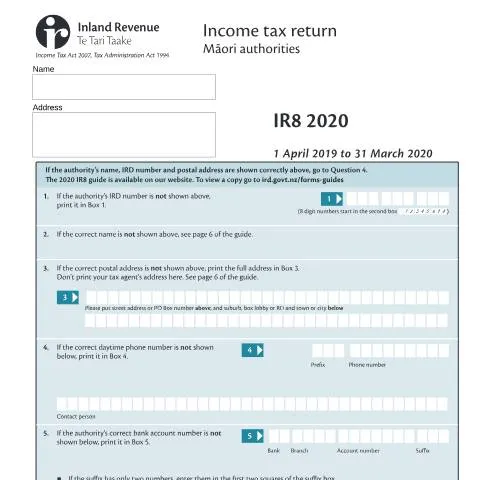
Understanding the IR8 Form: A Key Document for Māori Authorities
When it comes to navigating the complexities of New Zealand's tax obligations, the IR8 form emerges as a crucial instrument specifically designed for Māori authorities. This official document serves as the income tax return that enables these entities to accurately report their financial activities and comply with the legal frameworks outlined in the Income Tax Act 2007 and the Tax Administration Act 1994. The IR8 form plays a vital role in ensuring the proper tax treatment of Māori authorities, allowing them to fulfil their responsibilities while also preserving their unique cultural identity.
The Historical Context and Regulatory Framework
The IR8 form is not just a bureaucratic obligation; it stems from a long history of recognition of Māori interests within New Zealand's tax system. Understanding this background is essential for appreciating the importance of the form.
The Māori authorities concept was first established to support the management of Māori land and resources. Over the years, the New Zealand government has implemented various regulations that acknowledge the distinct status of Māori authorities. The inclusion of the IR8 form is a manifestation of this recognition, providing a standardized method for Māori entities to report income and expenses while ensuring compliance with tax law.
To further understand the significance of the IR8 form, it's important to note that it operates within a framework that respects the principles of the Te Ture Whenua Māori Act 1993, which aims to promote the retention and use of Māori land for the benefit of Māori communities. The IR8 form, therefore, serves not merely as a tax return but as an instrument that supports the economic growth and sustainability of Māori authorities.
Step-by-Step Guide to Completing the IR8 Form
Completing the IR8 form can initially seem daunting. However, by breaking down the process step by step, it becomes more manageable. It’s crucial that each section is completed accurately to avoid delays or issues with the application. Below is a streamlined guide to navigating through the sections of the IR8 form.
Identification Information
The first part of the form requires essential identification details about the Māori authority:
- Authority Name: Ensure that the name of the Māori authority is correctly shown at the top of the form. If there are discrepancies, corrections must be made as stated in the accompanying guide.
- IRD Number: This eight-digit number can usually be found on previous tax documents. If it’s not pre-filled, you must enter it manually in Box 1.
- Postal Address: Box 3 should be filled with the current postal address, ensuring it corresponds with the official registration records.
Contact Details
Section four requires the current contact details:
- Daytime Phone Number: Enter this in Box 4 to facilitate any communication regarding the return.
- Bank Account Number: Box 5 is for your authority's bank account details, which are crucial for any potential refunds.
Income Reporting
One of the most significant sections of the IR8 form pertains to income reporting. This is where Māori authorities must declare various sources of income:
- Residential Property Income: Questions 8 and 9 require details on any income from residential properties, including rental income and any related deductions.
- Other Income Sources: This includes gross interest, dividends, and any taxable distributions. Key considerations are outlined in Boxes 10 through 10L, where authorities must carefully report all earnings and applicable deductions.
Each income stream must be reported accurately, and it’s essential to refer to the guidelines for specifics about allowable deductions and reporting requirements.
The Importance of Accurate Reporting
Accurate completion of the IR8 form is critical not only for compliance but also for the financial health of the Māori authority. Errors or omissions can lead to penalties, and in some cases, trigger audits by the Inland Revenue Department (IRD). It is imperative for Māori authorities to take the time to ensure that each figure is correct and that the return is submitted on time.
Potential Pitfalls to Avoid
As with any official form, there are common pitfalls that can complicate the filing process:
- Incorrect IRD Numbers: Ensure the IRD number is entered accurately; a single digit error can lead to significant issues.
- Misreporting Income: Underreporting or misclassifying income can raise red flags. Always cross-verify figures with financial statements.
- Missing Deadlines: Be aware of key dates and ensure the form is filed within the required timeframe to avoid penalties.
Timeline of Events: From Submission to Outcome
The process does not end with the completion of the IR8 form. Understanding the timeline from submission to outcome is essential for effective tax management.
- Submission Period: For the fiscal year 1 April 2019 to 31 March 2020, the IR8 form must be submitted by 7 February 2021.
- Acknowledgment of Receipt: Once submitted, the IRD will acknowledge receipt of your return, typically through electronic means.
- Review Process: The IRD will review the information provided, which may take several weeks. During this time, they may reach out for additional information or clarification.
- Tax Calculation and Results: After the review, the IRD will calculate any tax owed or refund due based on your reported income and deductions. This will be communicated either through a tax notice or electronically.
Understanding the Tax Calculation
The final sections of the IR8 form focus on tax calculations. It’s essential to follow the instructions meticulously to ensure an accurate computation of tax liabilities:
- Taxable Income Calculation: Referencing Box 10L, you will calculate the total taxable income by applying the appropriate tax rate, currently set at 17.5% for most income.
- Deductions and Credits: Be sure to account for any overseas tax paid, dividend imputation credits, and Māori authority credits that can reduce your overall liability.
The final tax payable will be clearly outlined in Box 11 and will dictate whether you owe taxes or are due for a refund.
Post-Submission: Keeping Records and Managing Compliance
Once the IR8 form has been submitted and processed, it’s vital for Māori authorities to maintain accurate records for future reference.
- Financial Statements: Keep detailed financial records that back up the figures reported on the IR8. These will be crucial in the event of an audit or review.
- Ongoing Compliance: Stay abreast of changing tax regulations that may affect your obligations as a Māori authority. Regular reviews of your financial practices can help in maintaining compliance.
Conclusion: The IR8 Form as a Catalyst for Growth
In summary, the IR8 form is more than just a tax return; it is an essential tool that enables Māori authorities to engage with New Zealand's tax system in a manner that respects their cultural identity while fulfilling legal obligations. By understanding its importance, accurately completing the form, and staying vigilant about compliance, Māori authorities can use the IR8 as a catalyst for economic growth and sustainability.
| Section | Description |
|---|---|
| Identification | Name, IRD number, and postal address of the Māori authority. |
| Income Reporting | Details of various income streams and deductions. |
| Tax Calculation | Final computation of tax liabilities and credits. |
| Post-Submission Compliance | Maintaining records and ensuring ongoing compliance with tax obligations. |
Māori Authorities and Their Role in Income Tax Returns
Māori authorities play a crucial role in the economic landscape of New Zealand. Recognising the unique status of Māori as tangata whenua (people of the land), the Inland Revenue Department (IRD) provides tailored support and guidelines for Māori authorities regarding income tax returns. These entities, which often operate as trusts or incorporations, have specific obligations and advantages under New Zealand's tax laws.
For instance, Māori authorities can access particular tax treatments that may not apply to standard corporations. They are generally subject to the same tax rates as companies but can benefit from certain exemptions and deductions related to their community-focused activities. Understanding these nuances is essential for ensuring compliance while maximising the financial benefits available to these entities.
When filing income tax returns, Māori authorities must use specific forms like the IRD's Māori Authority Tax Return (IR 8). This form is designed to capture the unique nature of Māori authority income, including tribal income, which may come from various sources such as fisheries, land leases, and cultural enterprise activities. Additionally, Māori authorities must disclose their income and expenses in a way that reflects their obligations to their beneficiaries and adheres to the principles of Te Tiriti o Waitangi (Treaty of Waitangi) regarding the stewardship of resources and fiscal accountability.
Decoding the Taxation System for Māori Entities
Navigating the New Zealand tax system can be complex, particularly for Māori entities that often have diverse income streams and unique governance structures. A key resource for these entities is the IRD's comprehensive guidelines, which specify how different types of income should be declared. It is essential for Māori authorities to understand the distinction between taxable and non-taxable income, especially as it pertains to their operational activities.
For example, income derived from community projects or cultural initiatives may not be subject to income tax, as these are often regarded as non-profit in nature. However, if a Māori authority generates profit through commercial ventures, such income is typically treated as taxable. The timing of such income recognition is also critical; understanding whether income should be reported based on cash received or on an accrual basis can affect the overall tax liability.
Furthermore, Māori authorities must keep accurate, transparent records to substantiate their income and expenses. This can be achieved through diligent bookkeeping practices and using digital tools that comply with the IRD's requirements. An annual review of financial statements by a qualified accountant is also advisable, ensuring that Māori authorities are well-positioned to meet their tax obligations while optimising their financial position.
Support Services and Resources Available to Māori Authorities
There are numerous support services and resources available specifically for Māori authorities to aid them in meeting their income tax obligations. The IRD provides dedicated resources designed to help Māori entities better understand their tax responsibilities. This includes workshops, webinars, and one-on-one consultations where Māori authorities can seek tailored advice.
Additionally, local Māori development agencies offer guidance on tax compliance and financial management. These agencies often have in-depth knowledge of both the local and national tax landscape and can provide invaluable support in navigating complex regulations. Engaging with these organisations can help Māori authorities not only to meet compliance requirements but also to enhance their financial literacy, ultimately leading to more sustainable economic practices.
Moreover, the use of RealMe digital ID can significantly streamline the process of filing income tax returns for Māori authorities. By creating a secure digital identity, Māori authorities can access IRD's online services more efficiently, allowing for quicker submissions of tax returns and correspondence. This transition towards digital solutions aligns with the government's emphasis on accessibility and innovation, ultimately benefiting Māori authorities in their financial management.