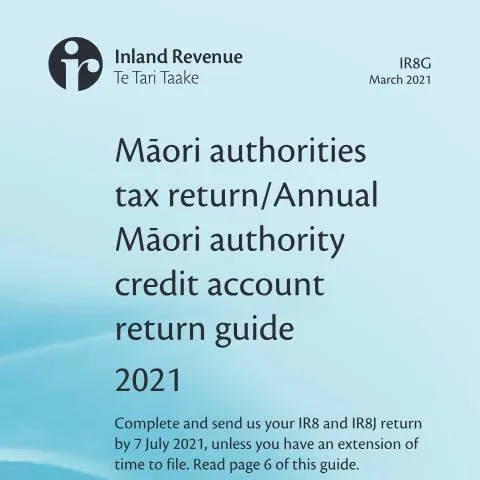
Diving into the Māori Authorities’ Tax Return Guide: A Comprehensive Overview
Navigating the intricacies of taxation can be daunting, especially for entities that identify as Māori authorities. The Māori authorities' tax return guide (IR8G) is an essential document designed to aid these entities in their annual tax obligations. Understanding and effectively utilizing this guide can be pivotal for ensuring compliance and maximizing the benefits available under New Zealand’s tax laws.Understanding the Essence of a Māori Authority
Before jumping into the specifics of the tax return guide, it is crucial to clarify what constitutes a Māori authority. The definition is broad and encompasses various entities, primarily those established under specific Māori legislation, such as Te Ture Whenua Māori Act 1993 (Māori Land Act 1993).Who Qualifies as a Māori Authority?
The list of entities eligible for consideration as a Māori authority includes:- Companies established by an order made under Te Ture Whenua Māori Act 1993.
- Trustees of trusts established under the aforementioned act.
- Māori Trust Boards as defined by the Māori Trust Boards Act 1955.
- Entities receiving assets from the Crown as part of Treaty of Waitangi settlements.
The Significance of Completing the Tax Return
All Māori authorities must file their tax return, irrespective of income levels. This requirement underscores the importance of proper financial tracking and accountability within these entities.When is the Return Due?
For entities with a balance date of 31 March, the tax return is typically due by 7 July of the same year. However, variations exist based on different balance dates or if an extension has been granted. Engaging with tax agents can alter these deadlines, extending the submission date to 31 March of the following year in some cases.Key Components of the Guide
The IR8G is structured to provide comprehensive guidance through the process of filing the tax return. It is divided into specific sections, each catering to distinct aspects of the return process.Annual Māori Authority Credit Account Return (IR8J)
Most entities filing the tax return must also complete the Annual Māori Authority Credit Account Return, which is referred to as IR8J. This is critical for entities that have opted into the Māori authority framework for the tax year. Notably, certain authorities exempt from this requirement include those with constitutions explicitly prohibiting distributions and those deriving exempt income.Exploring Key Questions in the Return
The guide outlines specific questions to address during the filing process, including:- Identification details like the name and postal address of the Māori authority.
- Bank account details for potential refunds or credits.
- Income declarations covering residential properties and taxable property sales.
Common Misinterpretations and Pitfalls
As with any tax-related document, there are common areas of confusion that can lead to errors in filing.Incorrect Understanding of Income Types
One of the most frequent misconceptions involves the nature of income that needs to be reported. For instance, distinguishing between exempt income and taxable income can be complex. Authorities must be diligent in categorizing their income accurately to avoid potential penalties.Failure to Meet Filing Deadlines
Lost in the shuffle of deadlines is another pitfall. Given the specific timelines associated with various income years, authorities must keep meticulous records to ensure compliance. Failure to submit on time can result in late penalties and interest charges which can aggravate financial strain.Articulating with Other Documents and Procedures
The Māori authorities’ tax return guide does not exist in isolation. It is crucial to understand its relationship with other forms and documents within the taxation framework.Interconnections with Other Tax Returns
The IR8G closely integrates with other tax forms such as the standard IR8 tax return. Being aware of these interrelations can streamline the filing process and enhance accuracy in reporting.Utilizing Online Resources and Tools
The IRD provides a suite of online tools designed to aid Māori authorities. By logging into myIR, entities can manage their tax affairs and access relevant calculators and worksheets that simplify the financial reporting process.Practical Steps to Efficient Filing
Filing the Māori authorities tax return can seem daunting, but breaking it down into practical steps can ease the process.Gathering Required Documentation
Before initiating the filing process, it is essential to gather all necessary documents, such as:- Financial statements for the relevant tax year.
- Details of any distributions made to beneficiaries.
- Records of income earned from various sources.
Utilizing Support Resources
Māori authorities can seek support from experienced tax professionals or utilize the resources provided by the IRD. Engaging with these experts can provide clarity and ensure compliance with the evolving tax regulations.Emphasizing Compliance and Accountability
Engaging with the Māori authorities’ tax return guide is more than a legal obligation; it is a way to uphold accountability within the community.The Importance of Accurate Reporting
Accurate reporting fosters trust among stakeholders and ensures that authorities can operate effectively without the burden of financial mismanagement. This compliance also serves a broader purpose, reflecting the commitment of Māori authorities to transparency and responsibility.Conclusion on the Guide’s Role
In summary, the Māori authorities’ tax return guide (IR8G) is an invaluable resource for entities navigating their tax obligations. By understanding the guide’s content and applying its principles, Māori authorities can ensure compliance, uphold their responsibilities, and ultimately contribute positively to the broader socio-economic framework in New Zealand. As we delve deeper into the specific sections of the IR8G, it becomes evident how integral this guide is to supporting Māori authorities in their financial stewardship. Emphasizing clarity in communication and the nuances of tax obligations will help empower these entities as they fulfil their roles within their communities.Understanding Tax Obligations for Māori Authorities
Māori authorities in New Zealand hold a unique position within the tax framework. These entities, which represent the interests of Māori communities, are often involved in various economic activities, ranging from land leases to business ventures. Recognizing the nature of these operations is vital for understanding tax obligations. Māori authorities are typically classified under either the Income Tax Act 2007 or the Māori Land Act 1993, depending on their structure and activities.
To navigate tax obligations effectively, Māori authorities must first determine their status. For instance, those operating as charitable entities may be eligible for specific exemptions under the Income Tax Act. Conversely, authorities engaged in commercial activities must ensure they comply with income tax regulations. The distinction is crucial, as it affects filing requirements, tax rates, and potential deductions.
Additionally, Māori authorities may have responsibilities under the Goods and Services Tax (GST) regime if their annual turnover exceeds NZD 60,000. Understanding the requirements and implications of GST registration is essential for these entities, particularly in ensuring compliance with reporting obligations and claiming input tax credits. Information regarding GST can be sourced from the Inland Revenue Department (IRD), which provides guidelines tailored for Māori authorities.
Filing Tax Returns: Specific Forms and Deadlines
When it comes to filing tax returns, Māori authorities must be aware of the specific forms required and the deadlines associated with them. The primary form for Māori authorities is the IRD’s income tax return, specifically the IR10 form, which caters to trusts and Māori authorities alike. It’s crucial to note that the fiscal year for tax purposes runs from 1 July to 30 June, and returns are typically due four months after the end of the fiscal year.
For Māori authorities, this means that the tax return for the period ending 30 June is due by 31 October. However, if the authority has a tax agent, they may receive an automatic extension that provides additional time for filing. These extensions can be beneficial, allowing authorities to ensure accuracy and compliance without incurring penalties.
Furthermore, it's essential to maintain accurate financial records throughout the fiscal year. This includes keeping track of income sources, expenses, and any distributions made to beneficiaries. The IRD emphasizes the importance of thorough documentation to support claims and deductions, especially for entities engaged in diverse economic activities.
Tax Credits and Deductions Available to Māori Authorities
Māori authorities are entitled to various tax credits and deductions that can significantly reduce their taxable income. One of the key deductions available is the ability to offset losses from one income year against income from the following year. This feature is particularly relevant for authorities that may experience fluctuations in income due to seasonal activities or market changes.
Additionally, Māori authorities can claim deductions for expenses directly related to their activities. This may include costs associated with land management, business operations, and any community-focused initiatives. Understanding which expenses are deductible is vital; clear distinctions must be drawn between personal and business-related costs.
Another noteworthy tax credit available is the R&D tax incentive for Māori authorities involved in innovative projects. This incentive encourages entities to invest in research and development activities, fostering economic growth within Māori communities.
To ensure that they maximize available benefits, Māori authorities are encouraged to engage with tax professionals who specialize in Māori taxation issues. This collaboration can provide insights into specific deductions and credits that align with the unique needs of their community and governance structure.