The Importance of the Sale of Abandoned/Unclaimed Goods
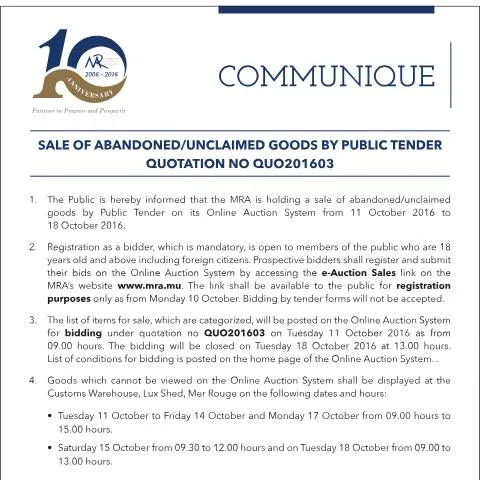
In the context of Mauritius, the Sale of Abandoned/Unclaimed Goods by Public Tender is a significant event, particularly for those interested in acquiring goods that have been left unclaimed or abandoned. This procedure is not only a means for the Mauritius Revenue Authority (MRA) to manage surplus goods but also opens avenues for citizens and foreign nationals alike to bid on items they might find valuable. Understanding the procedures surrounding this sale through the appropriate form, specifically Quotation No QUO201603, is essential for prospective bidders.
Understanding the Context: Why Goods Go Unclaimed
Goods may go unclaimed for a variety of reasons, ranging from abandoned cargo at ports to unsold items collected by the government. The MRA periodically organizes these sales to clear out such items, ensuring that they do not remain in storage indefinitely while also providing the public with an opportunity to purchase goods at potentially lower prices. For bidders, participating in this sale could lead to acquiring valuable items at a fraction of their market value.
Who Can Participate in the Public Tender?
This sale is open to a wide audience. The rules stipulate that any individual aged 18 and above, including foreign citizens, can register as a bidder. This inclusivity encourages a diverse range of participants, enhancing the competitive nature of the tender. However, it is essential to note that registration is mandatory. Without registering on the MRA's Online Auction System, individuals cannot place bids, making this an essential first step.
Registration Process for Bidders
To engage in the bidding process, prospective bidders must register on the MRA's official website. It is crucial to complete the registration before the bidding period commences. Here’s a step-by-step breakdown of the registration process:
- Visit the MRA website, specifically the e-Auction Sales link.
- Complete the registration form with accurate personal details.
- Submit the registration before the deadline, ideally before 10 October.
Key Dates and Timeline
Understanding the timeline of the auction is vital for participants. The sale runs from 11 October 2016 to 18 October 2016. Bidders must familiarize themselves with the following key dates:
| Date | Event |
|---|---|
| 10 October 2016 | Registration opens for bidders. |
| 11 October 2016 | Bidding begins at 09:00 hours. |
| 15 October 2016 | Special viewing hours on Saturday. |
| 18 October 2016 | Bidding closes at 13:00 hours. |
Navigating the Bidding Process
Once registered, participants will have access to the categorized list of items available for bidding. This list will be made public on the MRA’s Online Auction System starting 11 October 2016. It is advisable to review the items thoroughly before placing any bids. Bidders should be aware that:
- Bidding cannot be done through traditional tender forms—only via the Online Auction System.
- Items requiring a deposit must have that deposit submitted alongside the tender offer.
Understanding the Deposit Requirement
For certain items, a deposit of at least 10% of the tender offer is required. This deposit must be in the form of a banker’s cheque made out to the Director-General of the MRA. Bidders should ensure the cheque is placed in a special envelope indicating both their name and the items associated with the deposit. Personal cheques will not be accepted, which underscores the importance of following the guidelines closely.
Viewing the Goods: What to Expect
During the auction period, unable to view the items online can result in missed opportunities. For this reason, the MRA allows for physical viewing of goods at the Customs Warehouse, Lux Shed, Mer Rouge. The displayed items can be viewed on specific dates:
- 11 to 14 October and 17 October: 09:00 hours to 15:00 hours.
- 15 October: 09:30 hours to 12:00 hours.
- 18 October: 09:00 hours to 13:00 hours.
Prospective bidders are advised to bring their Identity Cards for access to the warehouse, ensuring they comply with entry regulations.
Handling Potential Issues: What If Problems Arise?
While the process is structured, issues may arise, such as errors during registration or issues with bids. Here are guidelines on how to proceed if such circumstances occur:
- For registration errors, bidders should promptly contact MRA via the provided phone or email to rectify any discrepancies.
- If bids are submitted incorrectly, it is vital to act quickly to amend them before the closing date. An understanding of the online system can aid in navigating this issue.
- In case of missing documents or deposits, bidders should ensure all required materials are submitted well ahead of the deadline.
Consequences of Inaction
Failure to meet requirements, such as submitting incomplete bids or necessary deposits, can lead to disqualification from the auction. Understanding these consequences helps bidders stay vigilant and ensure all aspects are completed accurately.
Post-Bid Procedures: What Happens After the Auction?
Once the bidding closes, participants eagerly await the results. Successful bidders will receive notifications indicating their wins, alongside instructions on how to pay for and collect their items. It is crucial to be attentive to these communications to avoid missing out on acquired goods.
- Check your email or the MRA website for auction results.
- Follow instructions provided for payment within the stated timeframe.
- Arrange for collection or delivery of the purchased items as per stipulated guidelines.
Final Thoughts: Engaging with the Process
Participating in the Sale of Abandoned/Unclaimed Goods by Public Tender can be a rewarding experience, both financially and personally. By following the guidelines outlined in the Quotation No QUO201603 and being proactive throughout the bidding process, individuals can navigate this intricate procedure successfully. Each step, from registration to bid submission and beyond, is a crucial component of the overall experience. It serves as a reminder of the importance of diligence and attention to detail in any administrative process.
Understanding the Legal Framework for Sale of Abandoned Goods
The sale of abandoned or unclaimed goods in Mauritius is governed by a combination of statutory requirements and local regulations. Under the Civil Code, as well as the provisions of the relevant Public Tender Act, the process of selling such goods is treated with particular scrutiny to protect the rights of original owners while ensuring transparency in public procurement.
The legal basis for the sale of unclaimed goods is primarily outlined in the Sale of Goods Act and various local government policies. Authorities must maintain a clear protocol that involves public notices, adequate time for claimants to present their case, and a transparent bidding process. This ensures that the sale is not only lawful but also equitable and that all potential owners have the opportunity to reclaim their property before it is put up for public tender.
In practice, this means that once goods have been classified as abandoned—whether due to them being unclaimed at a local storage facility or having been discarded without following proper disposal protocols—authorities such as the local government or the Ministry of Arts and Culture, depending on the nature of the goods, are required to follow specific procedures. This includes conducting a thorough investigation to ascertain ownership and attempting to contact potential claimants through registered mail or public notice in local newspapers.
Criteria for Classifying Goods as Abandoned
The classification of goods as abandoned or unclaimed is subject to specific criteria set forth by the relevant governing bodies. Generally, goods may be classified as abandoned under the following circumstances:
Duration of Non-Claim: Goods must remain unclaimed for a period of time as stipulated by local regulations, which often ranges from three to six months. The exact timeframe can vary based on the type of goods and the local authority's regulations.
Condition of Goods: If goods are in a state of disrepair or deemed unsafe, they may be classified as unfit for use. This determination is typically made by a qualified inspector, who assesses the condition of the goods before reaching a conclusion regarding their classification.
Failure to Respond: If the owner or any interested party fails to respond to notices sent by the local authority regarding the status of the goods, a declaration of abandonment can be initiated.
Documentation of Attempts to Contact Owners: Authorities must keep a record of all attempts to reach out to the owners, including any correspondence and public notices issued.
It is crucial for citizens to be aware that the classification process is not arbitrary; it is subjected to stringent checks and balances. Should you find yourself in a situation where your belongings have been classified as abandoned, you have the right to contest this decision by providing proof of ownership and evidence of your attempts to collect the goods in question.
Fill in your form directly online
No printing: type your details into the boxes of the official form, tick, then download the PDF ready to send.
- 1Type into the form boxes
- 2Tick in one click
- 3Save and download the PDF
Procedure for Bidding on Unclaimed Goods
The procedure for participating in a tender for the purchase of unclaimed or abandoned goods involves several stages, each requiring careful attention to detail and adherence to the stipulated regulations. Here’s a step-by-step outline of the bidding process:
Public Notice: The process begins with a public notice issued by the relevant authority, detailing the nature of the goods available for tender. This notice must include specific information such as the location of the goods, the deadline for submission of bids, and the criteria that will be used for selection.
Registration: Interested bidders are often required to register their intention to participate in the tender process. This may involve submitting an application form—such as the PSC Form 7 for public sector tenders—and paying a nominal registration fee, if applicable.
Viewing of Goods: Potential bidders will usually be granted an opportunity to view the abandoned goods before the tender closes. This is a critical step, allowing participants to assess the condition and value of the items available.
Submission of Bids: Bids must be submitted in the format specified in the tender notice, often through an online portal associated with the government’s e-services. Bidders must ensure they provide all required documentation, including proof of registration and any necessary financial guarantees.
Evaluation of Bids: After the submission deadline, the tender board will evaluate the bids based on predefined criteria. Factors such as bid amount, the credibility of the bidder, and compliance with all regulations will be assessed.
Awarding of Tender: Successful bidders will be notified of their win and will need to complete payment according to the conditions outlined in the tender notice. The payment, in Mauritian Rupees (MUR), must be made within the specified timeframe to avoid forfeiture of the tender awarded.
Collection of Goods: Once payment is completed, bidders can arrange for the collection of the goods. It is vital to keep all documents related to the tender, as these will serve as proof of ownership and may be necessary for future transactions involving the goods.
Engaging in the bidding process for unclaimed goods not only presents potential economic opportunities for individuals and businesses but also contributes to the proper management of abandoned property, ensuring that it is reused or repurposed appropriately.