Navigating the Sale of Abandoned and Unclaimed Goods: A Practical Guide
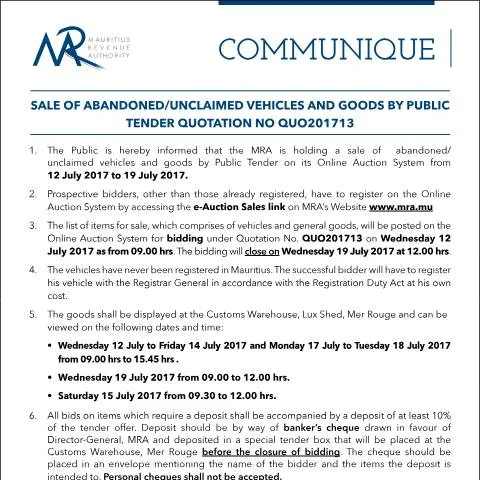
Imagine uncovering the opportunity to acquire unclaimed vehicles and goods, potentially at a fraction of their market value. The Sale of Abandoned/Unclaimed Goods by Public Tender holds immense potential for individuals and businesses alike, yet it requires a clear understanding of the procedures and necessary documentation involved. Understanding the nuances of this official document, identified as Communique Q13 of 2017, becomes essential for prospective bidders seeking to navigate the process efficiently.
Who Should Take Notice of This Tender?
This process primarily targets individuals and entities interested in bidding for unclaimed goods and vehicles. However, not everyone is eligible. Here’s a closer look at the profiles of potential bidders:
- Individuals: Adults who are legal residents of Mauritius and possess valid identification are eligible.
- Businesses: Registered companies seeking to acquire items for resale or operational use can also participate.
- Foreign Bidders: Non-residents may need to adhere to additional requirements, such as securing a local representative or additional documentation.
Understanding the specific eligibility requirements helps avoid unnecessary complications during registration and bidding.
The Role of the Document in the Bidding Process
At the heart of the tender is the official Sale of Abandoned/Unclaimed Goods by Public Tender document. It serves several critical functions in the bidding process:
- Regulatory Framework: It establishes the legal basis for the sale conducted by the Mauritius Revenue Authority (MRA).
- Bid Submission Guidelines: It details the necessary procedures, timelines, and formats for submitting bids.
- Deposit Information: The document outlines the financial commitment required from bidders, including the specifics of deposit payments.
By understanding these roles, bidders can better appreciate the significance of adhering to the guidelines within this document.
How to Engage: Steps for Participation
Registration on the Online Auction System
Before participating in the tender, prospective bidders must register on the MRA’s Online Auction System. The following steps outline the registration process:
- Access the e-Auction Sales link on the MRA website.
- Fill in the required personal and contact details.
- Submit the registration form and await confirmation of your account.
Understanding the Bidding Timeline
Bidding occurs within a specific timeframe, making it essential for bidders to remain aware of critical dates:
- Start of Bidding: Bids open on 12 July 2017 at 09:00 hrs.
- End of Bidding: Bids close on 19 July 2017 at 12:00 hrs.
Any submissions outside this timeline may be deemed invalid, emphasizing the importance of punctuality.
Details of the Goods: What Is Up for Bid?
The sale encompasses a variety of items, primarily unclaimed or abandoned vehicles, alongside general goods. Potential bidders are encouraged to review these items carefully:
- The list of items for sale will be posted online starting 12 July 2017.
- Items can be viewed at the Customs Warehouse, Lux Shed, Mer Rouge on specified dates prior to bidding.
This preview period is crucial for bidders to assess the condition and value of the items they intend to bid on.
Payment Procedures and Deposits: What You Need to Know
Financial preparation is a vital component of the bidding process. Bidders must be aware of the deposit requirements:
- A deposit of at least 10% of the tender offer is required for bids involving certain items.
- Deposits must be made via banker’s cheque, drawn in favour of Director-General, MRA.
- Deposits should be placed in a sealed envelope stating the bidder's name and the corresponding item, then submitted in a designated tender box at the Customs Warehouse.
Failure to follow these payment guidelines may lead to exclusion from the bidding process.
Assistance and Resources: Where to Get Help
Accessing Support During the Bidding Process
Given the complexity of the tender, bidders may seek assistance from various resources:
- The MRA’s official website provides comprehensive information and updates regarding the bidding process.
- Three bidding booths equipped with computer terminals will be available at the Customs Warehouse for those without internet access.
- For direct inquiries, bidders can contact the MRA using the provided phone number or email address.
Ensuring Compliance: What Happens If Things Go Wrong?
Despite thorough preparation, issues may arise during the bidding process, such as document errors or missing information. Here’s how to navigate these challenges:
- In Case of Refusal: Bidders should review the reasons for refusal, as outlined by the MRA, and rectify any deficiencies.
- Error Correction: Should there be an error in the submitted bid, it is crucial to contact the MRA promptly to resolve the issue before the bidding end date.
- Missing Documents: Ensure all requisite documentation is prepared and submitted as outlined; follow up with the MRA if there are uncertainties.
Final Thoughts: The Cost of Opportunity
Engaging in the sale of abandoned and unclaimed goods presents a unique opportunity for bidders willing to navigate the procedural landscape effectively. Understanding the roles and requirements outlined in Communique Q13 of 2017 equips participants with the tools necessary for a successful bidding experience. By paying close attention to timelines, deposit requirements, and available resources, bidders can turn potential risks into lucrative opportunities within this dynamic market.
Understanding the Process of Abandoned Goods Sale in Mauritius
The sale of abandoned or unclaimed goods by public tender in Mauritius is a procedure directed by the principles laid out in various statutory regulations. Primarily, it aims to address the issue of goods that are left unclaimed in public spaces or by specific authorities. This process is governed under the legal frameworks established by the various acts and directives of the government. For those interested in either participating as bidders or seeking to claim ownership of such goods, understanding the procedural nuances is essential.
The process begins when goods are deemed abandoned according to local regulations, which requires a specific duration of time for which the goods have remained unclaimed. Typically, this duration can vary, depending on the nature of the goods and the ownership history. It is essential to check with the appropriate authority, such as the Ministry of Commerce and Consumer Protection or the relevant local government office, to obtain concrete timelines and regulations that apply to specific cases.
Once goods are classified as abandoned, they are usually listed publicly, often through announcements in local newspapers and on official government portals. Interested parties should regularly monitor these announcements to identify potential bidding opportunities. This is also where the significance of maintaining an updated knowledge of the local bidding processes comes into play, especially if you are new to public tenders.
Legal Considerations and Bidder Responsibilities
Participating in the bidding for abandoned goods carries specific legal considerations that prospective bidders must fully understand. Firstly, all bidders are required to be in compliance with Mauritian laws, which means that having a clean legal standing is crucial. The authorities may conduct background checks to ensure that bidders do not have outstanding legal issues that could affect the legitimacy of their bids.
Moreover, bidders must be well-informed about the condition of the goods being tendered. A thorough assessment of the goods is advisable, as the auctioned items are often sold "as-is." This means that once the sale is finalized, the responsibility for any defects or issues lies entirely with the buyer. Therefore, it is prudent to conduct due diligence prior to making bids—this may involve physically inspecting the goods if allowed or seeking expert opinions regarding their condition.
Additionally, it is essential for bidders to be aware of the terms and conditions of the sale. Generally, a specific bidding form is required to be filled out and submitted, often accompanied by necessary identification documents and a deposit to show good faith. The amount required for the deposit can vary, and it is advisable to verify the stipulated amount with the tender notice. Failure to comply with these requirements may result in disqualification from the bidding process.
Post-Auction Procedures and Ownership Transfer
After the bidding process concludes, successful bidders will need to navigate several post-auction procedures to finalize their ownership of the acquired goods. The first step is to settle the full payment within the specified timeline, as indicated in the tender announcements. Delays in payment can lead to forfeiture of the bid and potential legal penalties depending on the terms set forth in the tender agreement.
Once payment has been made, the next critical step is the formal transfer of ownership. This typically involves filling out a transfer of ownership form, which must be submitted to the relevant authority along with proof of payment and identification documents. For certain categories of goods, there may be additional requirements or documentation necessary to complete the transfer process, such as customs clearance for imported goods or compliance with health and safety regulations.
Finally, it is important for new owners to keep all documentation related to the purchase for future reference, especially if questions about ownership arise. In some cases, there might be a need to register the new ownership in specific governmental databases, depending on the nature of the goods purchased. Staying informed about these requirements will help ensure a smooth transition from bidder to owner.