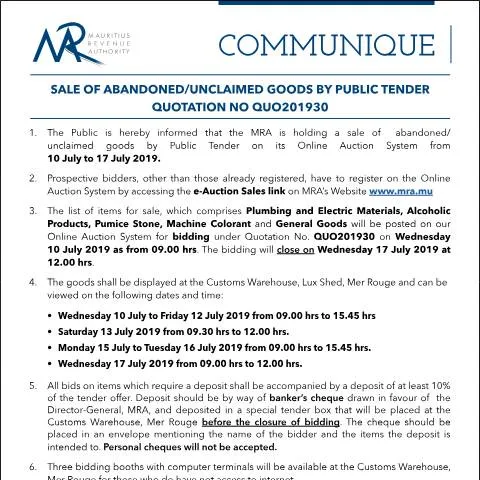
Understanding the Sale of Abandoned and Unclaimed Goods: A Public Tender Overview
The sale of abandoned and unclaimed goods by public tender is a unique opportunity for individuals and businesses to acquire items that have been left unclaimed, often at a fraction of their original value. This process is governed by the Mauritius Revenue Authority (MRA) and provides a transparent and competitive bidding environment. Knowing how to navigate this process effectively can lead to significant savings and beneficial acquisitions.
Key Dates and Timeline for Bidding
The public tender for abandoned and unclaimed goods operates on a strict timeline. Here’s a breakdown of the critical dates for potential bidders:
- Registration Period: For those who are not already registered, registration on the Online Auction System must be completed prior to bidding.
- Bidding Open: July 10, 2019, starting at 09:00 hours.
- Bidding Close: July 17, 2019, at 12:00 hours.
- Item Viewing: July 10-12 and July 15-16, 2019, from 09:00 to 15:45 hours; July 13, 2019, from 09:30 to 12:00 hours; and July 17 from 09:00 to 12:00 hours.
How to Access the Online Auction System
To participate in the bidding process, individuals must first register on the MRA’s Online Auction System. This can be achieved by visiting the MRA website and accessing the e-Auction Sales link. Here’s a step-by-step guide:
- Navigate to the MRA website.
- Locate the e-Auction Sales link.
- Complete the registration form with accurate details.
- Verify your registration via email or SMS confirmation.
Once registered, bidders will have access to the list of items available for auction.
Item Listings: What to Expect
The auction features a diverse range of goods, categorized under Quotation No. QUO201930. The list includes items such as:
- Plumbing and electrical materials
- Alcoholic products
- Pumice stone
- Machine colorants
- General goods
It is crucial for bidders to review the item listings thoroughly prior to placing bids. These listings will be available online starting July 10, 2019, at 09:00 hours.
Viewing the Goods
All items available for bidding can be viewed at the Customs Warehouse located at Lux Shed, Mer Rouge. Viewing times are set to ensure potential bidders can inspect the goods before committing to a bid. Bidders should take advantage of this opportunity to assess the condition and suitability of the items they are interested in.
Deposits and Bidding Requirements
When participating in the bidding process, it is essential to understand the deposit requirements. For items that necessitate a deposit, bidders must provide:
- A deposit of at least 10% of their tender offer.
- The deposit must be in the form of a banker’s cheque, made out in favor of the Director-General, MRA.
- Cheques should be deposited in a designated tender box at the Customs Warehouse before the bidding closure.
Please note that personal cheques will not be accepted. The deposit serves as a commitment to your bid and ensures serious participation in the auction.
Bidding Process: Step by Step
Once registered and with the deposit ready, bidders can proceed to place their bids. The process can be summarized as follows:
- Log in to the Online Auction System during the bidding period.
- Browse the available items and select those you wish to bid on.
- Submit your bid along with the required deposit if applicable.
- Monitor your bids until the closing time on July 17, 2019, at 12:00 hours.
It’s advisable to bid strategically, keeping an eye on competing bids to ensure you remain competitive.
Assistance for Bidders Without Internet Access
Recognizing that not all bidders may have access to the internet, the MRA has made provisions for alternative bidding methods. Three bidding booths equipped with computer terminals will be available at the Customs Warehouse in Mer Rouge. Participants can use these terminals to place their bids electronically.
Identification and Access Requirements
Access to the Customs Warehouse is regulated. Visitors are required to present their Identity Cards upon arrival at the Port Main Gate. It is crucial for all bidders to carry their ID for entry to ensure a smooth bidding experience.
Special Circumstances: Foreign Bidders and Minors
Foreign bidders wishing to participate must ensure they comply with the necessary regulations set forth by the MRA. Additionally, minors are typically not permitted to bid independently; thus, consultation with legal guardians may be necessary for such cases.
Post-Bidding Process: What Happens After the Auction?
After the bidding concludes, successful bidders will be notified and required to complete payment for the items won. This process typically includes:
- Finalizing the payment as per the auction agreement.
- Arranging for the collection of purchased goods from the Customs Warehouse.
- Ensuring all legal and tax obligations are met, including any applicable duties for imported goods.
Conclusion: Making the Most of the Tender Opportunity
Participating in the sale of abandoned and unclaimed goods by public tender can be a rewarding experience if approached with knowledge and preparedness. By understanding the requirements, timelines, and processes involved, bidders can navigate this opportunity effectively, maximizing their chances of acquiring valuable items at competitive prices.
Understanding the Public Tender Process for Abandoned or Unclaimed Goods
The sale of abandoned or unclaimed goods by public tender is governed by specific procedures and regulations in Mauritius. It is essential for citizens and businesses interested in this process to understand the different stages involved. The Public Procurement Act, alongside the associated guidelines issued by the relevant authorities, outlines the necessary steps. Typically, the process begins with the identification of goods that have remained unclaimed or abandoned for a specified period. This period is often determined by the agency responsible for the goods, be it a government department or a local authority.
Once the goods have been identified, a suitable valuation is conducted to determine their market worth. This valuation is crucial as it not only provides a reference point for setting a minimum bid price but also ensures transparency in the sale process. Interested parties will then find notices of the public tender advertised in local newspapers, on government websites such as govmu.org, and through other official channels. These advertisements will provide detailed information about the goods available for sale, the bidding process, and the deadlines for submissions.
Fill in your form directly online
No printing: type your details into the boxes of the official form, tick, then download the PDF ready to send.
- 1Type into the form boxes
- 2Tick in one click
- 3Save and download the PDF
In addition to the advertisement, potential bidders must carefully prepare their bids. This preparation often requires the completion of specific tender documents, which may include PSC Form 7 or other relevant forms as indicated in the tender announcement. Bidders must also provide evidence of their financial capacity to complete the purchase, and in some cases, a deposit may be required to accompany the tender submission.
Legal Considerations and Obligations in Tendering
Those participating in the tender process must also be aware of the legal framework that governs the sale of abandoned or unclaimed goods. The Public Procurement Act establishes the rights and responsibilities of both the authorities conducting the tender and the bidders. For instance, all potential bidders must be informed of their rights to appeal in case of any disputes arising from the tender process. This includes situations where their bids are unjustly rejected or if they feel that the tendering authority has not adhered to due process.
Moreover, it is crucial for bidders to understand the implications of their bids being successful. Upon winning a tender, the successful bidder is obligated to complete the transaction in accordance with the terms specified in the tender documents. Failure to do so may result in legal repercussions, including forfeiture of any deposits made and potential bans from future tender opportunities.
Additionally, bidders should be aware of the tax implications associated with the purchase of abandoned or unclaimed goods. The Mauritius Revenue Authority (MRA) will generally require the payment of applicable taxes upon acquisition, and it is advisable for bidders to consult with a tax advisor to ensure compliance with all fiscal obligations.
Environmental and Social Implications of Tendering for Abandoned Goods
Beyond legal and logistical considerations, it is important to recognize the environmental and social implications of the sale of abandoned or unclaimed goods through public tender. The government encourages responsible bidding and disposal practices. For instance, individuals or companies that purchase these goods are often tasked with ensuring that they do not contribute to environmental degradation. This may involve proper disposal of items that cannot be reused or repurposed.
Furthermore, the tender process has the potential to foster community development. By providing access to these goods at competitive prices, the government enables individuals and small businesses to acquire resources they might otherwise be unable to afford. This can stimulate local economies and promote entrepreneurship, particularly in underserved areas.
Lastly, bidders should consider the social ramifications of their purchases. Engaging in the tender process offers an opportunity to rethink consumption patterns and embrace sustainability. Buyers are encouraged to promote the reuse and recycling of materials, contributing positively to broader environmental goals in Mauritius.